
If you're still running an older PBX, inherited ISDN-era line counts, or a phone setup that "mostly works", you're in the position many UK SMEs found themselves in after the network changeover. The phones still ring, but the assumptions behind the system no longer hold. Legacy line thinking, fixed circuits, and expensive channel bundles don't fit how modern businesses operate.
That's why business owners keep asking the same practical question. What are SIP trunks, and what do they change for my business? The short answer is this: SIP trunks replace old physical phone lines with a digital connection over your data network, giving you a modern way to make and receive calls without relying on ISDN. In the UK, that matters because ISDN has been permanently switched off, and SIP trunking has become the foundation for business telephony. If you need context on the wider network change, this guide to the PSTN switch-off in the UK is a useful starting point.
Table of Contents
- The End of an Era Why Your Business Phone Lines Must Change
- What Are SIP Trunks A Plain English Guide
- How SIP Trunking Works A Technical Overview
- SIP Trunks vs ISDN and Traditional Phone Lines
- The Business Case for SIP Trunks Benefits and ROI
- Securing Your Calls Quality of Service and Cybersecurity
- Your SIP Trunk Migration Plan and Provider Checklist
- Modernise Your Communications with Confidence
The End of an Era Why Your Business Phone Lines Must Change
The old way of buying business telephony was simple. You ordered lines, installed circuits, and treated phone capacity as something tied to copper and cabinets. That model has gone. In the UK, SIP trunking has replaced ISDN as the foundational telephony standard following the permanent switch-off, driving a 35% increase in adoption over the past three years according to Ofcom.
For many SMEs, the issue isn't whether change is coming. It has already happened. A significant risk now is carrying old design habits into a new environment. Businesses that keep thinking in terms of fixed line bundles often end up with the wrong costs, the wrong resilience model, and the wrong expectations from their provider.
What has changed in practical terms
A SIP trunk gives your phone system a digital route to the public phone network over your internet connectivity instead of over dedicated ISDN circuits. That sounds technical, but the business effect is straightforward.
- You're no longer tied to physical line installations.
- Capacity changes don't depend on engineering visits to add circuits.
- Your phone service can align with remote work, multi-site teams, and cloud systems.
The businesses that struggle after the ISDN era usually don't have a telephony problem first. They have a planning problem.
Why inaction costs more than migration
Legacy systems often stay in place because they feel familiar. The problem is that familiar doesn't mean efficient. Old line counts, old failover assumptions, and old procurement habits create waste long after the original technical reason has disappeared.
If you're reviewing communications now, treat SIP trunking as infrastructure, not a gadget. It's the standard your phones now depend on, and it affects more than calls. It influences business continuity, customer access, and how easily your organisation can grow or move.
What Are SIP Trunks A Plain English Guide
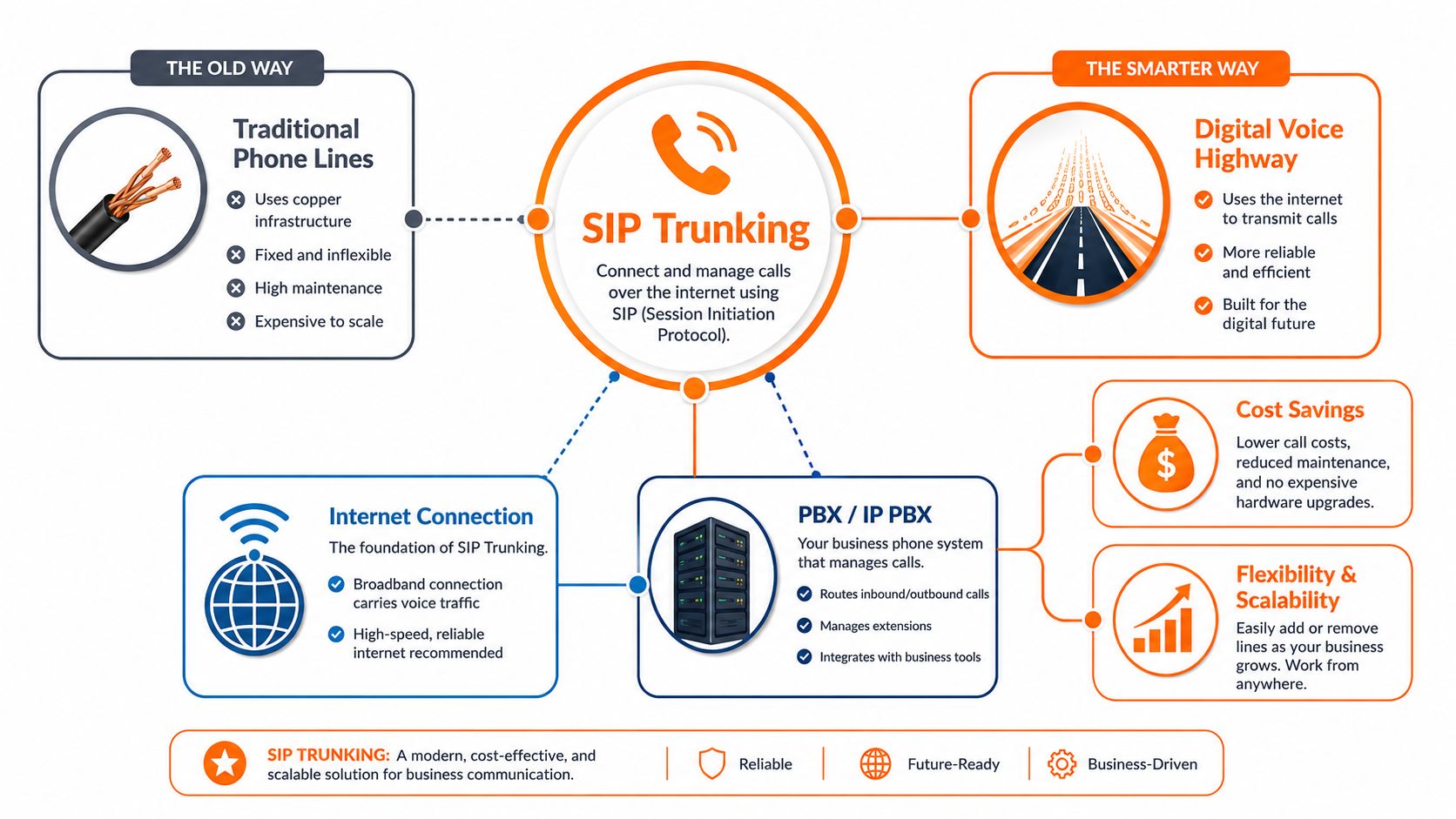
If you've asked "what are SIP trunks" and every answer sounds like telecom jargon, strip it back to this. A SIP trunk is the digital connection that links your business phone system to the outside world.
With older telephony, you had physical lines coming into the building. Each one had hard limits. SIP changes that model. Instead of separate copper paths, you use a logical connection over your existing data network.
Think of it as roads and lanes
ISDN was like booking a set number of fixed A-roads to your premises. If you needed more capacity, you usually had to order more physical infrastructure.
SIP is closer to having one digital motorway connection, with channels acting as the lanes. Each channel supports one simultaneous call. If your business needs more concurrent calling capacity, you change the number of channels rather than install more copper.
That distinction matters because a trunk is no longer a bundle of wires. It's a service.
What a business owner actually needs to know
You don't need to become a voice engineer to make good decisions. You do need to understand a few practical points:
- A SIP trunk isn't the same as a full hosted phone system. It usually connects an existing PBX or IP PBX to the public phone network.
- Channels are about simultaneous calls, not headcount. Thirty staff do not automatically mean thirty channels.
- The internet connection matters. Voice quality and resilience depend on the network carrying the calls.
If you're comparing options across regions, this explanation of SIP Trunk for Australian businesses is useful because it shows the same core idea in another market, even though UK numbering, regulation, and switch-off timelines differ.
Practical rule: If a provider explains SIP trunking only as "internet phones", they're oversimplifying. The important question is how your existing phone system, call capacity, numbering, and connectivity fit together.
Where SIP trunks sit in your wider phone setup
A SIP trunk is one part of the stack. Your business may still need handsets, softphones, an on-site PBX, or a cloud platform depending on how you run calls internally. If you're weighing that broader decision, this guide to a hosted VoIP phone system for business helps clarify where SIP trunks fit and where hosted telephony is the better route.
At the plain-English level, that's the answer. SIP trunks are the replacement for old business phone lines, delivered digitally, with capacity you can adjust far more easily.
How SIP Trunking Works A Technical Overview
Under the hood, SIP trunking is less mysterious than it sounds. A UK SIP trunk functions as a logical IP-based connection between an on-premise IP PBX and the PSTN, defined technically by its capacity in channels, where one channel equals one concurrent call, and its numbering plan alignment with UK national numbers, using G.711 or G.729 codecs for packetised voice transmission over existing broadband rather than dedicated copper ISDN pairs, as described in this UK SIP service definition document.
The main components
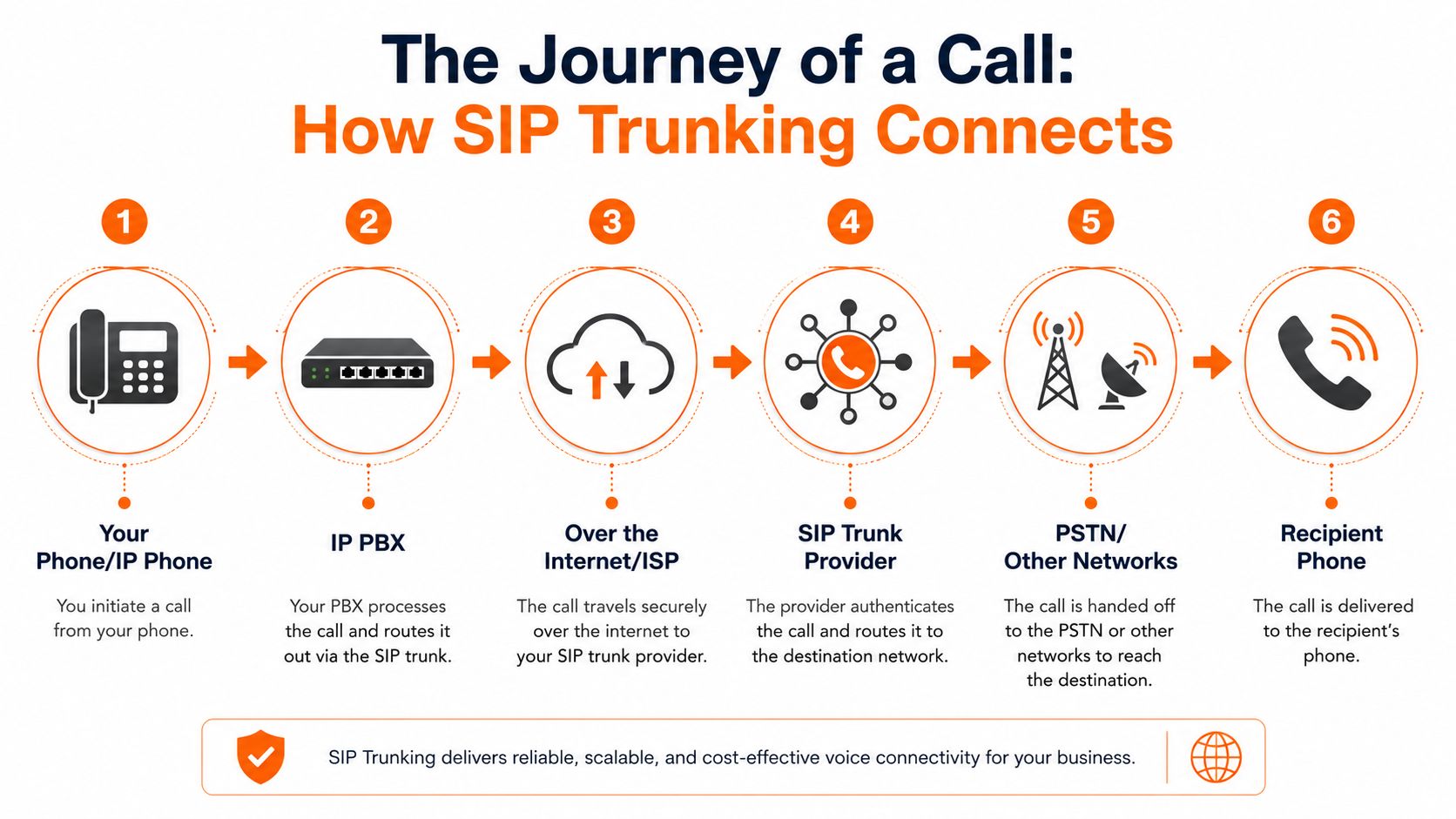
A normal SIP trunk setup has a few moving parts:
- Your IP PBX handles internal call control. It decides what happens when someone dials out or when a customer calls in.
- Your internet or private data connection carries the voice traffic.
- Your SIP provider links your system to the public phone network so calls can reach mobiles, landlines, and other organisations.
- A Session Border Controller or SBC secures and manages the edge of that connection.
The simplest way to think about it is this: your PBX creates and routes the call, the data connection carries it, and the SIP provider gets it onto the wider voice network.
What happens when someone makes a call
When a user dials an outside number, the PBX packages the call request and sends it through the SIP trunk. Voice is converted into packets using a codec such as G.711 or G.729. The provider authenticates the session, applies the numbering rules, and delivers the call onward to the public network.
Incoming calls work in reverse. A customer dials your business number, the provider receives that call, and the SIP trunk presents it to your PBX so your call routing rules can take over.
If you can understand "one channel equals one live call", you already understand the most important sizing rule in SIP trunking.
Why technical details matter to a non-technical buyer
You don't need to configure codecs yourself, but these terms tell you what to ask a provider.
Ask about:
- Codec support if you're integrating older systems or mixed handset estates
- SBC provision because unmanaged edges often create security and call quality problems
- Compatibility with your firewall and network
- Emergency calling support and number presentation
A lot of voice issues blamed on SIP are really network issues. If your broadband is poor, contended, or badly prioritised, call quality suffers first. That's why connectivity should be part of the conversation from day one. A business-grade overview of broadband and leased lines for UK companies is worth reviewing before you finalise any design.
SIP Trunks vs ISDN and Traditional Phone Lines
The cleanest way to understand SIP trunking is to compare it directly with what came before. ISDN was built around physical circuits and fixed provisioning. SIP trunks are built around software-defined capacity and IP connectivity.
That difference affects every commercial and operational decision that follows.
SIP Trunks vs ISDN At a Glance
| Feature | ISDN | SIP Trunks |
|---|---|---|
| Infrastructure | Physical copper-based service tied to legacy telecom circuits | Logical IP-based connection carried over your data network |
| Capacity model | Fixed line or circuit provisioning | Virtual channels that can be adjusted more easily |
| Scalability | Changes can require physical intervention and legacy planning | Capacity can be added or removed without changing copper infrastructure |
| Location flexibility | Strongly tied to site-specific lines | Better suited to multi-site, remote, and hybrid working |
| Business continuity | Traditional failover options, but less flexible at application level | Call routing and diversion can be designed more flexibly if the network supports it |
| Future fit in the UK | Obsolete after the switch-off | The current telephony standard for business connectivity |
Where ISDN still tricks buyers
The most common trap is emotional, not technical. ISDN feels dependable because it was physically present. You could point to the circuit, the card, the wall socket. SIP is virtual, so some buyers assume it must be less solid.
That's the wrong comparison. Physical doesn't automatically mean resilient, and virtual doesn't automatically mean fragile. The key question is whether the design suits the business.
For example:
- A single-site office with old line counts may find SIP immediately cheaper and easier to manage.
- A multi-site legal or financial practice may care more about controlled failover, security boundaries, and 999 capability.
- A manufacturing business may need call handling that fits shift changes and predictable peaks rather than static all-day capacity.
What works and what does not
What works:
- Matching channels to actual concurrent demand
- Treating data connectivity and telephony as one design problem
- Using SIP to support number flexibility and business continuity
What doesn't work:
- Copying your old ISDN line count into a SIP quote
- Assuming any internet connection will do
- Buying on headline price without reviewing support, fraud controls, and failover options
A cheap SIP quote can still be an expensive phone system if it's built on the wrong channel count or a weak connection.
The Business Case for SIP Trunks Benefits and ROI
For most SMEs, the business case starts with cost. Not because cost is the only reason to move, but because old telephony charges were built around infrastructure that no longer makes sense.
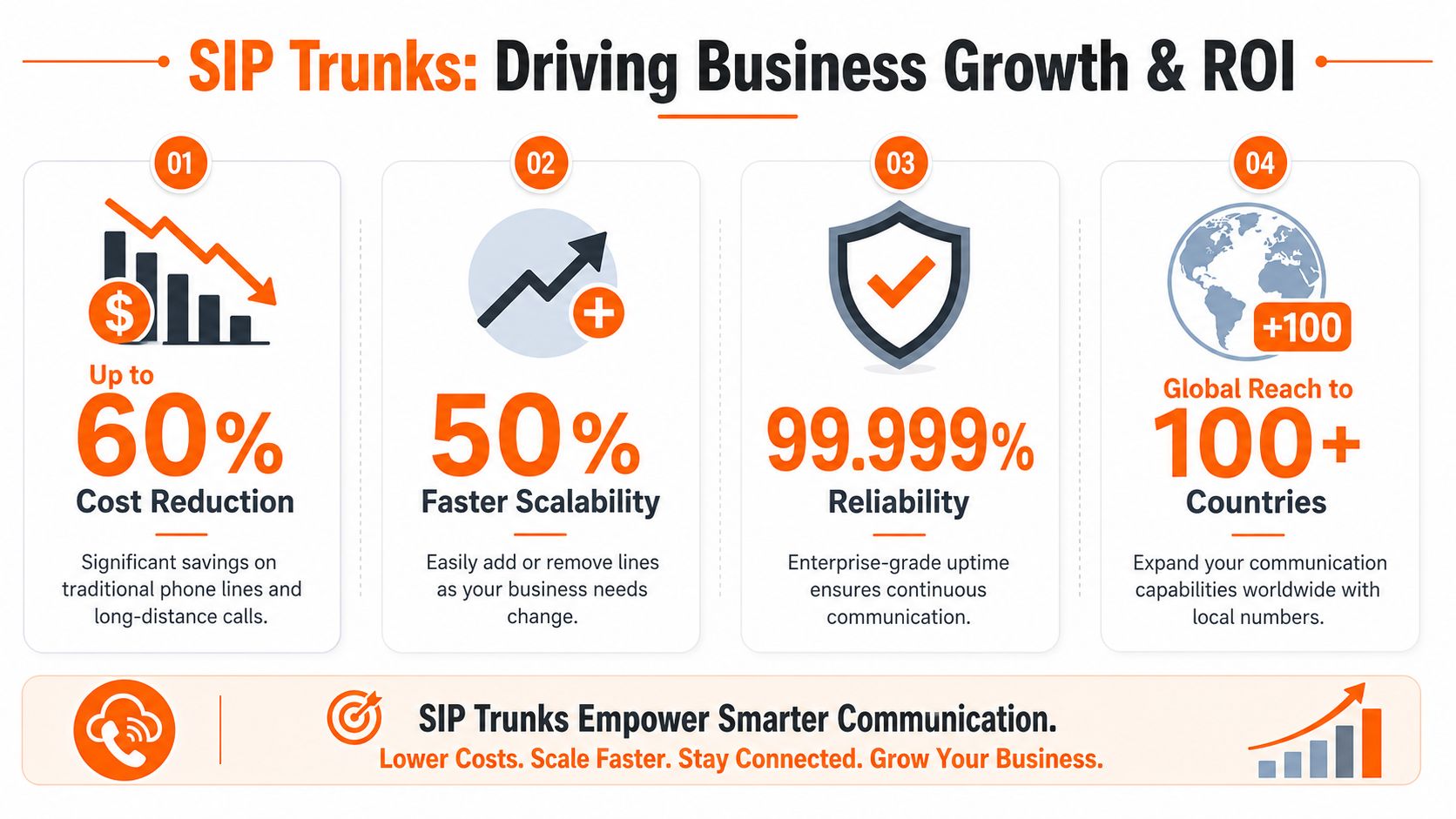
A typical migration from a 30-channel ISDN30 circuit with monthly line rental of £1,000 to £1,500 results in a new SIP capacity cost of only £150 to £450 per month, representing a 50 to 70% reduction in line rental alone. A Deloitte Digital Transformation study also confirms that UK companies implementing SIP trunking achieve an average telecom expenditure reduction of 43%.
Why the savings happen
SIP doesn't just make calls cheaper by accident. The commercial model is different.
You're no longer paying for dedicated copper infrastructure in the old sense. Instead, you buy the call capacity you need and pay according to the way the service is consumed. In the UK market, SIP trunks are priced per channel per month with per-minute call charges. Current pricing ranges from £3.99 to over £13 per channel per month, with examples such as Gradwell at £3.99 per channel for 3CX systems and sipgate from £4.95 per month. That market flexibility is part of why SMEs can scale telephony far more cleanly than they could with ISDN-era services.
ROI is not only about line rental
The strongest returns often come from operational changes around the telephony platform.
- Remote and hybrid support means staff can keep the same business identity without being tied to one office line arrangement.
- Faster changes reduce the friction of moves, adds, and departmental changes.
- Regional growth becomes easier when numbering and routing are no longer tied to a physical legacy circuit.
- International trading can become less expensive. The Department for International Trade statistics cited in the verified data note that UK businesses using SIP trunking for international expansion report 43% lower telecommunications expenditures compared to traditional approaches.
Here's a useful explainer before the video below.
The finance question to ask first
Don't ask, "How much is a SIP trunk?" Ask, "What is my total telephony spend today, and which parts disappear or shrink after migration?"
That shifts the discussion from product pricing to business outcome. It also stops you comparing a modern service against a legacy estate in the wrong way.
Securing Your Calls Quality of Service and Cybersecurity
A lot of UK businesses hear that SIP is resilient and stop thinking there. That's where avoidable problems begin.
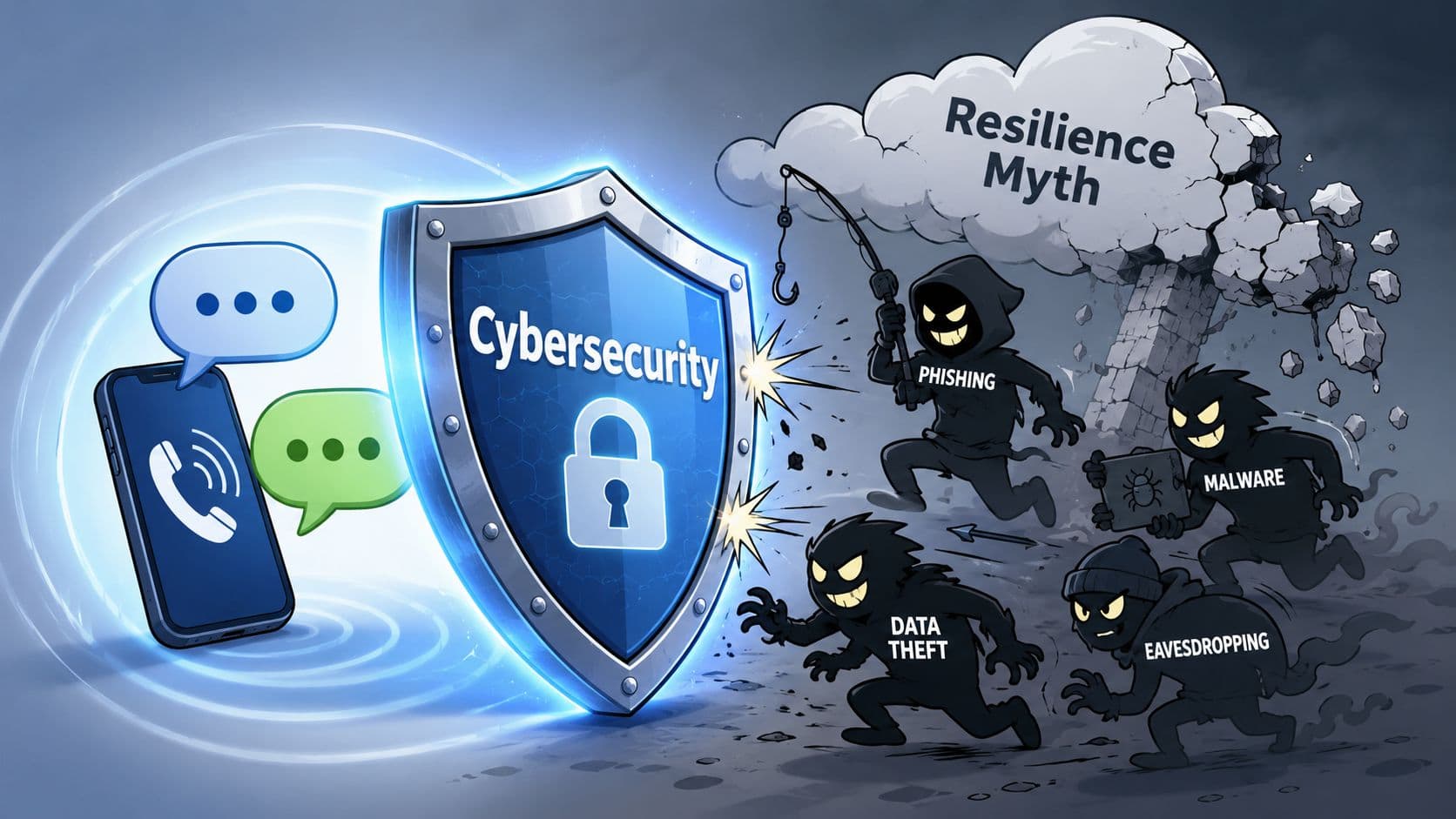
The protocol itself isn't the same thing as resilience. 41% of UK business VoIP failures stem from single-path internet connectivity. In other words, many outages happen because the business has only one route to the internet, not because SIP trunking failed. The same verified data also notes that compliance frameworks such as Cyber Essentials require resilient, secure VoIP infrastructure, including robust fraud mitigation and firewall compatibility.
The resilience myth
Businesses often replace ISDN with SIP and assume they've upgraded reliability by default. They haven't, at least not automatically.
If your entire voice service sits on one broadband circuit, one ISP path, and one poorly configured edge device, you've created a single point of failure. The call technology may be modern, but the service design is still brittle.
SIP can be highly resilient. A single internet connection cannot.
What actually protects call quality
Quality of Service, usually shortened to QoS, is the practice of prioritising voice traffic so calls don't get mangled when the network is busy. Without it, large file transfers, cloud backups, or heavy Microsoft 365 activity can interfere with voice packets.
For a non-technical buyer, the practical checks are simple:
- Business-grade connectivity matters more than headline download speed.
- Firewall compatibility needs to be confirmed before go-live.
- Voice prioritisation should be built into the network design, not added as an afterthought.
- Failover options should be discussed early, especially for legal, financial, and engineering firms that can't tolerate lost inbound calls.
Security controls that should be standard
Telephony fraud is real, and badly managed SIP estates can be abused quickly. A proper design should include layered protection.
- SBC management helps control and secure the PBX-to-provider edge.
- Fraud mitigation should cover abnormal call behaviour and risky routing patterns.
- Firewall alignment needs to be tested, not assumed.
- Emergency calling support must be clear and documented.
The compliance angle for regulated firms
For businesses working toward Cyber Essentials, voice isn't separate from security. If your phones rely on data connectivity, firewall policy, endpoint behaviour, and access controls, then your telephony design becomes part of the wider assurance picture.
That's particularly important in regulated sectors. A legal practice, accountancy firm, or financial services business doesn't just need dial tone. It needs a voice platform that can withstand outages, limit exposure, and fit documented security controls.
Your SIP Trunk Migration Plan and Provider Checklist
Most SIP migrations go wrong long before numbers are ported. The failure usually starts at the quote stage, when nobody checks what the business requires.
One of the biggest mistakes is the Channel Efficiency Gap. A 30-person UK office typically needs only 8 to 10 concurrent channels, not 30, and a 2025 UK telecom audit found 62% of SMEs retain legacy ISDN-era line counts post-migration, inflating costs by 20 to 35% without improving resilience, according to this UK SIP trunking guide discussing channel sizing.
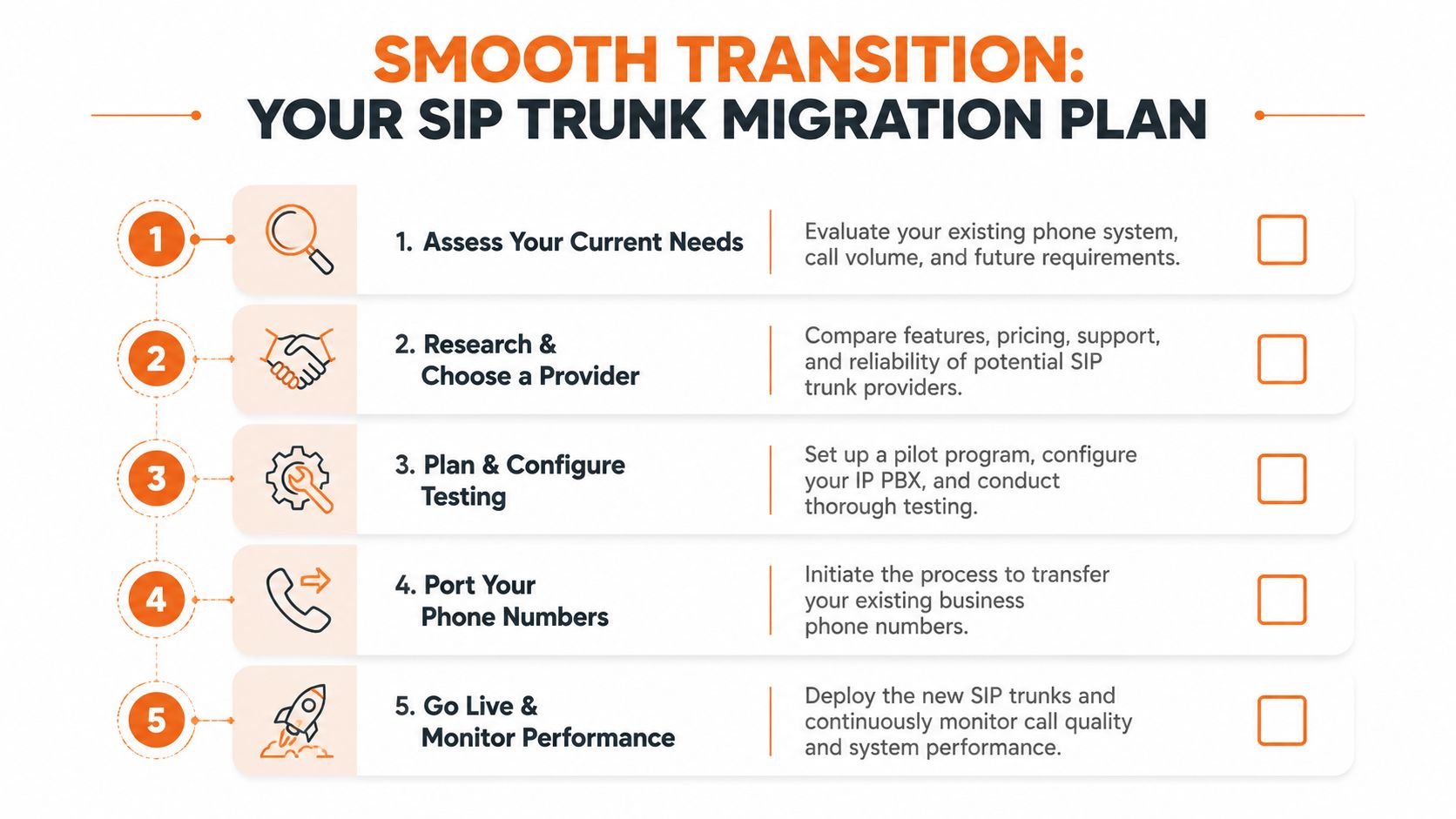
Step one and two Audit first then size properly
Start with evidence, not assumptions.
Review current bills, line counts, call patterns, hunt groups, DDI ranges, and any special routing. Then work out how many calls happen at the same time during genuine busy periods. That number matters more than how many people sit in the office.
A provider that mirrors your old ISDN count into a SIP proposal is giving you the fastest quote, not the best one.
Step three Choose a provider with the right questions
Don't buy voice on monthly price alone. Interview the provider like you're handing them a business-critical service, because you are.
Ask questions such as:
- How do you handle fraud protection
- What failover options are available if the primary connection fails
- How is 999 calling supported
- What firewall compatibility checks are included
- Who manages the SBC or edge security layer
- How do you test call quality before live cutover
The best SIP provider isn't the one with the shortest price list. It's the one that can explain failure scenarios clearly and show how your calls keep flowing.
Step four Plan number porting and cutover carefully
Porting isn't difficult when it's prepared properly. It becomes painful when account names, service addresses, and number ownership records don't match.
Build a cutover plan that includes:
- Porting validation with current supplier records checked early
- Pilot testing on a subset of users or numbers
- Fallback arrangements if something doesn't behave as expected
- User communication so staff know what changes on the day
Step five Test the operational details
Once the trunk is live, test more than dial tone.
Check inbound routing, outbound presentation, voicemail paths, call transfers, mobiles, auto attendants, emergency calling behaviour, and failover scenarios. A good implementation also documents the final design so the business isn't dependent on tribal knowledge.
If you're preparing the wider environment around telephony, this guide on setting up hosted telephony properly is a helpful companion read because it covers the practical groundwork businesses often miss.
Modernise Your Communications with Confidence
SIP trunks aren't a niche telecom product anymore. They are the practical replacement for legacy business phone lines in the UK. Done well, they reduce unnecessary costs, give you cleaner scalability, and support a stronger continuity plan than old fixed-line thinking ever could.
The important part is getting the design right. Right-size the channels. Treat resilience as a network question, not a marketing promise. Check security, call quality, and failover before you sign anything. If you want expert help planning a migration, validating a provider quote, or modernising your telephony estate, speak to Blowfish Technology for a no-obligation conversation.

The Blowfish Technology team. Managed IT, cloud services, software development and connectivity for North West businesses since 1999.