
You've probably seen an 0191 number pop up on a business card, a website footer, or your phone screen and wondered whether it signals a local office, a call centre, or something less trustworthy. For a North East business, it can be a smart way to look local without being tied to one postcode. For anyone receiving the call, it can also raise a simple question, is this a genuine regional number or just a number being used to look local?
Table of Contents
- What Are 0191 Telephone Numbers?
- Where Does the 0191 Area Code Cover?
- Call Costs and Security Risks with 0191 Numbers
- Getting an 0191 Number for Your Business with VoIP
- Setup and Security for Your 0191 Business Line
- Partner with Blowfish for Your 0191 Number
What Are 0191 Telephone Numbers?
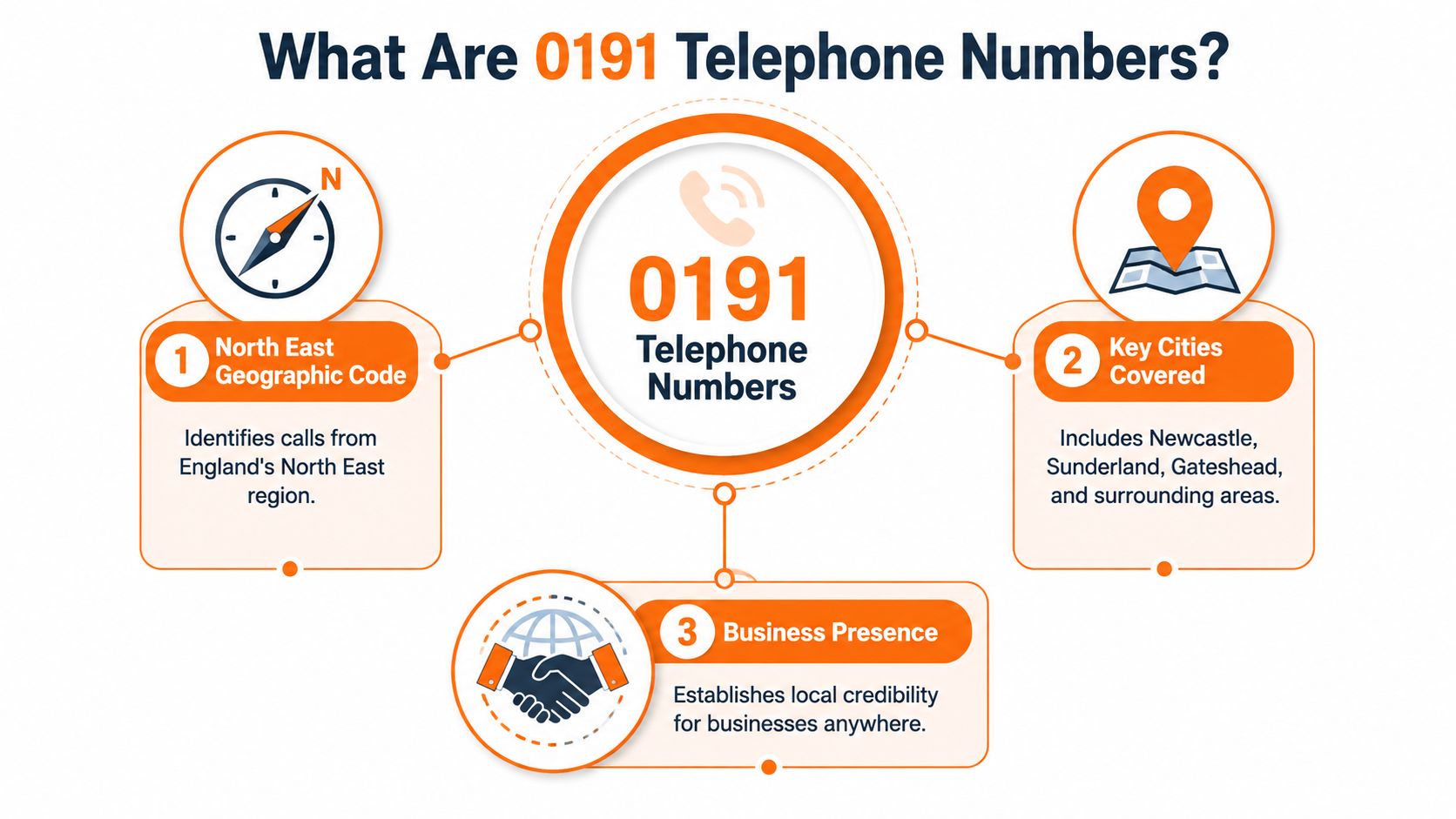
0191 telephone numbers are the geographic dialling code for the North East of England, including areas such as Newcastle, Sunderland, Durham, Gateshead, and nearby places. If you see an 0191 prefix, you are looking at a UK landline-style number, not a premium-rate service, and not some special short code. That distinction matters because many business owners still judge a number too quickly, either assuming it proves a physical office or assuming it must be expensive to call.
Why business owners care
A local-looking number can help with customer confidence, especially if you sell into the North East and want callers to feel they're dealing with a nearby business. The flip side is just as important, because an 0191 prefix does not prove where the business is physically based. Modern number routing means the number can present as local while the underlying phones ring in a different office, at home, or across several sites.
Practical rule: treat the prefix as a presentation choice, not proof of location.
That's why 0191 gets searched for by two very different groups. One group wants a local presence for sales and support, while the other wants to check whether a call from the number is legitimate before they ring back. Both uses are sensible, and both depend on understanding that a number can say something about routing without telling the whole story about the organisation behind it.
Where Does the 0191 Area Code Cover?
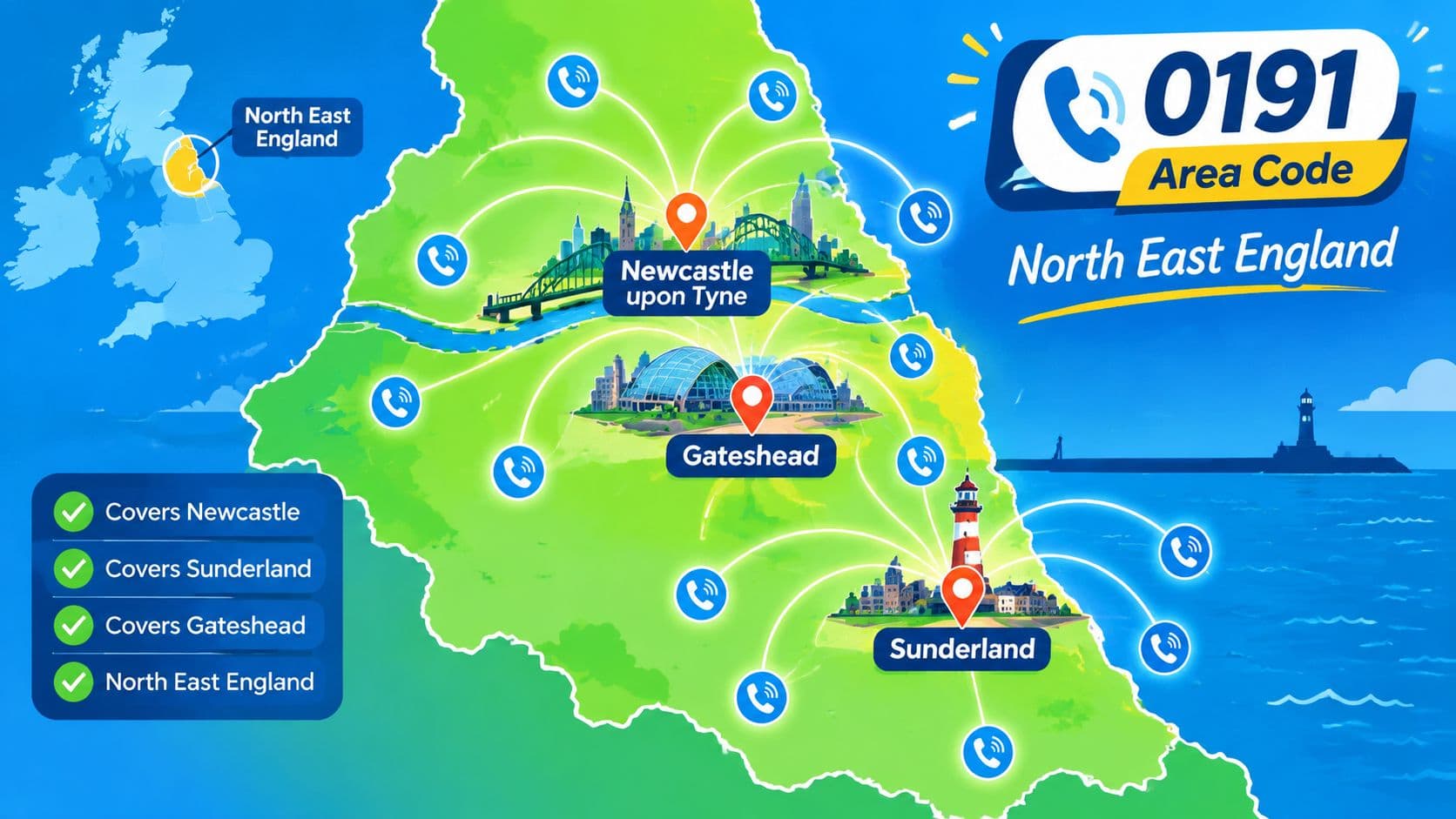
The 0191 code sits over a defined North East footprint, and in practice it is associated with Tyneside, Sunderland, Durham, eastern County Durham, and south-eastern Northumberland. For business owners, that matters because the code still signals regional relevance, even when the number is being used through hosted telephony rather than a traditional office switchboard. The Ofcom area-code tool identifies 0191 as a UK geographic code, which is the key reason it still feels familiar and trustworthy to callers across the region. Ofcom's telephone area codes tool is the clearest place to verify that basic geographic status.
How the code took shape
The modern code is the result of a long cleanup of older numbering. The 0191 area code is the post-PhONEday form of the former 091 code, and PhONEday took place on 16 April 1995 across the UK, when a “1” was inserted into all geographic area codes to expand numbering capacity. Before that, the region had already been consolidated from several older codes, including 0632 for Newcastle and North Tyneside, 0783 for Sunderland, 0385 for Durham, and 0894 for South Tyneside, which were merged into 091 in the early 1980s before becoming 0191 in 1995. The UK numbering history page captures that sequence clearly in its account of the national rewrite of geographic codes. UK telephone numbering history
That history is useful because it explains why 0191 is more than a label. It's part of a wider move from fragmented local codes to a more scalable regional system, which is exactly what businesses need when they want one recognisable number that can handle growth. The same structure also helps explain why different blocks within 0191 can be assigned to different local areas or services over time, rather than being frozen in one old-fashioned exchange model.
What that means in practice
If you're buying a number for a local office, you want a prefix that customers recognise immediately. If you're receiving calls from an unknown 0191 number, you should remember that the code says something about the numbering plan, not necessarily the caller's current location. That's the practical difference between a geographic code and a physical address.
Call Costs and Security Risks with 0191 Numbers
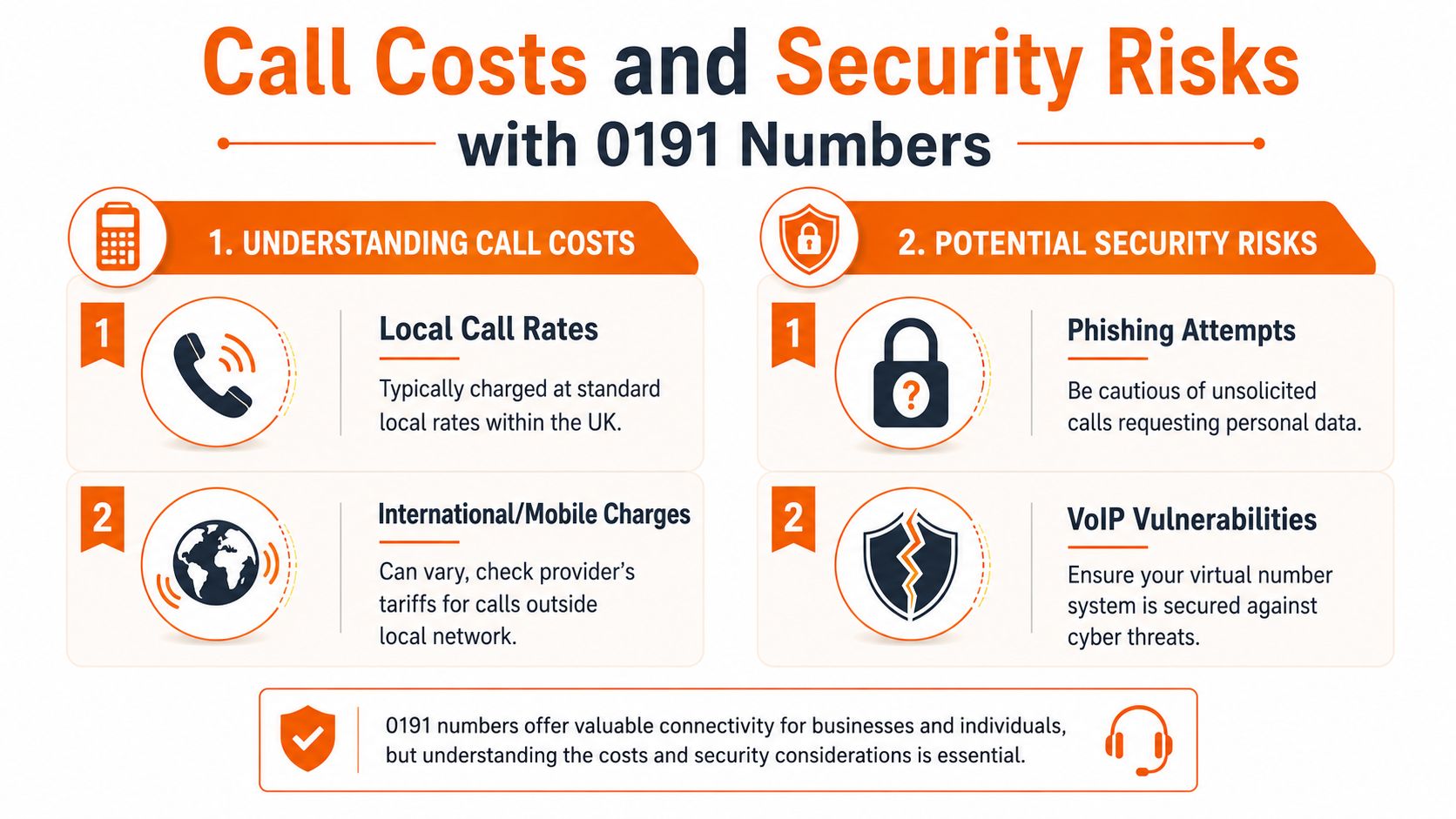
The straightforward part is call cost. 0191 is a standard UK geographic code, so calls are usually billed at the same rate as other 01/02 landline numbers and are commonly included in bundled minutes. That's why it works well for customer-facing use, because callers don't face the barrier that often comes with premium-rate or non-geographic services. OnSim's 0191 area code guide makes that practical billing point clearly.
What callers should expect
For most UK customers, an 0191 call behaves like a normal landline call. That makes it suitable for local-presence routing, support lines, and reception numbers where you want people to ring without hesitation. It also means there's no good reason to hide the number type from customers, because the familiar geographic format can support trust when used properly.
If you're trying to understand the broader numbering environment that sits behind modern UK telephony, the PSTN migration is relevant too. The move away from old-style fixed-line assumptions changes how numbers are presented and routed, which is why a business should check both the number type and the platform behind it. This overview of the PSTN switch-off is useful background if you're reviewing a legacy telephone setup.
The real security issue
The risk isn't the code itself, it's spoofing. A scammer can fake a local-looking caller ID to seem trustworthy, and a genuine-looking 0191 prefix won't protect you from that. If a caller asks for personal details, payment data, or login information without warning, treat the number as unverified until you've checked the request through a separate channel.
For practical privacy guidance, Ciphar on securing your number is a useful read because it focuses attention on how number exposure and misuse happen in the world. The main takeaway is simple, use the prefix as one clue, not as proof. If a call feels wrong, stop, verify, and call back through a known business route rather than trusting the displayed number alone.
Getting an 0191 Number for Your Business with VoIP
A business doesn't need a physical office in Newcastle or Sunderland to use an 0191 number. That's the shift, VoIP and virtual numbering let you present a North East local presence while routing calls wherever your team works. The Ofcom tool notes that a number's prefix doesn't reliably prove where a business is physically based, which is exactly why hosted telephony has become the practical choice for SMEs that want local credibility without a fixed-line dependency. Ofcom's area-code tool
Why hosted telephony fits this use case
A hosted system gives you a single business number that can ring desk phones, softphones, and mobiles in the right order. That makes it much easier to centralise incoming calls, keep the customer experience consistent, and avoid missing opportunities when staff are away from the office. A setup like the one described in hosted phone systems is well suited to that model because it separates the number from a fixed copper line.
Local presence works best when the call path is designed properly, not when a business simply buys a number and hopes for the best.
A lot of generic area-code advice falls short. It treats the prefix as the product, when the product is the routing, recording, call handling, and resilience behind it. If you want a number that feels local but still supports remote staff, shared reception, or overflow handling, the underlying VoIP platform matters more than the digits on the screen.
What good setup looks like
Good use of an 0191 number usually means clear routing rules, sensible voicemail, and a professional on-hold experience. It can also help separate sales, service, and admin calls without forcing customers to deal with a messy internal switchboard. For a small team, that flexibility is often the difference between a number that looks local and a number that performs like a proper business line.
For businesses evaluating how SIP-based services fit into that model, what SIP trunks are is the right next technical step. The useful point here is not the jargon, it's the outcome. You can run a regional number without being locked to one building, and you can still present a polished, consistent point of contact.
Setup and Security for Your 0191 Business Line
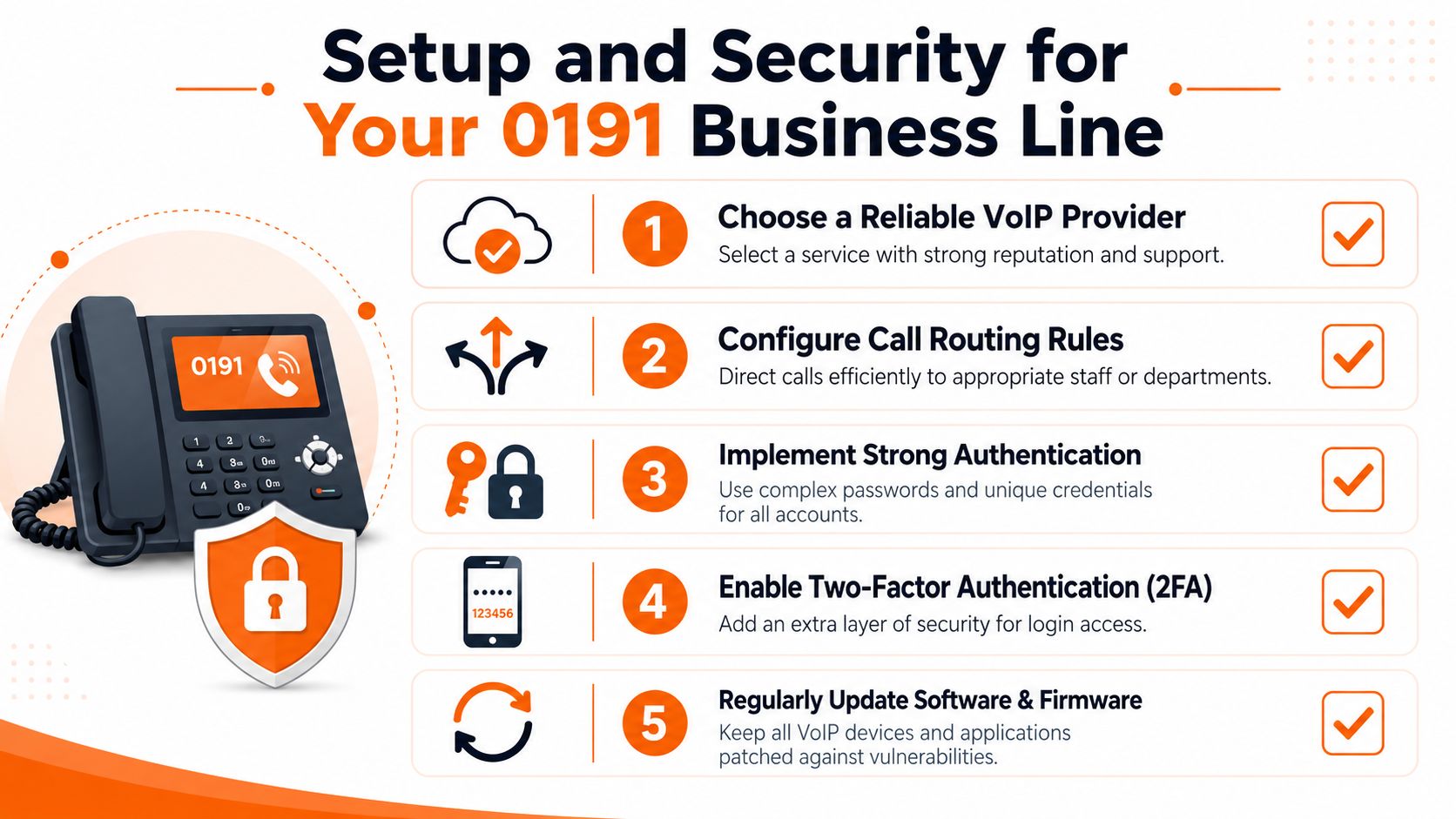
A virtual 0191 line works best when it's treated as part of your operations, not as a decorative extra. The number should connect cleanly to the right people, sound professional when unanswered, and be locked down well enough that nobody can misuse it. That's especially important because spoofing and phishing threats don't disappear just because the business bought a local number.
Operational basics that matter
Start with routing. If your main line goes unanswered, it should move to a mobile, a colleague, or a voicemail that explains when the caller will get a response. Hunt groups are useful when multiple staff members can take calls, because they reduce the chance of a caller being bounced around or left waiting too long.
Voicemail needs the same care. Use a calm greeting, name the business clearly, and say what happens next. A rushed or generic message makes a local number look improvised, while a clear message tells callers the line is monitored and managed.
Security hygiene for your own number
Your 0191 number should be protected like any other business system. Use strong passwords, keep credentials unique, and enable two-factor authentication wherever the platform supports it. Staff also need a simple rule for suspicious calls, if someone asks for credentials, payment details, or urgent changes to routing, they verify through a separate known contact before acting.
A small but important point is software maintenance. VoIP apps, phones, and handsets need updates, because old firmware is one of the easiest ways for avoidable problems to linger. If you're comparing providers, ask how they handle account security, authentication, and caller-ID abuse before you sign anything.
A practical checklist
- Set clear call flows: decide where the call goes first, second, and after hours.
- Write a proper voicemail: include the company name and response expectation.
- Separate user access: don't let every employee share the same login.
- Train front-line staff: they should know how spoofed calls and urgent payment requests look.
- Review the platform regularly: check whether the line still fits the business as teams and hours change.
A managed telecoms provider can help implement that structure, and businesses often combine telephony with wider support such as managed telephone systems. The value is in making the line usable and defensible at the same time, not just in getting the number live.
Partner with Blowfish for Your 0191 Number
An 0191 number can do two jobs at once, it can make your business look local in the North East, and it can give customers an easy, familiar way to call. Its value depends on the platform behind it, though, because a number without proper routing, authentication, and support is just a label. When the telephony is managed well, the prefix becomes part of a wider trust signal rather than a standalone marketing trick.
If you're choosing a provider, look for one that can handle the number, the call flow, and the security controls together. That's the difference between a basic line and a business-ready communications setup. For SMEs that want the benefits of local presence without inheriting avoidable risk, a managed approach is the sensible one.
Blowfish Technology provides managed telephone systems alongside the wider support needed to keep them usable and secure. If you're planning an 0191 number for your business, speak to Blowfish Technology and get a setup that works for callers, staff, and security from day one.
If you want help choosing and securing an 0191 business number, Blowfish Technology can help you plan the VoIP setup, call routing, and account protection around it. Visit the site to discuss a managed telephony solution that fits your team and supports a credible North East presence.

The Blowfish Technology team. Managed IT, cloud services, software development and connectivity for North West businesses since 1999.