
When you search for “it support near me”, the results can feel eerily similar. Every provider promises fast response, local coverage, and managed services, yet the pages behind those promises are often polished templates designed to rank in every town. For a business buyer, the challenge is separating a North West IT provider with engineers actually on the ground from a national brand’s local landing page. This tutorial gives you five practical checks that a distant reseller cannot fake. You will learn how to judge where engineers and spare parts sit, how to verify named local references you can call, and why on-site response inside your own business hours matters. You will also see how to find out who answers the phone at 8am on a Monday, and how to ask whether a provider runs and verifies security controls or simply sells them. See the UK Government’s Cyber Security Breaches Survey 2025/2026, published by DSIT and DCMS, for official context. Along the way, we will cover how to read a “managed IT services near me” results page in five minutes, the checklist to take to every call, common questions, and next steps to turn the five checks into your shortlist.
Why Every “IT Support Near Me” Search Looks the Same
A search for “it support near me” returns a wall of similar promises. Many national brands run templated location pages, so swap the town name and compare the wording yourself, from response times and accreditations to 24/7 support. Proximity in a result carries no operational meaning. A page written for your town can be run from a head office hundreds of miles away, staffed by a service desk you will never visit.
That matters because your shortlist is what the business lives with for the whole contract term. A national reseller’s page is designed to be indistinguishable from a local provider’s by wording, headline price or star rating alone.
So judge on evidence that is hard to fake. Five checks follow: where engineers and spare parts sit, named local references, on-site response inside business hours, who answers the phone at 8am on a Monday, and security controls that are run rather than resold. They finish with questions to ask before signing.
The checks apply whether you search “it support near me”, “it support companies near me” or “business it support”. The real question is always: who turns up? This IT support checklist for Liverpool businesses shows the criteria in practice.
Check 1: Where Your Engineers and Spare Parts Actually Sit
Engineer location is the first question worth asking. Request the town or postcode where your covering engineers sit, and how many there are. A number and a place is evidence; a shaded coverage map with no names is not.
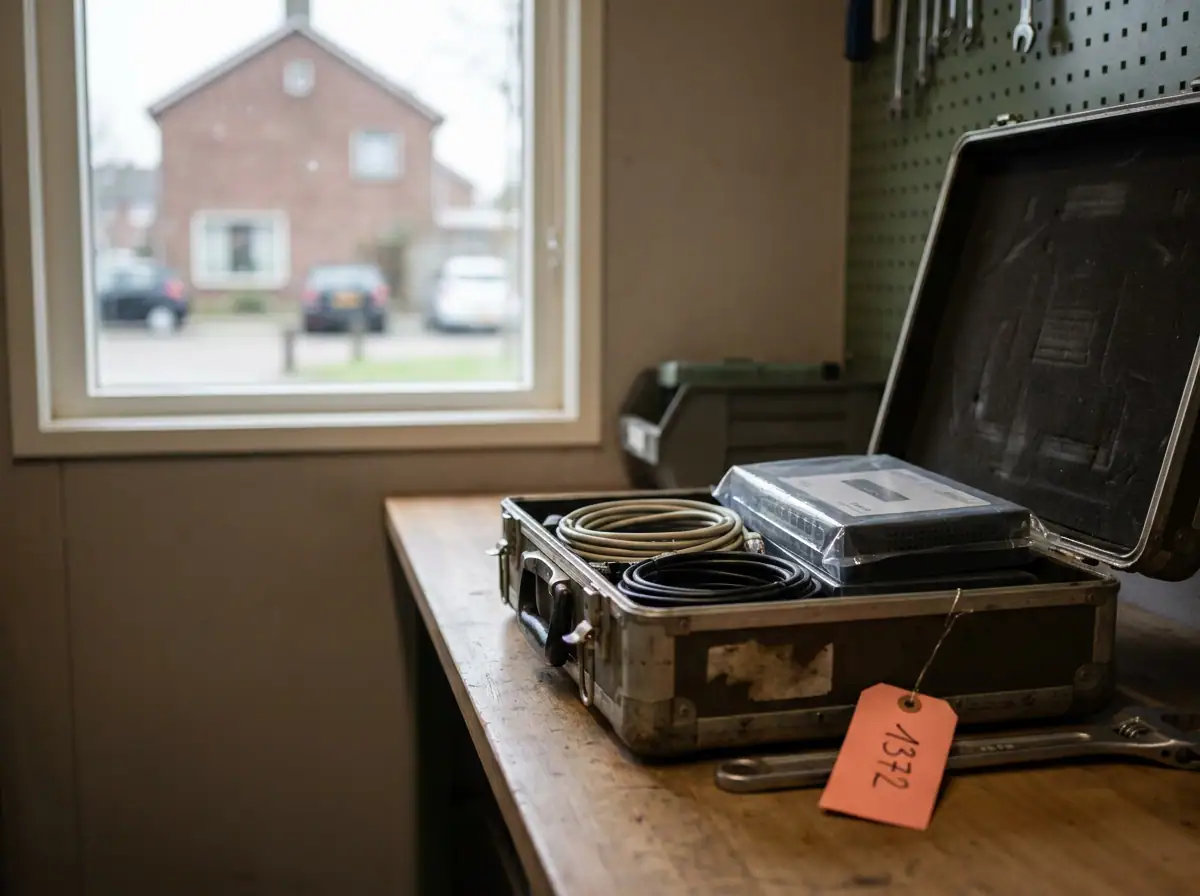
Ask where replacement hardware is held locally: laptops, switches, access points, drives, power supplies. Also ask how long you would wait for a replacement switch if the provider holds parts locally versus couriering them in.
Then apply the failure test: “If my main switch fails at 3pm on a Tuesday, what happens before 5pm?” A provider holding local parts answers with a list and timings; a reseller offers a ticket reference and a courier window.
Check how travel time is treated in the service level agreement. A two-hour response promise means little if the engineer is 45 miles away when you call. Generic SLA promises are hard to verify, so read how North West businesses translate managed IT support commitments into concrete benchmarks.
Finally, look for operational detail on the provider’s own pages: named engineers, local case work or coverage by town. One template with the city name swapped is marketing, not evidence.
Blowfish Technology’s Managed IT support page is a useful scope-of-service point of comparison.
Check 2: Named Local References You Can Actually Call
Engineers and parts settled, the next test is proof of delivery: ask for three reference customers of similar size and sector in the North West, named, with a person you can ring directly. A summary written by the sales team is not a reference.
Insist on detail: sector, headcount, systems supported and an outcome. A logo wall with no context tells you about marketing spend, not service on a bad Monday.
Then ask whether the team serving your reference would be the team serving you. National brands often win logos through a regional salesperson and deliver through a centralised desk.
Push for a customer who has recently onboarded, moved premises or changed systems. One who went through change without disruption is a stronger signal than a decade-old logo.
Finally, read case studies and reviews for on-site visits in your area, not just quick remote fixes and a polite phone manner. To see whether a provider genuinely covers your patch, check the areas we cover before you shortlist.
Check 3: On-Site Response Inside Your Own Business Hours
Named references prove a provider performs; the on-site commitment proves when. Separate remote response from physical attendance. Many contracts promise a fast remote reply and little else, leaving you waiting when a switch dies, an access point fails or cabling needs pulling.
Ask for the on-site attendance target in writing and test it against your trading pattern. A 9 to 5 promise does not help a manufacturer starting at 6am, a logistics team on early shifts or a retailer open on Saturday.
Then check cost: are visits included in the monthly fee or billed as extra? Request callout and hourly rates so you can compare total cost of ownership rather than headline price.
Ask how cover holds through holidays, sickness and peak weeks. Is there a local bench of engineers, or does every call join one national queue at the busiest hour?
Finally, request evidence: the last twelve months of response performance, or two or three recent examples. Any target with no records behind it is marketing copy. For the detail to demand, see our guide to what a strong IT support SLA should contain.
Check 4: Who Answers the Phone at 8am on a Monday
Response targets only matter if someone answers, so test the phone line itself.
Call at 8am on a Monday, as good a moment as any to catch a desk under pressure, and note the ring time, the name of the person who answered, and whether you were given a ticket reference.
Then ask whether first-line support sits with directly employed staff or is passed to a third-party or offshore service desk. That answer decides whether anyone knows your name, your systems and your history by day 90.
Ask where the number on the local page actually routes: a local desk, a regional office or a national switchboard. Confirm how out-of-hours calls are handled once business hours end.
Repeat the test on a Friday afternoon and compare. Keep both sets of notes as part of your shortlisting evidence, alongside the written contract terms.
Marketing cannot prove answering times, so treat unmeasurable claims with caution. Service terms are contractual and can vary between customers, as one published service level agreement illustrates. If a provider promises a fast pick-up, ask for it as a service level in the contract.
Next, check whether they run the security controls they sell.
Check 5: Do They Run and Verify Security Controls, or Just Sell Them?
Strong phone answering only gets you so far. The Cyber Security Breaches Survey 2025/2026, published 30 April 2026 by DSIT and DCMS, sets the frame: basic controls such as malware protection, cloud backups and firewalls are widely deployed, while advanced controls including multi-factor authentication and VPNs lag well behind. Ask which controls your provider configures, monitors, patches and tests, and which it merely resells. The gap between buying a tool and running it is where most small and mid-sized businesses come unstuck.
Request a sample monthly report covering patching status, backup success and, critically, proof that restore tests were performed. Backups are easy to promise; tested restores are where the real gaps appear.
Phishing ranks among the most common and most disruptive incidents reported, so ask what email filtering, endpoint detection and awareness training are genuinely run on your behalf, month by month.
Ask how your provider governs newer tools, AI assistants and cloud apps among them, since adoption is running ahead of controls. Security Breaches Are Rising: What North West Businesses Need to Know in 2026 covers what that means locally, and Blowfish Technology’s Cyber Security and Cloud services show the managed, verified work to look for.
How to Read a “Managed IT Services Near Me” Results Page in Five Minutes
With security settled, you can read a “managed IT services near me” results page in five minutes.
Step 1: Evidence density. Look for named engineers, towns covered, response times and local client stories. If ten city pages share identical wording with only the place name changed, it is a template. For a wider view, see what to look for in a managed IT support company.
Step 2: Contact reality check. Open contact and team pages. You want a physical address, named people and operational detail, not just a form, one national headquarters address and a chat widget.
Step 3: After-sales story. Search the brand with complaints, leaving or contract. Read feedback about the months after signing, not the sales process.
Step 4: Scope like for like. Managed IT services usually mean proactive monitoring, patching and reporting; business IT support can be break-fix. Check that the “managed IT support near me” result describes the same service as your quote.
Step 5: Consistent shortlist. Pick two or three local results from your IT support companies near me search, plus one national name. Run these same checks on all of them. Identical questions produce a fair comparison.
The Business IT Support Checklist to Take to Every Call
Keep this to one page; use it live on every call with every provider.
- Where are engineers covering us based, and how many?
- Which spare parts are held locally?
- What is your written on-site attendance target?
- Do coverage hours match our trading pattern?
- Who answers the phone at 8am Monday?
- Name three North West references we may contact?
- Is first line in-house or outsourced?
- What does the monthly report contain?
- Which security controls do you run and verify?
- What are your exit terms and data handover process?
Score each answer red, amber or green. Treat “we would have to check” as amber at best; a provider who cannot answer an operational question on the first call will rarely answer it at 4pm Tuesday.
Ask for response targets, coverage windows, inclusions, escalation routes and exit terms to be written into the contract, and check processing terms against UK GDPR. See the UK Cyber Security and Resilience Bill for the regulatory direction MSPs now face.
Run the list again with a different person; if answers shift, knowledge sits with one salesperson, not the team.

Common Questions About Choosing a Local IT Support Company
Does “near me” mean the provider is local? No. It means a page was written to appear for your location. The operational question is where the engineers and the spare parts physically are.
How local is local enough? Close enough that an engineer reaches you well inside your response target, with common spares held nearby. For most North West businesses, that points to a provider genuinely based in the region. If you are also weighing outsourced IT support against an in-house hire, that regional proximity is part of what you are paying for.
Is national support always worse? Not automatically. A national provider with a real regional engineering team can perform well. Apply the five checks and let the answers, not the branding, decide.
What should a business IT support contract include? Response and on-site targets, coverage hours that match your operation, escalation routes with named contacts, monthly reporting, a defined security scope, and clear exit and data handover terms.
How many providers should I shortlist? Two or three at a comparable scope and price band, with one national name alongside them if you want a benchmark to measure against.
Next Steps: Turn the Five Checks Into Your Shortlist
You now have five checks, so use them as a shortlist filter:
- Engineers and parts: where the people and spares physically sit.
- References: three named North West customers you can call directly.
- On-site cover: attendance targets inside your own trading hours.
- The 8am test: who answers the phone on a Monday morning.
- Security: controls that are run and verified, not merely resold.
Act this week. Make the 8am call, request engineer locations and local parts confirmation in writing, and ask for three named North West references you are allowed to contact.
Score every candidate on the same ten-question checklist and compare answers side by side. Anything that matters, from response targets to exit terms, should be written into the contract before you sign.
Blowfish Technology should be measured against exactly the same checklist as anyone else.
Conclusion
The right North West IT provider is not the one that looks closest in a search list. It is the one whose engineers, parts and phone line are genuinely near you. Put every candidate, Blowfish Technology included, through the five checks and the ten-question checklist, and turn your “Managed IT Services Near Me” search into a confident, local shortlist today.
Frequently Asked Questions
Does "near me" in a search result mean the IT provider is actually local?
No. A "near me" result only means a page was written to appear for your location. Many national brands run templated location pages, so the operational question is where the engineers and spare parts physically are.
How can I check whether a provider's engineers and spare parts are really near my business?
Request the town or postcode where your covering engineers sit and how many there are, and ask where replacement hardware such as laptops, switches, access points, drives and power supplies is held locally. Then apply the failure test: "If my main switch fails at 3pm on a Tuesday, what happens before 5pm?"
What should I ask for to verify a provider's references?
Ask for three reference customers of similar size and sector in the North West, named, with a person you can ring directly. Insist on details such as sector, headcount, systems supported and an outcome, and ask whether the team serving the reference is the team that would serve you.
Why does on-site response inside my business hours matter?
Remote response does not mean someone attends in person. Ask for the on-site attendance target in writing and test it against your trading pattern, such as early shifts, Saturday opening or peak weeks. Also check whether visits are included in the monthly fee or billed extra.
How do I test who answers the phone at a provider?
Call at 8am on a Monday and note the ring time, the name of the person who answered, and whether you were given a ticket reference. Repeat the test on a Friday afternoon, and ask whether first-line support is directly employed or passed to a third-party or offshore service desk.
