
Protecting sensitive business information has become the cornerstone of operational resilience in 2026. As cyber threats evolve with increasing sophistication, organisations across the North West and throughout the UK must implement robust data security solutions that address vulnerabilities across every layer of their IT infrastructure. From ransomware attacks to insider threats, the landscape demands a proactive approach to safeguarding customer data, intellectual property, and business-critical systems.
Understanding Modern Data Security Challenges
The threat landscape has transformed dramatically over recent years, with cybercriminals exploiting increasingly complex attack vectors. Businesses face challenges ranging from cloud-based vulnerabilities to DNS-based attacks that compromise network integrity. Traditional perimeter defences no longer suffice when employees work remotely, third-party vendors access systems, and data flows across multiple platforms.
Key threats facing UK businesses include:
- Ransomware attacks targeting backup systems and recovery capabilities
- Phishing campaigns designed to harvest credentials and deploy malware
- Insider threats from negligent or malicious employees
- Supply chain vulnerabilities through compromised software or services
- Cloud misconfigurations exposing sensitive data to public access
Organisations must recognise that data security solutions extend far beyond antivirus software and firewalls. A comprehensive approach integrates technical controls, employee awareness, and strategic planning to create resilient defences.
The Cost of Data Breaches
Financial impacts extend well beyond immediate remediation costs. According to recent industry analyses, the average data breach costs UK businesses hundreds of thousands of pounds when accounting for downtime, regulatory fines, legal fees, and reputational damage. For small and medium-sized enterprises, a single significant breach can prove catastrophic, making investment in data security solutions not merely prudent but essential for survival.
Understanding how to reduce IT downtime becomes crucial when incidents occur, as rapid response determines the extent of damage. Businesses that deploy comprehensive data security solutions typically recover faster and experience fewer cascading failures across their operations.
Essential Components of Data Security Solutions
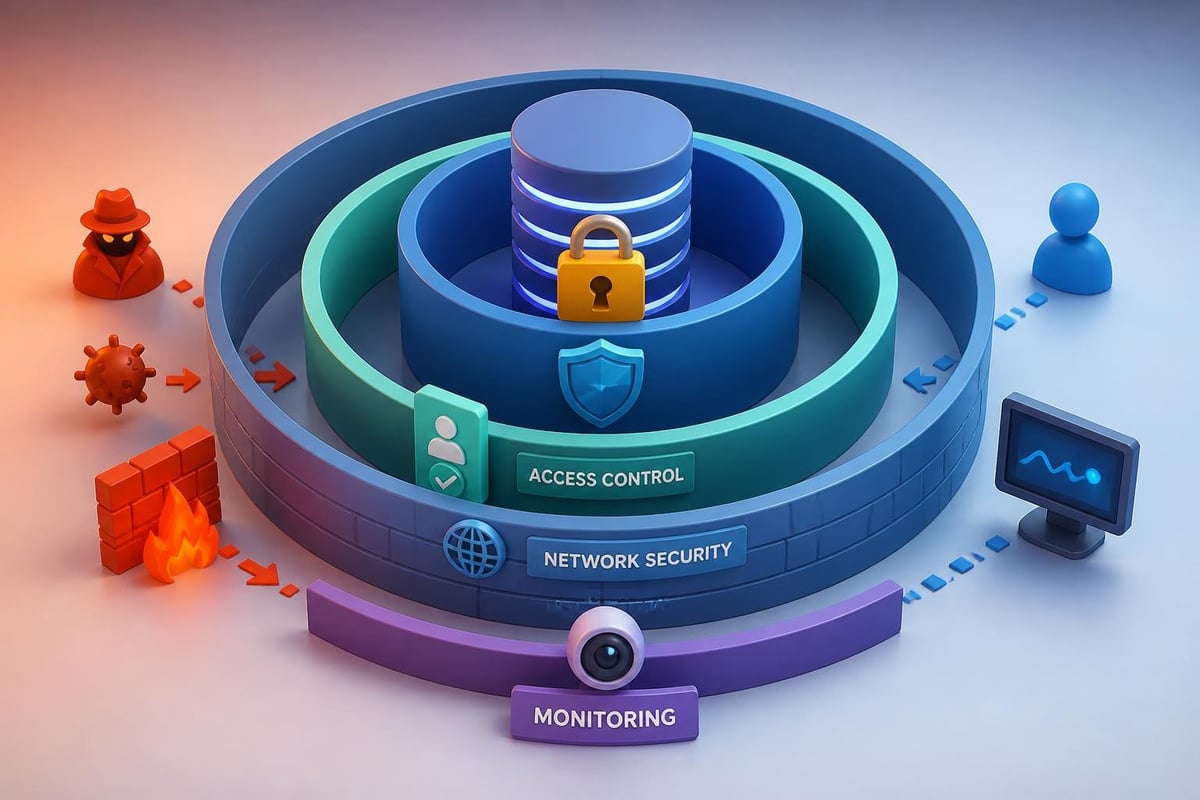
Building effective protection requires multiple layers working in concert. No single technology provides complete security, which is why modern data security solutions adopt a defence-in-depth strategy that assumes breaches will occur and plans accordingly.
Encryption and Data Protection
Encryption serves as the foundation for protecting data both at rest and in transit. Modern data security solutions employ industry-standard encryption algorithms to ensure that even if unauthorised parties access files, the information remains unintelligible without proper decryption keys.
| Encryption Type | Use Case | Key Strength |
|---|---|---|
| AES-256 | File and disk encryption | Military-grade protection |
| TLS 1.3 | Network communications | Forward secrecy and performance |
| End-to-end | Email and messaging | Zero-knowledge architecture |
Implementing encryption across email systems, databases, and file storage creates multiple barriers against data exposure. For organisations handling sensitive customer information, encryption isn't optional but rather a regulatory requirement under GDPR and industry-specific frameworks.
Access Control and Identity Management
Controlling who can access specific data represents another critical pillar. Role-based access control (RBAC) ensures employees only interact with information necessary for their responsibilities. Expert guidance on identity and access management highlights the importance of implementing least-privilege principles across all systems.
Modern data security solutions incorporate:
- Multi-factor authentication (MFA) requiring multiple verification methods
- Single sign-on (SSO) reducing password fatigue whilst maintaining security
- Privileged access management (PAM) for administrative accounts
- Regular access reviews removing stale permissions
For remote workers, secure access becomes particularly complex. Solutions like those provided by U Shield VPN offer pre-configured VPN routers that protect every device on a network, ensuring encrypted connections whether staff work from home offices or client sites. These plug-and-play VPN routers simplify deployment whilst maintaining robust security standards.
Network Security and Threat Detection
Perimeter security remains relevant even as organisations embrace cloud services and remote work. Firewalls, intrusion detection systems, and network segmentation form essential components of comprehensive data security solutions.
Advanced Threat Protection
Modern threats require sophisticated detection capabilities. Next-generation firewalls analyse traffic patterns, whilst endpoint detection and response (EDR) solutions monitor individual devices for suspicious behaviour. Security Information and Event Management (SIEM) platforms aggregate logs across systems, enabling security teams to identify coordinated attacks.
Key threat detection capabilities include:
- Behavioural analysis identifying anomalous user activities
- Machine learning algorithms detecting zero-day exploits
- Automated response systems isolating compromised devices
- Threat intelligence feeds providing real-time attack indicators
Organisations implementing comprehensive cyber security measures benefit from reduced dwell time when incidents occur. The faster threats are identified, the less damage attackers inflict before containment.
DNS Security Considerations
Domain Name System security often receives insufficient attention despite its critical role. DNS hijacking and cache poisoning enable attackers to redirect traffic, intercept communications, or distribute malware. Data security solutions must include DNS filtering and monitoring to prevent these attack vectors from succeeding.
Cloud Security and Data Protection
The shift towards cloud computing introduces both opportunities and challenges for data security. Whilst cloud providers offer robust physical security and infrastructure protection, organisations retain responsibility for securing their data and applications.
Shared Responsibility Model
Understanding where provider responsibility ends and customer responsibility begins proves essential. Cloud platforms typically secure the underlying infrastructure, but organisations must configure access controls, enable encryption, and monitor their cloud environments.
| Responsibility Area | Provider Role | Customer Role |
|---|---|---|
| Physical security | Complete | None |
| Infrastructure | Complete | None |
| Platform configuration | Partial | Primary |
| Application security | None | Complete |
| Data protection | None | Complete |
Research into data security issues in cloud computing reveals common challenges related to data confidentiality, integrity, and availability that organisations must address through appropriate controls and configurations.

Secure Cloud Migration
Transitioning workloads to cloud platforms requires careful planning to maintain security throughout the process. Business cloud migration services should include comprehensive security assessments, data classification, and migration testing to prevent exposure during transitions.
Data security solutions for cloud environments must address:
- Identity federation and single sign-on integration
- Data loss prevention (DLP) policies preventing unauthorised sharing
- Cloud access security brokers (CASB) monitoring cloud service usage
- Container and serverless security for modern application architectures
- Regular compliance audits ensuring ongoing adherence to standards
Backup and Disaster Recovery
The most effective data security solutions incorporate robust backup and recovery capabilities. Ransomware attacks increasingly target backup systems, making it essential to implement immutable backups and offline storage copies that attackers cannot compromise.
The 3-2-1 Backup Rule
This time-tested approach recommends maintaining three copies of data across two different media types with one copy stored offsite. Modern implementations extend this to 3-2-1-1-0, adding an immutable copy and zero errors through verification.
Implementing best business backup solutions ensures organisations can recover from disasters, whether caused by cyberattacks, hardware failures, or natural events. Regular testing proves critical, as untested backups frequently fail when needed most.
Essential backup capabilities:
- Automated scheduling eliminating human error
- Incremental backups reducing storage requirements
- Encryption protecting backup data from unauthorised access
- Rapid recovery options minimising downtime
- Geographic distribution preventing regional disasters from causing data loss
Compliance and Regulatory Requirements
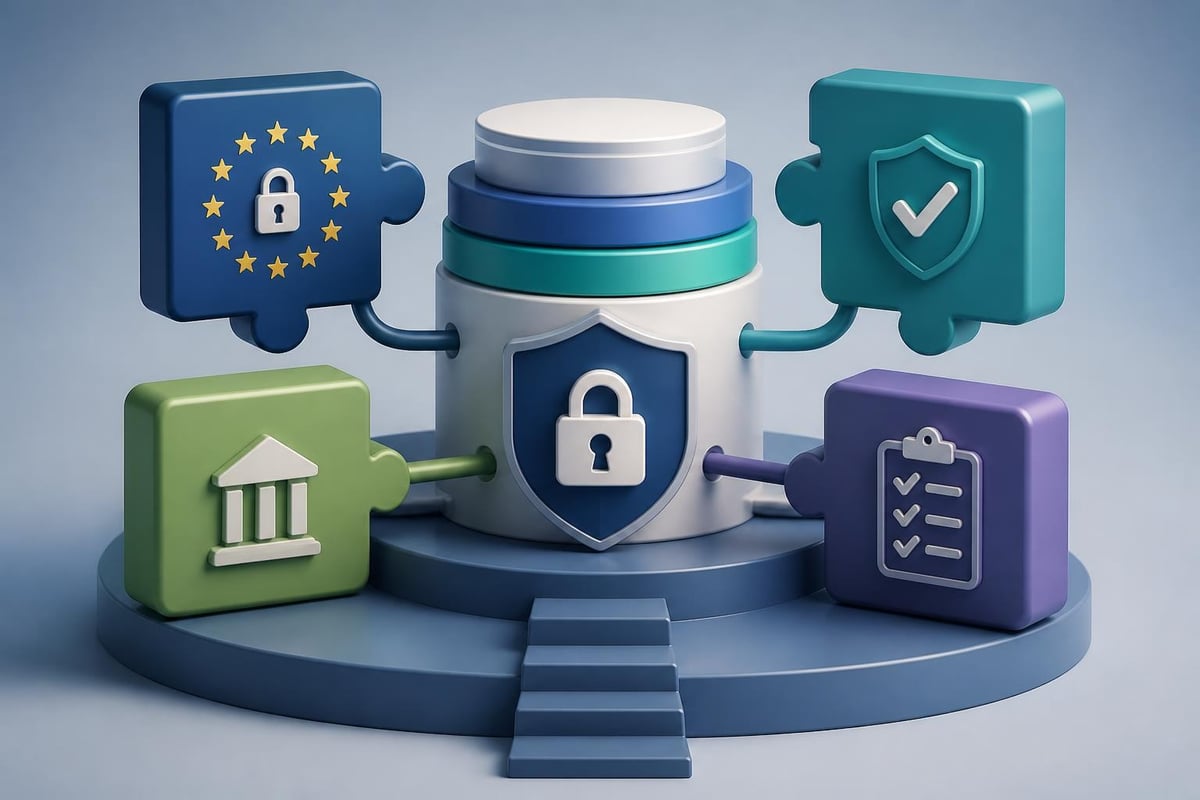
Data security solutions must align with legal and regulatory frameworks governing information protection. UK organisations face requirements from GDPR, sector-specific regulations, and increasingly, contractual obligations mandating specific security standards.
Framework-Based Approaches
The HITRUST Framework maps over 70 regulations and standards, providing organisations with a comprehensive approach to data protection compliance by harmonising authoritative sources into a unified framework. This approach simplifies compliance whilst ensuring robust security controls.
For businesses across the North West, Cyber Essentials certifications have become increasingly important as they become conditions of contract. These certifications demonstrate baseline security competence and often serve as prerequisites for government contracts and insurance coverage.
Industry-Specific Considerations
Different sectors face unique requirements that data security solutions must address:
| Industry | Key Regulations | Specific Concerns |
|---|---|---|
| Healthcare | HIPAA, GDPR | Patient confidentiality |
| Finance | FCA rules, PCI DSS | Transaction security |
| Manufacturing | NIS Directive | Intellectual property |
| Legal | SRA requirements | Client privilege |
Manufacturing organisations face particular challenges protecting intellectual property and operational technology systems. Cyber security for manufacturing companies must address both IT and OT environments, where legacy systems often lack modern security capabilities.
Employee Training and Security Awareness
Technical controls prove insufficient when employees inadvertently undermine security through phishing susceptibility or poor password practices. Effective data security solutions incorporate comprehensive training programmes that transform staff from vulnerabilities into assets.
Building Security Culture
Regular training sessions should cover:
- Recognising phishing attempts and social engineering tactics
- Creating strong, unique passwords and using password managers
- Identifying suspicious behaviour and reporting procedures
- Understanding data classification and handling requirements
- Secure remote working practices and VPN usage
Simulated phishing campaigns help organisations measure awareness levels and identify departments requiring additional training. When combined with positive reinforcement rather than punishment, these exercises significantly reduce successful phishing attacks.
Monitoring and Incident Response
Continuous monitoring enables early threat detection, whilst documented incident response procedures ensure coordinated, effective reactions when breaches occur. Data security solutions must include both preventive and responsive components.
Security Operations Capabilities
Establishing security operations centres (SOCs) or partnering with managed security service providers (MSSPs) provides 24/7 monitoring capabilities. These teams analyse security events, investigate anomalies, and coordinate responses to confirmed incidents.
Research on AI-based cybersecurity solutions and intrusion detection systems demonstrates how machine learning enhances threat detection accuracy whilst reducing false positives that overwhelm security teams.
Effective incident response includes:
- Clearly defined roles and escalation procedures
- Communication plans for internal and external stakeholders
- Evidence preservation protocols for forensic analysis
- Recovery procedures restoring operations safely
- Post-incident reviews identifying improvements
Vendor and Supply Chain Security
Third-party relationships introduce risks that organisations must manage through appropriate data security solutions. Vendors often require access to systems or data, creating potential attack vectors if their security proves inadequate.
Third-Party Risk Assessment
Before granting access, organisations should evaluate vendor security posture through questionnaires, audits, and certification reviews. Ongoing monitoring ensures vendors maintain agreed security standards throughout relationships.
The importance of evaluating the credibility of information sources when developing data security solutions extends to vendor selection, where marketing claims must be verified through independent validation.
Contractual agreements should specify:
- Required security controls and compliance standards
- Data handling and retention requirements
- Incident notification timeframes and procedures
- Right to audit and review security practices
- Liability provisions addressing breach scenarios
Software Supply Chain Security
Recent high-profile attacks exploiting software supply chains highlight the need for solutions ensuring software integrity. Systems providing binary transparency help maintain trust in software distribution by ensuring the integrity and authenticity of software packages throughout deployment.
Implementing Data Security Solutions Strategically
Successful implementation requires strategic planning rather than reactive purchasing. Organisations should begin with comprehensive risk assessments identifying vulnerabilities, threats, and potential impacts. This foundation enables prioritised investment in data security solutions addressing the most significant risks first.
Phased Deployment Approach
Rather than attempting comprehensive transformation simultaneously, phased approaches deliver measurable improvements whilst managing budgets and change impacts:
- Foundation: Core controls including firewalls, encryption, and access management
- Enhancement: Advanced threat detection, SIEM, and security awareness training
- Optimisation: Automation, orchestration, and continuous improvement processes
- Innovation: Emerging technologies addressing evolving threats
Working with experienced managed IT service providers accelerates deployment whilst ensuring solutions integrate effectively with existing infrastructure. These partnerships provide expertise that many organisations cannot maintain in-house, particularly small and medium-sized enterprises with limited IT resources.
Emerging Technologies and Future Trends
The data security landscape continues evolving as new technologies emerge and threats adapt. Zero-trust architectures, which assume no user or device is trustworthy by default, gain adoption across industries. These frameworks require continuous verification and least-privilege access, fundamentally changing how organisations approach security.
Artificial intelligence and machine learning increasingly power data security solutions, enabling faster threat detection and automated response capabilities. However, these same technologies empower attackers, creating an ongoing arms race between defenders and adversaries.
Emerging considerations include:
- Quantum computing threats to current encryption standards
- IoT device security as connected devices proliferate
- Privacy-enhancing technologies balancing security with data protection
- Secure access service edge (SASE) converging network and security functions
- Extended detection and response (XDR) integrating security tools
Organisations must maintain awareness of emerging trends whilst avoiding technology adoption for its own sake. Data security solutions should address documented needs and integrate cohesively with existing capabilities.
Measuring Security Effectiveness
Investment in data security solutions requires justification through measurable outcomes. Key performance indicators (KPIs) help organisations assess whether controls function effectively and identify areas requiring improvement.
Relevant metrics include:
- Mean time to detect (MTTD) security incidents
- Mean time to respond (MTTR) following detection
- Number of successful phishing attempts during simulations
- Percentage of systems with current patches applied
- Access review completion rates
- Backup success rates and recovery time objectives
Regular reporting to executive leadership and boards ensures security receives appropriate attention and resources. Translating technical metrics into business impacts helps non-technical stakeholders understand the value data security solutions provide.
Protecting business data requires comprehensive data security solutions that address technical vulnerabilities, human factors, and organisational processes. From encryption and access controls to employee training and incident response, effective security demands coordinated efforts across multiple domains.
For businesses across the North West seeking to strengthen their security posture, Blowfish Technology delivers managed IT and cyber security services tailored to your specific requirements. Our proactive approach ensures your data remains protected whilst your operations continue smoothly, backed by expertise in disaster recovery, secure cloud computing, and compliance frameworks. Contact us today to discuss how we can help safeguard your organisation's most valuable asset: your data.

The Blowfish Technology team. Managed IT, cloud services, software development and connectivity for North West businesses since 1999.