
Operational technology environments face unprecedented threats in 2026, with cyberattacks targeting critical infrastructure reaching record levels. As industrial systems become increasingly connected to corporate networks and cloud platforms, the convergence of information technology and operational technology creates new vulnerabilities that demand specialised security approaches. For businesses operating manufacturing facilities, utilities, transportation systems, or any environment where physical processes meet digital control, understanding and implementing robust ot security measures has become essential to maintaining operational continuity and protecting vital assets.
Understanding the Operational Technology Landscape
Operational technology encompasses the hardware and software systems that monitor and control physical devices, processes, and infrastructure. Unlike traditional IT systems designed to manage data, OT systems directly influence real-world industrial operations, from production lines to power distribution networks.
The fundamental difference between IT and OT creates unique security challenges. OT systems prioritise availability, safety, and physical integrity above all else, whilst IT systems traditionally focus on data confidentiality and integrity. This distinction requires a tailored approach to ot security that acknowledges the operational requirements of industrial environments.
Critical OT Components Requiring Protection
Industrial control systems encompass several interconnected elements:
- SCADA (Supervisory Control and Data Acquisition) systems that monitor and control industrial processes
- PLCs (Programmable Logic Controllers) managing automated machinery and equipment
- DCS (Distributed Control Systems) coordinating complex manufacturing operations
- RTUs (Remote Terminal Units) collecting data from remote locations
- HMIs (Human-Machine Interfaces) enabling operator interaction with industrial systems
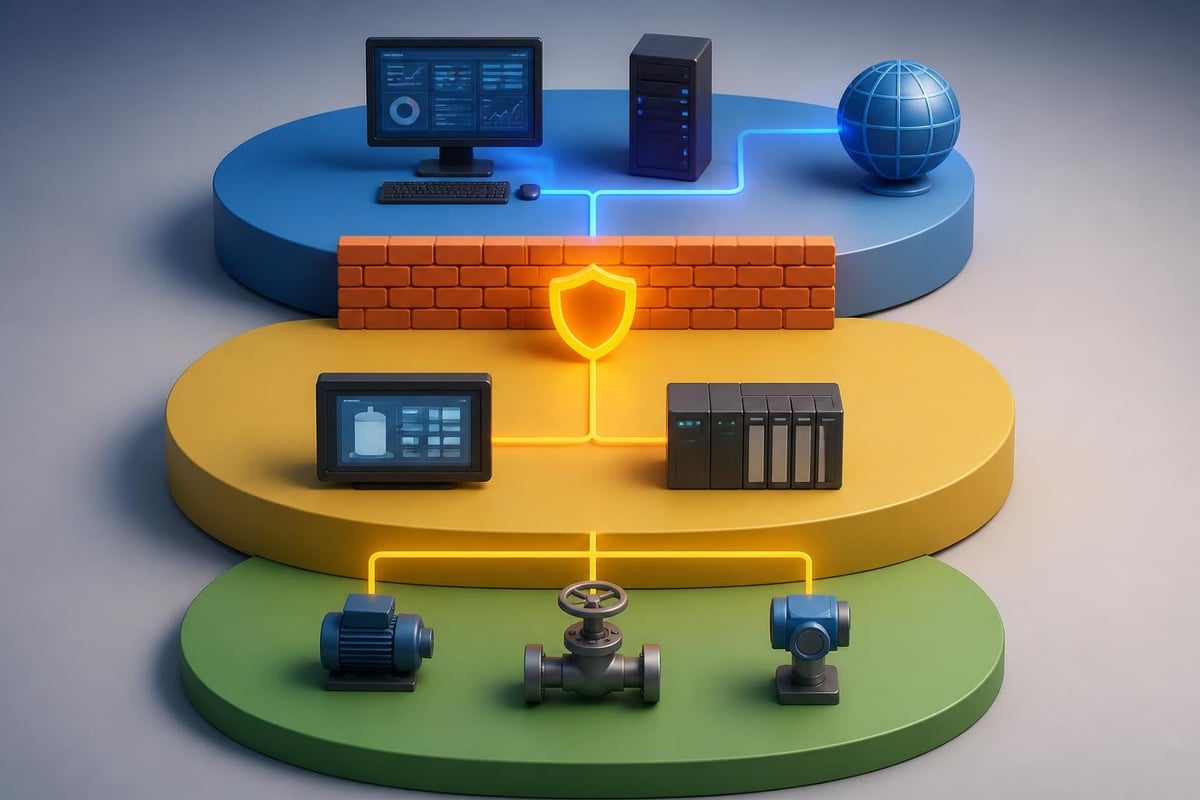
Each component represents a potential attack vector. The increasing integration between IT and OT environments amplifies these risks, as threat actors exploit connectivity pathways to penetrate previously isolated industrial networks.
Emerging Threats in Operational Technology
Cyberattacks targeting OT infrastructure have escalated dramatically. Industrial organisations face mounting pressure as sophisticated threat actors specifically target operational technology systems to disrupt critical services, demand ransoms, or cause physical damage.
Common Attack Vectors
| Attack Type | Description | Impact Level |
|---|---|---|
| Ransomware | Encrypts OT systems and demands payment | Critical |
| Supply Chain Compromise | Infiltrates through third-party vendors | Severe |
| Insider Threats | Malicious or negligent employee actions | High |
| Legacy System Exploitation | Targets unpatched, outdated equipment | Moderate to High |
Nation-state actors and criminal organisations increasingly view OT systems as strategic targets. Manufacturing facilities, water treatment plants, energy distribution networks, and transportation infrastructure all face persistent threats from adversaries seeking to cause disruption or gather intelligence.
The consequences of successful ot security breaches extend far beyond data theft. Physical damage to equipment, environmental hazards, production shutdowns, and threats to human safety represent genuine risks when operational technology defences fail.
Implementing Network Segmentation Strategies
Proper network architecture forms the foundation of effective ot security. Segmentation isolates critical industrial systems from corporate networks and external threats, creating defensive layers that limit lateral movement by attackers.
The Purdue Model provides a widely adopted framework for OT network segmentation:
- Level 0: Physical processes and devices
- Level 1: Intelligent devices and control systems
- Level 2: Supervisory control and operator interfaces
- Level 3: Manufacturing operations management
- Level 4: Business planning and logistics
- Level 5: Enterprise network connections
Implementing demilitarised zones (DMZs) between network levels creates controlled transition points where security controls monitor and filter traffic. Firewalls, unidirectional gateways, and data diodes enforce strict communication policies between zones.
Zero Trust Architecture for OT
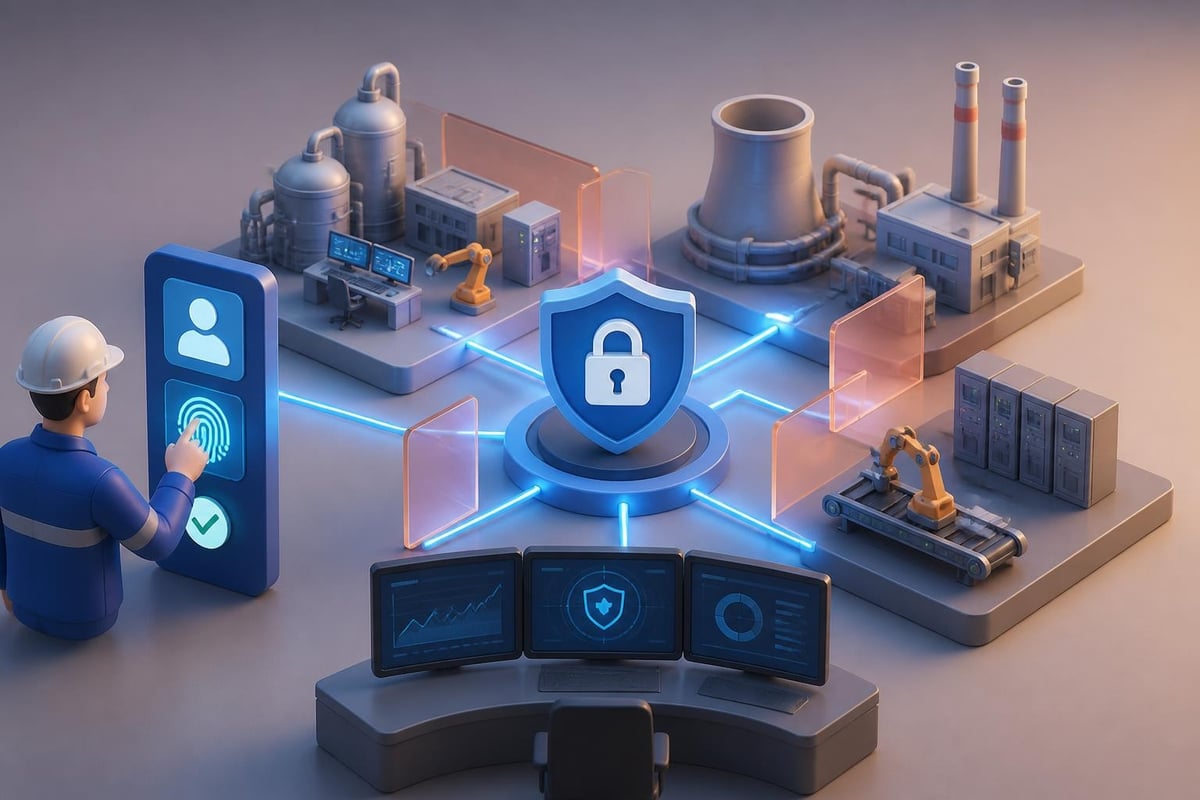
Traditional perimeter-based security proves inadequate for modern OT environments. Zero trust principles assume no implicit trust, requiring continuous verification for every access request regardless of origin.
Key zero trust components include:
- Micro-segmentation dividing networks into granular security zones
- Multi-factor authentication for all system access
- Least privilege access granting minimal necessary permissions
- Continuous monitoring detecting anomalous behaviour patterns
For businesses seeking comprehensive protection, managed EDR solutions provide continuous threat detection and response capabilities across both IT and OT environments.
Asset Discovery and Inventory Management
Organisations cannot protect assets they don't know exist. Comprehensive asset inventories form the cornerstone of any ot security programme, documenting every device, system, and connection within the operational environment.
Passive network monitoring tools identify devices without disrupting operations. Active scanning, when carefully scheduled during maintenance windows, validates inventory completeness and discovers shadow OT, unauthorised devices connected to industrial networks.
Building a Complete Asset Database
Essential information for each OT asset includes:
- Device manufacturer, model, and firmware version
- Network location and IP addressing
- Communication protocols and dependencies
- Criticality rating and operational function
- Patch status and known vulnerabilities
- Asset ownership and maintenance responsibility
Regular inventory updates track changes as equipment upgrades, replacements, or expansions occur. Many organisations discover legacy systems during initial assessments, equipment that has operated for decades without security updates or vendor support.
Vulnerability Management in Legacy Environments
OT environments typically contain equipment with operational lifespans exceeding 20 years. These legacy systems present significant challenges, often running outdated operating systems unable to receive security patches.
Traditional patch management approaches prove impractical for operational technology. System availability requirements prevent frequent maintenance windows, whilst patching risks introducing instability to critical processes.
| Challenge | Traditional IT Approach | OT-Appropriate Solution |
|---|---|---|
| Patching Frequency | Weekly/monthly | Quarterly during planned outages |
| Testing Requirements | Limited validation | Extensive testing in parallel environment |
| Downtime Tolerance | Minutes acceptable | Zero tolerance during operations |
| Change Control | Streamlined approval | Rigorous multi-stakeholder process |
Compensating controls mitigate risks when patching proves impossible. Network segmentation isolates vulnerable systems, whilst intrusion detection systems monitor for exploitation attempts. Virtual patching through security appliances can protect legacy equipment from known vulnerabilities.
The NIST guide for operational technology security provides comprehensive frameworks for managing OT-specific challenges whilst maintaining operational integrity.
Monitoring and Incident Response
Continuous monitoring detects threats before they cause significant damage. OT-specific security information and event management (SIEM) platforms correlate data from industrial control systems, network devices, and security tools to identify suspicious activities.
Baseline behaviour profiles establish normal operational patterns. Deviations from these baselines trigger alerts, whether from unauthorised access attempts, unusual network traffic, or anomalous process behaviours.
Developing OT-Specific Incident Response Plans
Standard IT incident response procedures often conflict with OT operational requirements. Safety considerations take precedence over evidence preservation during OT security incidents.
Response plans must address:
- Immediate threat containment without disrupting critical processes
- Coordination between IT security teams and OT engineering staff
- Communication protocols with regulatory bodies and stakeholders
- Recovery procedures that prioritise safe system restoration
- Post-incident analysis and lessons learned documentation
Tabletop exercises test response capabilities without operational risk. Regular drills ensure cross-functional teams understand their roles during actual incidents.
Businesses across the North West can benefit from specialised cyber security services that understand the unique requirements of operational technology environments.
Access Control and Identity Management
Controlling who accesses OT systems prevents both malicious attacks and accidental disruptions. Role-based access control (RBAC) assigns permissions based on job functions, ensuring users obtain only necessary system access.
Physical security complements logical access controls. Industrial facilities require badge access, security cameras, and visitor management protocols to prevent unauthorised physical access to OT equipment.
Remote Access Security
Vendors and third parties frequently require remote access for maintenance and support. These connections create security risks, providing potential pathways for attackers to infiltrate OT networks.
Secure remote access requires:
- Jump servers creating controlled entry points
- Session recording documenting all remote activities
- Time-limited access expiring after maintenance completion
- Multi-factor authentication verifying remote user identities
- Activity monitoring detecting suspicious remote actions

Workforce Training and Security Culture
Technical controls alone cannot secure OT environments. Personnel awareness and security culture significantly influence overall ot security posture. Operators, engineers, and maintenance staff all play crucial roles in preventing and detecting threats.
Phishing awareness training helps staff recognise social engineering attempts targeting industrial credentials. OT-specific scenarios illustrate how attackers might manipulate employees to gain system access or disrupt operations.
Regular security briefings keep teams informed about emerging threats. When attackers specifically target industrial organisations, workforce vigilance becomes essential to defensive strategies.
Regulatory Compliance and Standards
Various regulatory frameworks govern ot security across different industries. Energy sector organisations must comply with NERC CIP requirements, whilst water utilities face EPA regulations. Chemical facilities adhere to CFATS standards, and manufacturers increasingly face sector-specific guidelines.
Key Standards and Frameworks
- IEC 62443 provides comprehensive industrial automation security standards
- NIST Cybersecurity Framework offers risk-based guidance applicable to OT
- ISO 27001/27002 includes controls relevant to operational technology
- CIS Controls address OT security through specific implementation groups
Compliance frameworks provide structured approaches to ot security, though organisations should view them as minimum baselines rather than complete solutions. Best practices from leading sources recommend exceeding basic compliance requirements to achieve robust protection.
Supply Chain Security Considerations
OT systems depend on complex supply chains involving equipment manufacturers, software vendors, system integrators, and maintenance providers. Each relationship introduces potential security risks requiring careful management.
Vendor risk assessments evaluate third-party security practices before procurement. Security requirements should feature prominently in contracts, establishing expectations for vulnerability disclosure, patch delivery, and incident notification.
Software bill of materials (SBOM) documentation reveals component dependencies and potential vulnerabilities within OT systems. Understanding these dependencies helps organisations track risks across their technology stack.
Convergence of IT and OT Security
As operational technology increasingly connects with enterprise IT systems, cloud platforms, and internet services, the traditional separation between IT and OT security teams proves counterproductive. Unified security strategies acknowledge the interdependencies whilst respecting operational requirements.
Cross-functional security teams include:
- IT security professionals bringing cybersecurity expertise
- OT engineers understanding operational requirements and safety implications
- Risk managers balancing security investments against business priorities
- Compliance specialists ensuring regulatory adherence
Microsoft emphasises unified strategies for addressing ot security challenges, recognising that siloed approaches leave critical gaps in protection.
Building Resilience Through Defence in Depth
No single security measure provides complete protection. Layered defences create multiple barriers that attackers must overcome, significantly increasing the difficulty and detectability of intrusion attempts.
Defence in depth combines:
- Perimeter security controlling network boundaries
- Network segmentation limiting lateral movement
- Access controls restricting system interactions
- Encryption protecting data confidentiality
- Monitoring detecting malicious activities
- Incident response containing and remediating breaches
- Backup systems enabling recovery from incidents
This comprehensive approach acknowledges that breaches may occur, focusing on containment and recovery alongside prevention. Building organisational resilience ensures critical operations continue even during active security incidents.
Future Trends in Operational Technology Security
Artificial intelligence and machine learning increasingly enhance ot security capabilities. Automated threat detection identifies subtle anomalies that human analysts might miss, whilst predictive analytics forecast potential security events based on historical patterns.
Cloud-based security services extend enterprise-grade protection to OT environments. However, organisations must carefully evaluate cloud connectivity against operational requirements and risk tolerance.
The Industrial Internet of Things (IIoT) expands the OT attack surface exponentially. Thousands of connected sensors, actuators, and edge devices create new vulnerabilities requiring scalable security approaches.
Quantum computing poses future challenges to encryption protecting OT communications. Forward-thinking organisations begin planning for post-quantum cryptography to ensure long-term protection of operational systems.
Integration with Business Continuity Planning
OT security integrates closely with business continuity and disaster recovery strategies. Security incidents represent one category of disruption alongside natural disasters, equipment failures, and supply chain interruptions.
Recovery time objectives (RTOs) and recovery point objectives (RPOs) guide security investment decisions. Critical systems requiring near-instantaneous recovery demand more robust protection and redundancy than less critical infrastructure.
Regular testing validates both security controls and recovery procedures. Simulated incidents reveal gaps in planning whilst building organisational muscle memory for actual events.
Protecting operational technology requires specialised expertise that understands both cybersecurity principles and industrial operational requirements. As threats continue evolving in sophistication and frequency, businesses cannot afford gaps in their ot security posture. Blowfish Technology delivers comprehensive managed IT and cyber security services specifically designed for organisations across the North West and throughout the UK, combining proactive monitoring, expert guidance, and proven security frameworks to safeguard your critical infrastructure whilst maintaining operational excellence.

The Blowfish Technology team. Managed IT, cloud services, software development and connectivity for North West businesses since 1999.