
Small and medium-sized enterprises across the United Kingdom face an unprecedented wave of cyber threats in 2026, with cybersecurity warnings for SMEs rising 37% since 2023. Despite this alarming trend, many business owners still believe they’re too small to be targeted, whilst simultaneously struggling to implement adequate protection measures. The landscape of sme cyber security has evolved dramatically, transforming from a technical afterthought into a fundamental business requirement that directly impacts competitiveness, customer trust, and long-term viability. Understanding the specific threats facing smaller organisations and implementing proportionate, effective defences has become essential for survival in an increasingly digital economy.
The Current State of SME Cyber Security in the UK
The cyber threat landscape targeting small and medium-sized businesses has intensified considerably over the past three years. Recent research reveals that SMEs now face daily attacks designed to exploit their typically limited security resources and infrastructure.
Current threat statistics paint a concerning picture:
- Over 60% of UK SMEs experienced at least one cyber attack in 2025
- The average cost of a successful breach for smaller businesses now exceeds £25,000
- Ransomware attacks against SMEs increased by 43% year-on-year
- Email-based phishing remains the primary attack vector, accounting for 82% of successful breaches
These figures demonstrate that sme cyber security can no longer be relegated to the “when we have budget” category. Research from Amvia indicates that whilst awareness has improved, the gap between understanding the threat and implementing adequate protection remains substantial.
Why SMEs Are Attractive Targets
Criminal organisations deliberately target smaller businesses for several strategic reasons. SMEs often maintain valuable data whilst lacking the sophisticated defences employed by larger corporations, creating an asymmetric opportunity for attackers.
The supply chain dimension further amplifies this vulnerability. Many SMEs serve as suppliers, partners, or service providers to larger organisations, making them ideal entry points for sophisticated attacks targeting the entire business ecosystem.

| Vulnerability Factor | Impact on SMEs | Mitigation Priority |
|---|---|---|
| Limited IT Resources | Cannot monitor threats 24/7 | High – Consider managed services |
| Budget Constraints | Delayed security investments | High – Implement cost-effective controls |
| Employee Awareness | Susceptible to social engineering | Critical – Regular training essential |
| Legacy Systems | Unpatched vulnerabilities | Medium – Scheduled updates required |
| Supply Chain Position | Gateway to larger targets | High – Vendor security assessments |
Essential Components of SME Cyber Security
Building an effective security posture requires a layered approach that balances protection, detection, and response capabilities. Rather than pursuing perfect security, SMEs should focus on implementing fundamental controls that address the most common attack vectors.
Network Security and Perimeter Defence
Your network represents the first line of defence against external threats. Implementing robust perimeter security prevents unauthorised access whilst monitoring tools detect suspicious activity attempting to breach your defences.
Critical network security measures include:
- Enterprise-grade firewalls with intrusion prevention systems
- Secure Wi-Fi networks with WPA3 encryption and network segmentation
- Virtual Private Networks (VPNs) for remote access
- Regular security updates and patch management protocols
- Network monitoring tools that identify anomalous traffic patterns
These foundational elements create substantial barriers that deter opportunistic attacks whilst providing visibility into more sophisticated attempts. For businesses requiring comprehensive protection, working with specialists who understand cyber security services across the North West ensures these components integrate effectively.
Email Security and Anti-Phishing Measures
Email remains the predominant attack vector, with global research revealing widespread lack of basic email security among smaller organisations. Implementing multi-layered email protection significantly reduces the likelihood of successful phishing attacks.
Modern email security solutions employ artificial intelligence to identify suspicious messages, analyse sender reputation, and quarantine potentially malicious content before it reaches employee inboxes. These systems work alongside employee training to create a human-technology defence partnership.
Advanced measures such as DMARC, SPF, and DKIM authentication protocols prevent email spoofing, ensuring that messages purporting to come from your domain are genuine. This protection extends beyond incoming threats to safeguard your brand reputation and prevent criminals from impersonating your organisation.
Data Protection and Access Management
Securing sensitive information requires controlling who can access data, how they authenticate their identity, and what actions they can perform. Effective sme cyber security integrates data protection into daily workflows without creating excessive friction.
Identity and Access Control
Implementing robust identity management ensures that only authorised personnel can access specific systems and data. This principle of least privilege limits potential damage from compromised credentials or insider threats.
- Multi-factor authentication (MFA) across all business systems and applications
- Role-based access controls that align permissions with job responsibilities
- Regular access reviews to remove unnecessary privileges and departed employee accounts
- Privileged access management for administrative functions requiring elevated permissions
- Single sign-on solutions that simplify user experience whilst centralising security controls
These measures transform authentication from a simple username-password combination into a comprehensive verification process that significantly raises the barrier for unauthorised access.
Data Encryption and Backup Strategies
Protecting data both in transit and at rest ensures that even if criminals bypass other defences, the information they capture remains unusable. Encryption transforms readable data into coded formats that require specific keys to decrypt.
Comprehensive data protection requires:
- Full disk encryption on all laptops, desktops, and mobile devices
- Transport Layer Security (TLS) for data moving across networks
- Encrypted cloud storage for sensitive business information
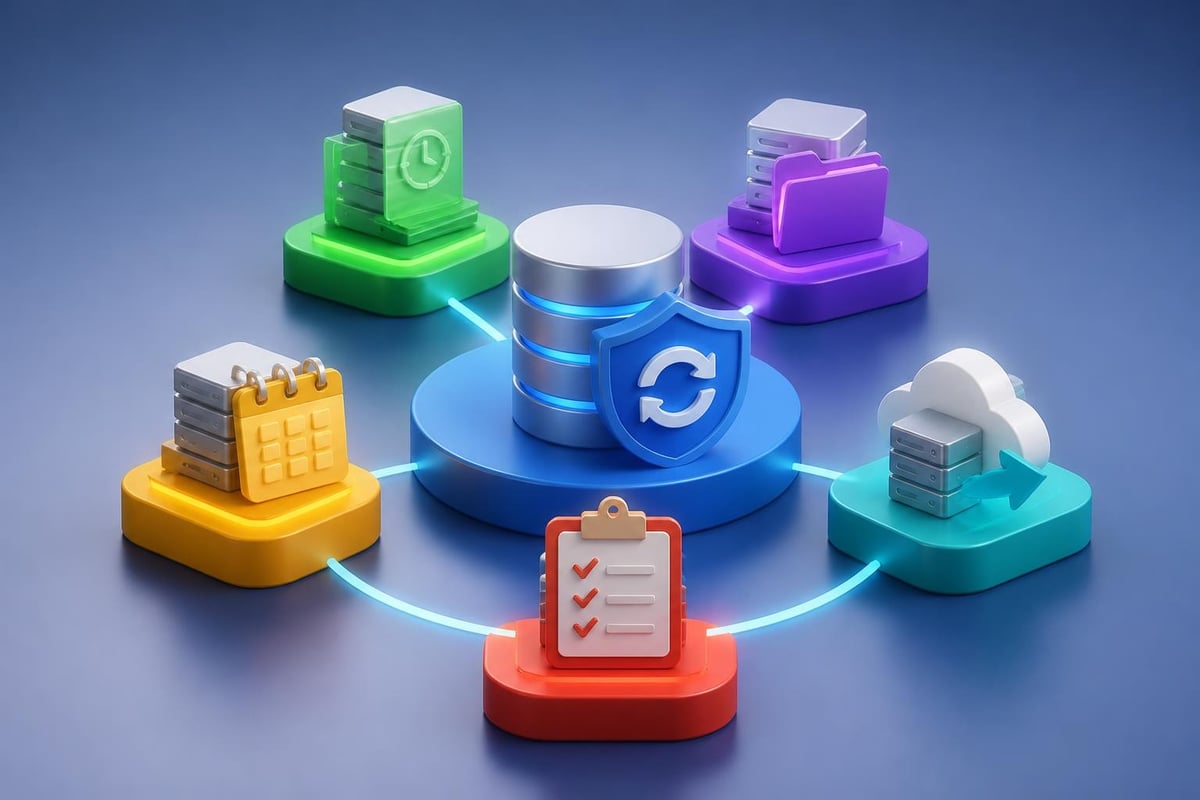
- Automated, tested backup systems with off-site replication
- Immutable backup copies protected from ransomware encryption
Regular backup testing ensures that recovery procedures actually work when needed. Many organisations discover backup failures only during crisis situations, making validation exercises essential components of sme cyber security strategies.
Building a Security-Aware Culture
Technology alone cannot protect organisations from sophisticated cyber threats. The human element remains both the weakest link and the strongest defence, depending on how effectively employees understand and respond to security risks.
Employee Training and Awareness Programmes
Regular security awareness training transforms employees from potential vulnerabilities into active defenders. Effective programmes move beyond annual compliance exercises to create ongoing engagement with security principles.
Training should cover practical scenarios employees actually encounter, from identifying phishing emails to handling sensitive customer data appropriately. Simulated phishing campaigns provide safe opportunities to test awareness whilst reinforcing lessons without real consequences.
The shift towards strategic cybersecurity partnerships reflects growing recognition that employee education requires ongoing investment rather than one-time initiatives. Businesses that view security training as continuous improvement rather than box-ticking compliance demonstrate substantially lower incident rates.
Incident Response Planning
Despite best efforts, security incidents will occur. Having a documented, tested incident response plan dramatically reduces damage by ensuring rapid, coordinated action when threats materialise.
An effective incident response plan addresses key questions before crisis pressure makes clear thinking difficult. Who leads the response team? What communication protocols activate? Which external partners provide support? How do you preserve evidence whilst restoring operations?
Components of effective incident response planning include defined roles and responsibilities, clear escalation procedures, communication templates, and regular testing through tabletop exercises. These preparations transform chaotic emergency reactions into structured, effective responses.
| Response Phase | Key Activities | Responsible Parties |
|---|---|---|
| Preparation | Document procedures, train staff, establish tools | IT team, management |
| Detection | Monitor systems, analyse alerts, confirm incidents | Security team, managed service provider |
| Containment | Isolate affected systems, prevent spread | Technical responders |
| Eradication | Remove threat, patch vulnerabilities | IT specialists |
| Recovery | Restore operations, verify security | All teams |
| Lessons Learned | Review response, improve procedures | Management, security team |
Compliance and Regulatory Requirements
Operating within legal frameworks protects businesses from regulatory penalties whilst demonstrating commitment to customer data protection. Understanding applicable requirements helps prioritise security investments toward areas with both legal and practical importance.
GDPR and Data Protection Obligations
The General Data Protection Regulation establishes comprehensive requirements for handling personal data of EU and UK residents. Whilst compliance can seem daunting, meeting GDPR standards simultaneously improves overall sme cyber security posture.
Key obligations include documenting data processing activities, implementing appropriate technical measures, reporting breaches within 72 hours, and respecting individual privacy rights. These requirements push organisations toward security best practices that benefit the business beyond mere compliance.
Industry-Specific Standards
Beyond general data protection laws, many sectors impose additional security requirements. Financial services, healthcare, legal practices, and other regulated industries must meet specific standards relevant to their operations.
Implementing frameworks such as Information Security Management Systems following ISO 27001 provides structured approaches to meeting diverse regulatory requirements. These standards offer blueprints for comprehensive security programmes whilst demonstrating due diligence to clients, partners, and regulators.
Managed Security Services for SMEs
Resource constraints make it challenging for smaller organisations to maintain comprehensive in-house security capabilities. Managed security service providers offer access to enterprise-grade protection, monitoring, and expertise at predictable monthly costs.
Benefits of Outsourced Security Management
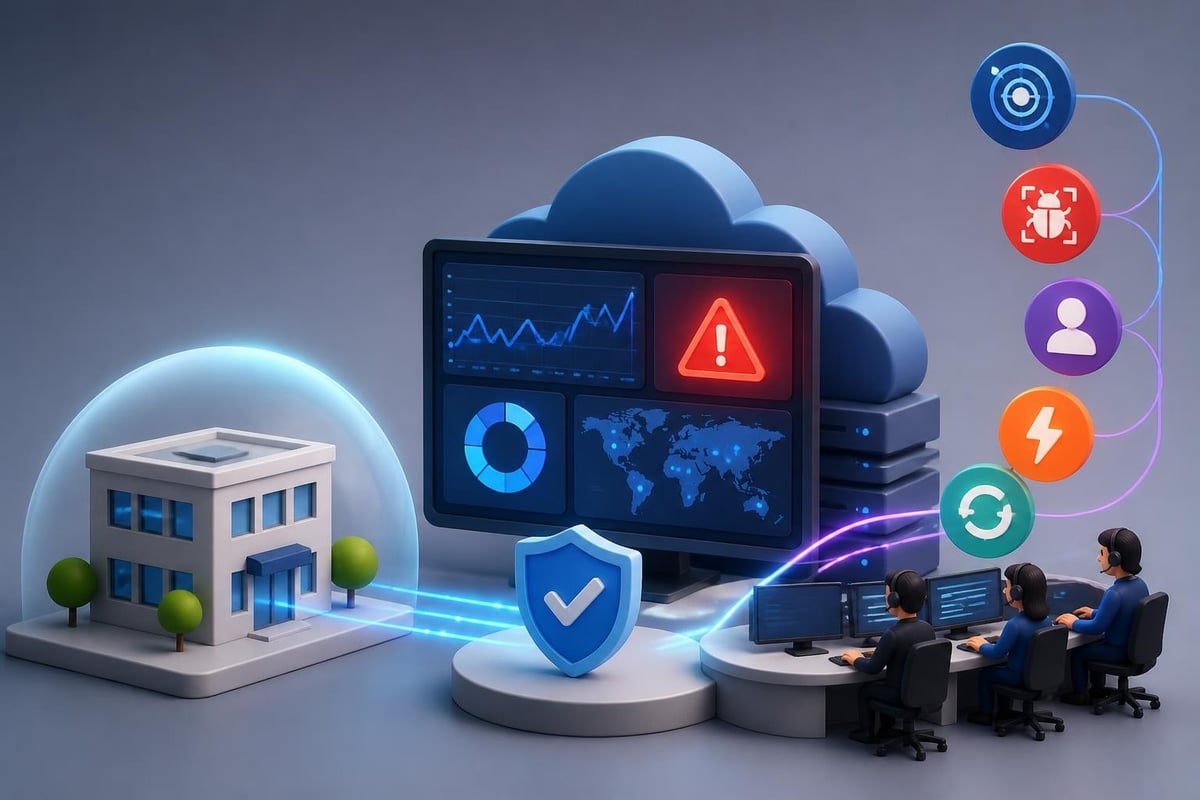
Partnering with specialists provides continuous monitoring, threat intelligence, and rapid incident response without requiring internal security teams. This model scales protection capabilities beyond what most SMEs could independently afford or staff.
Managed security services typically include:
- 24/7 security monitoring and threat detection
- Proactive vulnerability management and patch deployment
- Expert incident response and forensic capabilities
- Regular security assessments and compliance reporting
- Strategic guidance on security investments and priorities
These services transform sme cyber security from a periodic concern into continuous protection backed by dedicated professionals. The economics favour outsourcing for organisations below certain size thresholds, where maintaining equivalent internal capabilities would consume disproportionate resources.
Businesses across the region benefit from working with providers who understand local requirements and can respond rapidly when issues arise. Whether you need cyber security support in Burnley or protection for operations in Cheadle, proximity matters when incidents require immediate attention.
Selecting the Right Security Partner
Choosing a managed security provider requires evaluating technical capabilities, industry experience, and service delivery models. The cheapest option rarely provides adequate protection, whilst the most expensive may include unnecessary features for your specific requirements.
- Assess provider expertise in your industry and technology environment
- Review service level agreements for response times and uptime commitments
- Evaluate communication processes for regular updates and incident reporting
- Verify compliance certifications relevant to your regulatory requirements
- Request references from similar organisations they currently protect
The relationship should feel like partnership rather than vendor transaction, with your security provider understanding business objectives and tailoring protection accordingly.
Cloud Security Considerations
Migration to cloud services introduces new security dimensions that require specific attention. Whilst cloud providers maintain robust infrastructure security, customers remain responsible for protecting data, managing access, and configuring services appropriately.
Shared Responsibility Model
Understanding where provider responsibility ends and yours begins prevents dangerous security gaps. Cloud platforms secure underlying infrastructure, but you must protect accounts, configure permissions properly, and encrypt sensitive data.
Common cloud security failures include misconfigured storage buckets exposing confidential information, weak authentication allowing unauthorised access, and inadequate monitoring missing suspicious activity. These issues stem from misunderstanding the shared responsibility boundary rather than inherent cloud vulnerabilities.
For organisations using Microsoft 365, SharePoint, and similar platforms, clarifying these boundaries ensures comprehensive protection. Understanding differences between SharePoint and traditional file servers helps implement appropriate security controls for cloud-based collaboration.
Multi-Cloud and Hybrid Security Strategies
Many SMEs now operate across multiple cloud platforms alongside on-premises systems, creating complex hybrid environments. Maintaining consistent security policies across these diverse infrastructures requires careful planning and appropriate tools.
Centralised identity management, unified monitoring platforms, and consistent encryption standards help bridge different environments into cohesive security postures. This integration prevents gaps where responsibilities fall between different systems or providers.
Emerging Threats and Future Trends
The sme cyber security landscape continues evolving as attackers develop new techniques and business technology adoption creates fresh attack surfaces. Staying informed about emerging threats helps organisations anticipate risks rather than merely reacting to incidents.
Artificial Intelligence in Cyber Attacks
Criminal organisations increasingly leverage artificial intelligence to enhance attack effectiveness and scale. AI-powered phishing generates convincing messages tailored to specific targets, whilst automated vulnerability scanning identifies weaknesses across thousands of potential victims simultaneously.
Defensive applications of AI help level this playing field, with machine learning algorithms detecting anomalous behaviour patterns that indicate compromise. The technology arms race between attackers and defenders continues accelerating, making human expertise more valuable than ever for interpreting alerts and coordinating responses.
Supply Chain Security Challenges
Interconnected business relationships mean that your security depends partly on partners’ and suppliers’ practices. Cyber resilience increasingly defines SME competitiveness, as customers and partners evaluate security posture when selecting who they’ll work with.
Implementing vendor security assessments, requiring minimum security standards in contracts, and monitoring third-party access helps manage supply chain risks. These practices protect both your organisation and the broader business ecosystem you participate in.
Even businesses in seemingly unrelated sectors can learn from security-focused communities. For instance, eCommerce platforms must protect customer payment data and personal information, making communities like Talk Shop’s Shopify Discord server valuable forums where merchants discuss security challenges alongside conversion optimization and scaling strategies. The cross-industry exchange of security practices strengthens defences across all sectors.
Cost-Effective Security for Budget-Conscious SMEs
Limited budgets shouldn’t prevent implementing adequate protection. Strategic prioritisation and efficient resource allocation enable smaller organisations to achieve substantial security improvements without enterprise-level expenditure.
Prioritising Security Investments
Not all risks require equal investment. Conducting simple risk assessments identifies which threats pose greatest danger to your specific operations, allowing focused investment where it delivers maximum protection value.
Budget allocation framework:
| Priority Level | Focus Areas | Typical Budget % |
|---|---|---|
| Critical | Email security, backups, endpoint protection | 40-50% |
| High | Network security, access controls, training | 30-35% |
| Medium | Advanced monitoring, compliance tools | 15-20% |
| Low | Emerging technology, enhancement projects | 5-10% |
This framework ensures fundamental protections receive adequate resources before pursuing advanced capabilities. Many breaches exploit basic weaknesses rather than sophisticated vulnerabilities, making fundamental hygiene the highest-value investment.
Free and Low-Cost Security Tools
Numerous effective security tools operate on freemium models or offer affordable pricing specifically for smaller organisations. Open-source security software, manufacturer-provided protection, and government resources provide capabilities previously accessible only to larger enterprises.
However, free tools require expertise to implement and maintain effectively. The hidden cost comes in staff time and learning curves, which sometimes exceeds the price of commercial alternatives with better support and integration.
Automation and Efficiency in Security Operations
Automation helps smaller teams achieve comprehensive protection by handling repetitive tasks and providing consistent enforcement of security policies. Strategic automation investment multiplies limited human resources.
Security Automation Opportunities
Modern security platforms automate numerous traditionally manual activities, from patch deployment to threat hunting. These capabilities reduce workload whilst improving consistency and response speed.
Tasks suitable for automation include security update installation, log analysis, compliance reporting, and routine threat intelligence gathering. This frees security personnel to focus on strategic planning, incident response, and activities requiring human judgement.
Businesses looking to enhance their overall operational efficiency might explore platforms like RankPill, which automates SEO activities including keyword research and content optimization. Whilst focused on marketing rather than security, the automation principle applies across business functions-technology handling repetitive tasks whilst humans focus on strategy and creativity.
Balancing Automation with Human Oversight
Despite automation benefits, human expertise remains essential for interpreting context, making judgement calls, and handling novel situations that automated systems cannot address. The optimal approach combines technological efficiency with human wisdom.
Security tools generate numerous alerts, many representing false positives or low-priority events. Experienced analysts filter noise from genuine threats, investigate anomalies requiring deeper examination, and coordinate responses requiring cross-functional collaboration.
Building Resilience Beyond Prevention
Perfect prevention remains impossible, making resilience-the ability to withstand and recover from incidents-equally important as defensive measures. Resilient organisations experience security events but maintain operations and minimise damage.
Business Continuity and Disaster Recovery
Comprehensive resilience planning addresses how your organisation continues operating during and after security incidents. This extends beyond technical recovery to encompass communication, alternative workflows, and stakeholder management.
Disaster recovery plans document specific technical procedures for restoring systems and data. Business continuity planning takes broader perspective, addressing how critical functions continue even when primary systems are unavailable.
Regular testing validates these plans actually work under pressure. Tabletop exercises, simulation drills, and partial failover tests identify gaps before real incidents expose them catastrophically.
Insurance and Risk Transfer
Cyber insurance provides financial protection against losses that security controls cannot prevent. Policies typically cover incident response costs, legal expenses, regulatory fines, and business interruption losses.
However, insurance complements rather than replaces security measures. Insurers increasingly require minimum security standards before providing coverage, and premiums reflect your security posture. Strong sme cyber security practices reduce insurance costs whilst ensuring coverage activates when needed.
Measuring Security Effectiveness
Demonstrating security programme value requires metrics that translate technical activities into business outcomes. Effective measurement informs investment decisions whilst proving protection value to stakeholders.
Key Performance Indicators for SME Security
Selecting appropriate metrics focuses attention on outcomes rather than activities. Tracking meaningful indicators helps assess whether security investments deliver expected protection improvements.
Valuable security metrics include:
- Time to detect security incidents (target: under 4 hours)
- Time to contain confirmed incidents (target: under 24 hours)
- Percentage of employees completing security training (target: 100% annually)
- Percentage of systems with current security updates (target: above 95%)
- Number of successful phishing simulation clicks (target: below 5%)
These measurements provide concrete evidence of programme effectiveness whilst identifying areas requiring additional attention or resources.
Continuous Improvement Processes
Security programmes require ongoing refinement based on threat evolution, technology changes, and lessons learned from incidents. Organisations that view security as static quickly fall behind emerging risks.
Regular programme reviews assess whether current measures remain appropriate and identify opportunities for enhancement. This might involve adopting new technologies, refining processes based on incident experiences, or reallocating resources toward higher-priority risks.
Engaging with broader business technology discussions helps identify security implications of emerging tools and trends before they create vulnerabilities in your environment.
Protecting your SME from cyber threats requires comprehensive strategies combining technology, processes, and people into layered defence systems. The investment in sme cyber security delivers returns through prevented incidents, maintained customer trust, and operational continuity that directly supports business growth. Blowfish Technology provides managed IT and cyber security services specifically designed for businesses across the North West and throughout the UK, offering proactive protection that keeps your operations secure whilst you focus on core business objectives.

The Blowfish Technology team. Managed IT, cloud services, software development and connectivity for North West businesses since 1999.