
The digital transformation of British businesses has accelerated dramatically, bringing unprecedented opportunities alongside significant vulnerabilities. As organisations across the North West and throughout the UK embrace cloud services, remote working, and interconnected systems, the need for comprehensive info about cyber security has never been more critical. Understanding the threat landscape, implementing robust defences, and maintaining proactive vigilance are no longer optional considerations-they represent fundamental requirements for business survival in 2026.
The Current State of Cyber Security in the UK
The cyber security landscape has evolved into a complex ecosystem of threats, defences, and regulatory requirements that challenge businesses of all sizes. Recent data reveals a disturbing trend: cyber-attacks have increased by 44% according to Check Point Software’s 2025 Security Report, demonstrating the escalating sophistication and frequency of digital threats.
British organisations face a multifaceted challenge that extends beyond traditional perimeter defences. The convergence of artificial intelligence, cloud infrastructure, and increasingly sophisticated threat actors has created an environment where yesterday's security measures prove inadequate for tomorrow's threats.
Why Businesses Need Comprehensive Info About Cyber Security
Understanding the fundamentals represents the first step towards building resilient defences. Many organisations mistakenly believe that cyber security concerns only affect large enterprises or technology companies. This misconception leaves countless small and medium-sized businesses vulnerable to attacks that can prove devastating.
Key reasons businesses require detailed info about cyber security include:
- Financial protection against breaches that now cost an average of £8.4 million per incident
- Regulatory compliance with GDPR, NIS Directive, and industry-specific requirements
- Reputation management and customer trust preservation
- Operational continuity and disaster recovery capabilities
- Competitive advantage through secure digital transformation
The consequences of inadequate security extend far beyond immediate financial losses. Businesses face reputational damage, legal liabilities, operational disruptions, and potential closure following significant breaches.
Understanding the Modern Threat Landscape
Emerging Threats and Attack Vectors
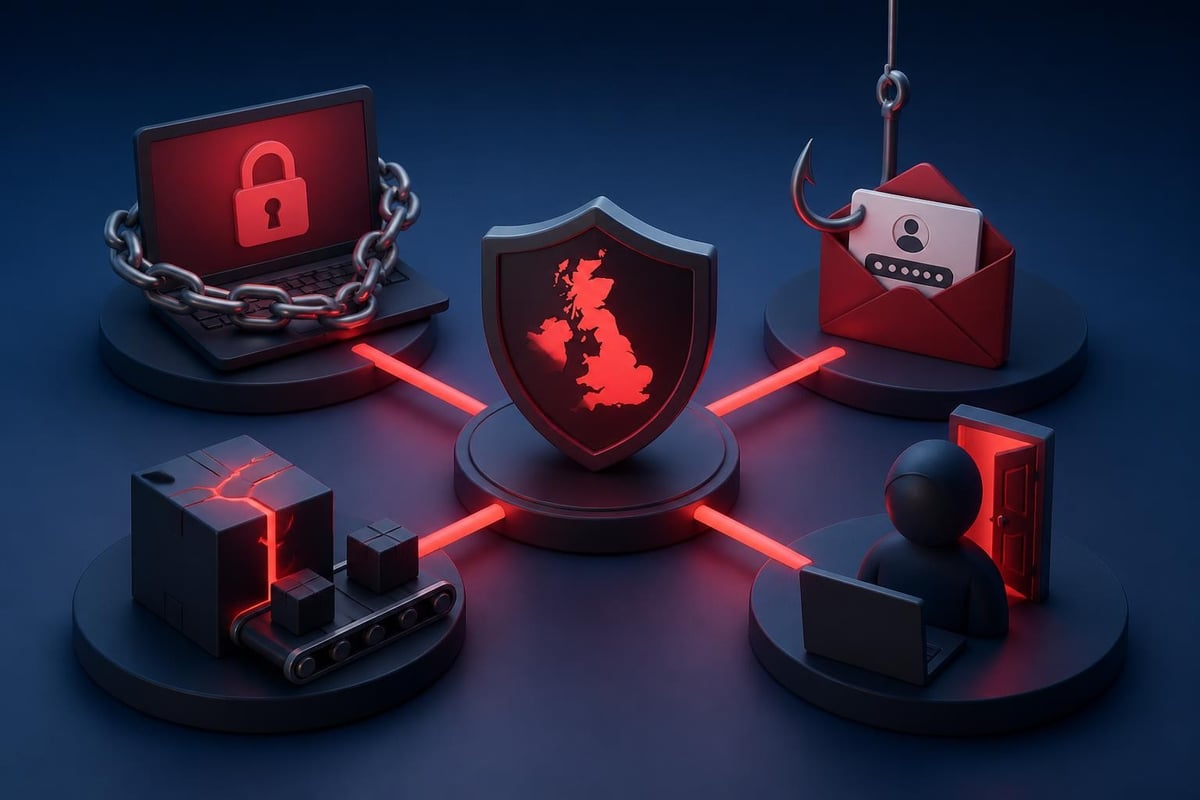
The threat landscape has transformed dramatically over recent years, with attackers leveraging advanced technologies and exploiting human vulnerabilities with increasing precision. Seven key trends are shaping cyber threats and risk management for 2025, creating a complex environment that demands sophisticated defensive strategies.
Ransomware continues to dominate as the primary threat facing UK organisations. Attackers have refined their techniques, moving beyond simple encryption to incorporate data exfiltration, threatening victims with public exposure if ransoms remain unpaid. This double-extortion approach has proven devastatingly effective, even against organisations with robust backup systems.
| Threat Type | Impact Level | Frequency | Primary Target |
|---|---|---|---|
| Ransomware | Critical | Daily | All sectors |
| Phishing | High | Hourly | Email users |
| Supply Chain | Critical | Weekly | Software dependencies |
| Insider Threats | High | Monthly | Privileged access |
| DDoS Attacks | Medium | Weekly | Public-facing services |
Phishing attacks have evolved beyond crude emails requesting bank details. Modern phishing campaigns employ sophisticated social engineering, leveraging artificial intelligence to craft convincing messages that bypass traditional detection systems. These attacks often target specific individuals within organisations, using publicly available information to create highly personalised and credible communications.
The Role of Artificial Intelligence in Cyber Threats
Artificial intelligence has become a double-edged sword in cyber security. Whilst defenders employ AI to detect anomalies and respond to threats, attackers utilise the same technology to automate reconnaissance, identify vulnerabilities, and craft targeted attacks at unprecedented scale.
Machine learning algorithms enable threat actors to analyse vast datasets, identifying patterns in security configurations and predicting defensive responses. This capability allows attackers to optimise their tactics in real-time, adapting to defensive measures faster than human security teams can respond.
Deepfake technology presents another emerging concern, enabling attackers to impersonate executives convincingly during video conferences or voice calls. These techniques facilitate sophisticated fraud schemes and social engineering attacks that bypass traditional verification methods.
Building Comprehensive Cyber Security Defences
Essential Security Measures for UK Businesses
Implementing effective cyber security requires a layered approach that addresses technical, procedural, and human factors. No single solution provides complete protection-organisations must deploy multiple defensive mechanisms that work in concert to detect, prevent, and respond to threats.
Core security components every business should implement:
- Advanced endpoint protection across all devices, including desktops, laptops, mobile devices, and servers
- Next-generation firewalls with deep packet inspection and threat intelligence integration
- Multi-factor authentication for all user accounts, particularly those with administrative privileges
- Encrypted communications for email, file sharing, and remote access
- Regular security assessments including penetration testing and vulnerability scanning
- Comprehensive backup strategies with off-site and immutable storage options
- Security awareness training for all employees, updated quarterly
- Incident response planning with clearly defined roles and escalation procedures
Choosing the right IT support partner becomes crucial when implementing these measures, as many organisations lack the internal expertise to deploy and maintain sophisticated security infrastructure effectively.
The Importance of Cloud Security
As businesses migrate to cloud platforms, understanding cloud-specific security considerations becomes essential. Cloud infrastructure offers significant benefits, but it also introduces unique vulnerabilities that require specialised defensive approaches.
The shared responsibility model defines security obligations between cloud providers and customers. Whilst providers secure the underlying infrastructure, customers remain responsible for configuring access controls, managing identities, and protecting data within their cloud environments.
Misconfigurations represent the leading cause of cloud security breaches. Simple errors-such as leaving storage buckets publicly accessible or failing to enforce encryption-can expose sensitive data to unauthorised access. Regular audits and automated configuration monitoring help identify and remediate these vulnerabilities before attackers exploit them.

Regulatory Compliance and Best Practices
Understanding UK Cyber Security Regulations
British businesses operate within a complex regulatory framework that mandates specific security measures and imposes significant penalties for non-compliance. The General Data Protection Regulation (GDPR) remains the most prominent requirement, establishing strict rules for processing personal data and requiring organisations to implement appropriate technical and organisational measures.
The Network and Information Systems (NIS) Directive applies to operators of essential services and digital service providers, imposing additional security requirements and incident reporting obligations. Regulated sectors-including finance, healthcare, and energy-face sector-specific requirements that extend beyond general regulations.
Key compliance requirements businesses must address:
- Data protection impact assessments for high-risk processing activities
- Breach notification within 72 hours of discovery
- Appointed data protection officers for certain organisations
- Regular security audits and documentation
- Employee training and awareness programmes
- Vendor management and third-party risk assessments
Penalties for non-compliance can reach £17.5 million or 4% of annual global turnover, whichever proves greater. Beyond financial penalties, regulatory violations damage reputations and erode customer trust.
Industry Standards and Frameworks
Adopting recognised security frameworks helps organisations structure their defensive programmes and demonstrate due diligence to regulators, customers, and partners. Several frameworks have gained prominence within the UK business community.
The National Cyber Security Centre (NCSC) Cyber Essentials scheme provides a baseline of security controls suitable for organisations of all sizes. This government-backed certification demonstrates commitment to cyber security and is increasingly required for government contracts and supply chain participation.
ISO 27001 represents the international standard for information security management systems. Achieving certification requires implementing comprehensive controls across people, processes, and technology, with regular audits ensuring ongoing compliance.
Proactive Security Strategies for 2026
Threat Intelligence and Monitoring
Effective cyber security extends beyond reactive defences to incorporate proactive threat hunting and continuous monitoring. Understanding emerging threats before they impact your organisation provides crucial advantages in an environment where cybersecurity trends evolve rapidly.
Security Information and Event Management (SIEM) systems aggregate logs from across your infrastructure, applying analytics and correlation rules to identify suspicious patterns. These platforms enable security teams to detect potential breaches in their early stages, before attackers establish persistence or exfiltrate sensitive data.
Threat intelligence feeds provide contextual information about current attack campaigns, malicious IP addresses, and known threat actor tactics. Integrating this intelligence into defensive systems enables organisations to block emerging threats proactively rather than waiting for attacks to materialise.
Vulnerability Management and Patch Deployment
Software vulnerabilities represent one of the most common attack vectors, with thousands of new vulnerabilities disclosed annually. Effective vulnerability management requires systematic processes for identifying, prioritising, and remediating security weaknesses across your technology estate.
| Vulnerability Severity | Remediation Timeframe | Risk Level | Action Required |
|---|---|---|---|
| Critical | 24-48 hours | Extreme | Immediate patching |
| High | 7 days | Severe | Urgent deployment |
| Medium | 30 days | Moderate | Scheduled update |
| Low | 90 days | Limited | Routine maintenance |
Automated patch management systems streamline deployment whilst ensuring consistent application across all endpoints. However, patches must be tested in non-production environments before widespread deployment to avoid introducing compatibility issues or operational disruptions.
Zero-day vulnerabilities-those without available patches-present particular challenges. Compensating controls such as network segmentation, access restrictions, and enhanced monitoring can mitigate risks whilst vendors develop and release fixes.

Human Factors in Cyber Security
Employee Training and Awareness
Technology alone cannot secure organisations against modern threats. Employees represent both the greatest vulnerability and the most powerful defensive asset. Comprehensive info about cyber security must address the human element, recognising that social engineering exploits human psychology rather than technical weaknesses.
Regular security awareness training transforms employees from potential liabilities into active defenders. Effective programmes cover practical topics including identifying phishing emails, protecting credentials, recognising social engineering tactics, and reporting suspicious activities.
Essential training topics for all employees:
- Password management and multi-factor authentication usage
- Identifying and reporting phishing attempts
- Safe internet browsing and download practices
- Physical security and device handling
- Remote working security considerations
- Data classification and handling procedures
- Social media risks and information disclosure
Simulated phishing campaigns test employee awareness whilst providing targeted training for those who fall victim to test messages. These exercises should occur quarterly, with increasing sophistication matching evolving threat tactics.
Creating a Security-Conscious Culture
Building a security-conscious organisational culture requires leadership commitment and consistent messaging from senior management. When executives visibly prioritise security and follow established protocols themselves, employees recognise its importance and modify their behaviours accordingly.
Security should be integrated into business processes rather than treated as an impediment to productivity. Streamlined authentication methods, clear policies, and accessible support resources encourage compliance whilst minimising friction in daily operations.
Positive reinforcement proves more effective than punitive approaches. Recognising employees who report suspicious activities or identify vulnerabilities encourages others to remain vigilant and engaged with security initiatives.
Business Continuity and Disaster Recovery
Planning for Security Incidents
Despite robust preventative measures, organisations must prepare for potential security incidents. Comprehensive incident response plans define procedures for detecting, containing, eradicating, and recovering from security breaches whilst minimising operational and financial impact.
Effective response plans identify key stakeholders, establish communication protocols, and define decision-making authority during crises. Clear escalation procedures ensure appropriate involvement from technical teams, management, legal counsel, and public relations depending on incident severity and scope.
Regular tabletop exercises test response procedures and identify gaps before real incidents occur. These simulations should incorporate realistic scenarios based on current threat intelligence, challenging teams to coordinate their responses under pressure.
Backup and Recovery Strategies
Ransomware and destructive attacks can render systems and data inaccessible, potentially crippling operations for extended periods. Comprehensive backup strategies ensure business continuity even when primary systems fail or become compromised.
The 3-2-1 backup rule provides a foundation for resilient data protection: maintain three copies of data, stored on two different media types, with one copy off-site. Modern implementations often extend this to 3-2-1-1, adding an immutable copy that cannot be altered or deleted even if attackers compromise backup infrastructure.
Testing recovery procedures regularly verifies that backups function correctly and that restoration processes meet recovery time objectives. Many organisations discover backup failures only after catastrophic incidents, when successful recovery becomes impossible.
Leveraging Professional Managed Services
Benefits of Partnered Cyber Security
Many businesses-particularly small and medium-sized organisations-lack the internal resources to implement and maintain comprehensive security programmes. Managed IT services provide access to enterprise-grade security capabilities without requiring substantial internal investment in specialised personnel and infrastructure.
Professional security providers maintain dedicated security operations centres with 24/7 monitoring, threat intelligence capabilities, and incident response expertise. This around-the-clock vigilance enables rapid detection and response to security events, often identifying and neutralising threats before they cause significant damage.
Managed security services offer additional advantages including access to cutting-edge technologies, continuous updates to defensive capabilities, and scalability that matches business growth. Providers spread costs across multiple clients, making advanced security accessible to organisations that could not justify these investments independently.
Selecting the Right Security Partner
Choosing an appropriate managed security provider requires careful evaluation of capabilities, experience, and cultural fit. Providers should demonstrate deep expertise in your industry sector, understanding specific threats, regulatory requirements, and operational constraints that affect your organisation.
Look for providers offering comprehensive services that address the full spectrum of security requirements rather than point solutions targeting individual threats. Integrated approaches ensure consistent protection and simplified management across your technology estate.
Transparency in service delivery, regular reporting, and clear communication channels enable effective partnership. Providers should explain their methodologies, share threat intelligence, and collaborate on strategic security planning rather than simply implementing predetermined solutions.
Investment in Cyber Security Infrastructure
Calculating Security ROI
Security investments compete with other business priorities for limited budgets. Demonstrating return on investment helps justify expenditure and secure ongoing executive support for security programmes.
Traditional ROI calculations prove challenging for security initiatives, as success often means preventing incidents that never occur. Alternative metrics-such as reduced incident frequency, decreased breach costs, improved compliance posture, and enhanced customer confidence-provide more appropriate measures of security value.
Risk-based approaches quantify potential losses from various threat scenarios, comparing these costs against security investment required to mitigate risks. This analysis helps prioritise spending on measures addressing the most significant threats whilst accepting residual risks where mitigation costs exceed potential impacts.
| Investment Area | Annual Cost | Risk Reduction | Estimated ROI |
|---|---|---|---|
| Advanced Endpoint Protection | £15,000 | 60% malware reduction | 450% |
| Security Awareness Training | £8,000 | 70% phishing reduction | 380% |
| Managed Detection & Response | £36,000 | 80% incident containment | 520% |
| Vulnerability Management | £12,000 | 65% exploit prevention | 410% |
Future-Proofing Security Investments
Technology evolves rapidly, with today's cutting-edge solutions potentially obsolete within years. Security investments should consider long-term sustainability, selecting platforms and partnerships that will adapt to emerging threats and evolving business requirements.
Cloud-based security solutions offer inherent advantages for future-proofing, with providers continuously updating capabilities without requiring hardware replacements or major configuration changes. Subscription models distribute costs over time whilst ensuring access to latest defensive technologies.
Connectivity infrastructure supporting security systems requires careful consideration, as inadequate bandwidth or unreliable connections can compromise monitoring effectiveness and incident response capabilities.
Staying Informed About Evolving Threats
Resources for Ongoing Education
Cyber security represents a dynamic field where continuous learning proves essential. Threat actors constantly develop new techniques, vendors release updated products, and regulatory requirements evolve in response to emerging risks. Accessing reliable info about cyber security developments helps organisations maintain effective defences.
The National Cyber Security Centre provides authoritative guidance tailored to UK organisations, including threat reports, security advisories, and practical implementation guidance. Their weekly threat reports summarise current attack campaigns and recommended defensive measures.
Industry associations, security vendors, and research organisations publish regular reports analysing threat trends and defensive technologies. The World Economic Forum’s Global Cybersecurity Outlook offers strategic perspectives on how cyber security intersects with broader economic and geopolitical developments.
Engaging with the Security Community
Participation in security communities provides opportunities to learn from peers, share experiences, and access expertise beyond your organisation. Regional security groups throughout the North West and broader UK facilitate networking and information sharing among security professionals.
Conferences and webinars offer concentrated learning opportunities, with experts presenting current research, case studies, and practical techniques. Virtual formats have expanded access to these educational resources, eliminating travel requirements whilst maintaining valuable learning opportunities.
Professional certifications demonstrate expertise and commitment to ongoing professional development. Certifications such as CISSP, CISM, and CEH provide structured learning paths covering comprehensive security domains whilst validating knowledge through rigorous examinations.
Protecting your organisation against evolving cyber threats requires comprehensive strategies combining technology, processes, and people working in concert. The increasing sophistication and frequency of attacks make professional expertise and proactive defences essential for businesses of all sizes. Blowfish Technology delivers comprehensive managed IT and cyber security services across the North West and throughout the UK, providing the expertise, technology, and 24/7 monitoring your organisation needs to maintain robust defences whilst focusing on core business objectives.

The Blowfish Technology team. Managed IT, cloud services, software development and connectivity for North West businesses since 1999.