
Protecting your organisation's digital assets has become increasingly complex as cyber threats evolve and business technology infrastructures expand. IT infrastructure security encompasses the policies, procedures, and technologies that safeguard your networks, servers, applications, and data from unauthorised access, breaches, and disruptions. For businesses across the North West and throughout the UK, implementing robust it infrastructure security measures is no longer optional but essential for operational continuity, regulatory compliance, and customer trust. This comprehensive guide explores the critical components, best practices, and strategic approaches that businesses must adopt to protect their technology investments and sensitive information.
Understanding the Foundations of IT Infrastructure Security
IT infrastructure security forms the backbone of your organisation's defence against cyber threats. It encompasses multiple layers of protection designed to secure physical hardware, network components, software applications, and data repositories.
The foundation begins with understanding your current security posture through comprehensive risk assessments. Conducting thorough IT security risk assessments helps identify vulnerabilities, evaluate potential threats, and prioritise remediation efforts based on business impact. This systematic approach enables organisations to allocate resources effectively and address the most critical security gaps first.
Core Components of Infrastructure Protection
Your IT infrastructure comprises several interconnected elements that each require specific security measures:
- Network infrastructure: Routers, switches, firewalls, and wireless access points
- Server environments: Physical and virtual servers hosting applications and databases
- Storage systems: Data repositories, backup solutions, and recovery mechanisms
- Endpoint devices: Workstations, laptops, mobile devices, and IoT equipment
- Cloud resources: Software-as-a-Service applications, Infrastructure-as-a-Service platforms, and hybrid environments
Each component presents unique security challenges. Network perimeters must filter malicious traffic whilst allowing legitimate business communications. Servers require hardening against exploitation attempts. Storage systems need encryption and access controls to protect sensitive data both at rest and in transit.
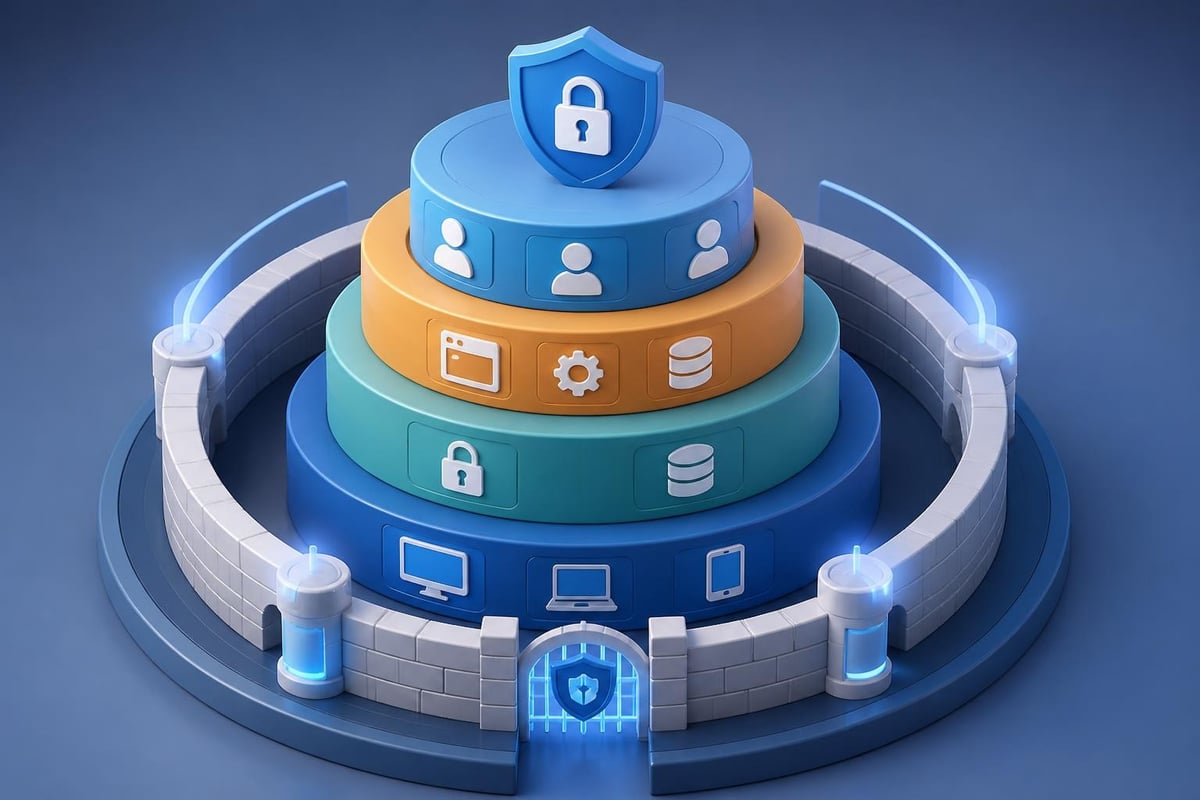
Implementing Zero Trust Architecture
Traditional security models that trust internal network traffic have proven inadequate against modern threats. Zero Trust Architecture represents a fundamental shift in it infrastructure security philosophy, assuming no user or device should be trusted by default, regardless of location.
This approach requires continuous verification of every access request, evaluating multiple factors before granting permissions:
- Identity verification: Multi-factor authentication confirms user identity
- Device assessment: Security posture checks ensure endpoints meet minimum standards
- Context evaluation: Location, time, and behaviour patterns inform access decisions
- Least privilege access: Users receive only the permissions necessary for their roles
- Continuous monitoring: Ongoing surveillance detects anomalous activities
Implementing Zero Trust Architecture provides substantial security improvements, particularly for organisations with remote workers or complex hybrid environments. The model assumes breaches will occur and limits potential damage through microsegmentation and strict access controls.
Practical Zero Trust Implementation
Transitioning to Zero Trust requires strategic planning and phased deployment. Begin by identifying your most critical assets and data flows, then apply increasingly strict controls around these resources. Network segmentation prevents lateral movement between systems, whilst identity and access management platforms centralise authentication and authorisation decisions.
For businesses across the North West seeking cyber security services in Bramhall or surrounding areas, partnering with experienced providers accelerates Zero Trust adoption whilst minimising disruption to operations.
Risk Assessment and Vulnerability Management
Effective it infrastructure security demands ongoing vigilance through systematic risk assessments and vulnerability management programmes. Understanding IT security risk assessment principles enables organisations to identify, analyse, and prioritise potential threats before they materialise into security incidents.
| Risk Assessment Phase | Key Activities | Frequency |
|---|---|---|
| Asset Identification | Catalogue all IT resources | Quarterly |
| Vulnerability Scanning | Automated and manual testing | Weekly/Monthly |
| Threat Analysis | Evaluate current threat landscape | Continuous |
| Impact Assessment | Determine business consequences | Annually |
| Remediation Planning | Prioritise and address findings | Ongoing |
Regular vulnerability scans reveal security weaknesses in systems before attackers exploit them. Automated tools efficiently identify known vulnerabilities, whilst penetration testing simulates real-world attack scenarios to uncover complex security gaps.
Building a Vulnerability Management Programme
Successful vulnerability management extends beyond identifying issues. Establish clear remediation timelines based on severity ratings, with critical vulnerabilities addressed within days and lower-priority items scheduled appropriately. Patch management processes ensure systems receive security updates promptly, reducing the window of exposure.
Documentation proves essential for compliance requirements and continuous improvement. Track identified vulnerabilities, remediation actions, and residual risks to demonstrate due diligence and inform future security investments.
Access Control and Identity Management
Controlling who can access your IT infrastructure and what actions they can perform represents a fundamental security principle. Robust access control mechanisms prevent unauthorised users from compromising systems whilst ensuring legitimate users can perform their duties efficiently.
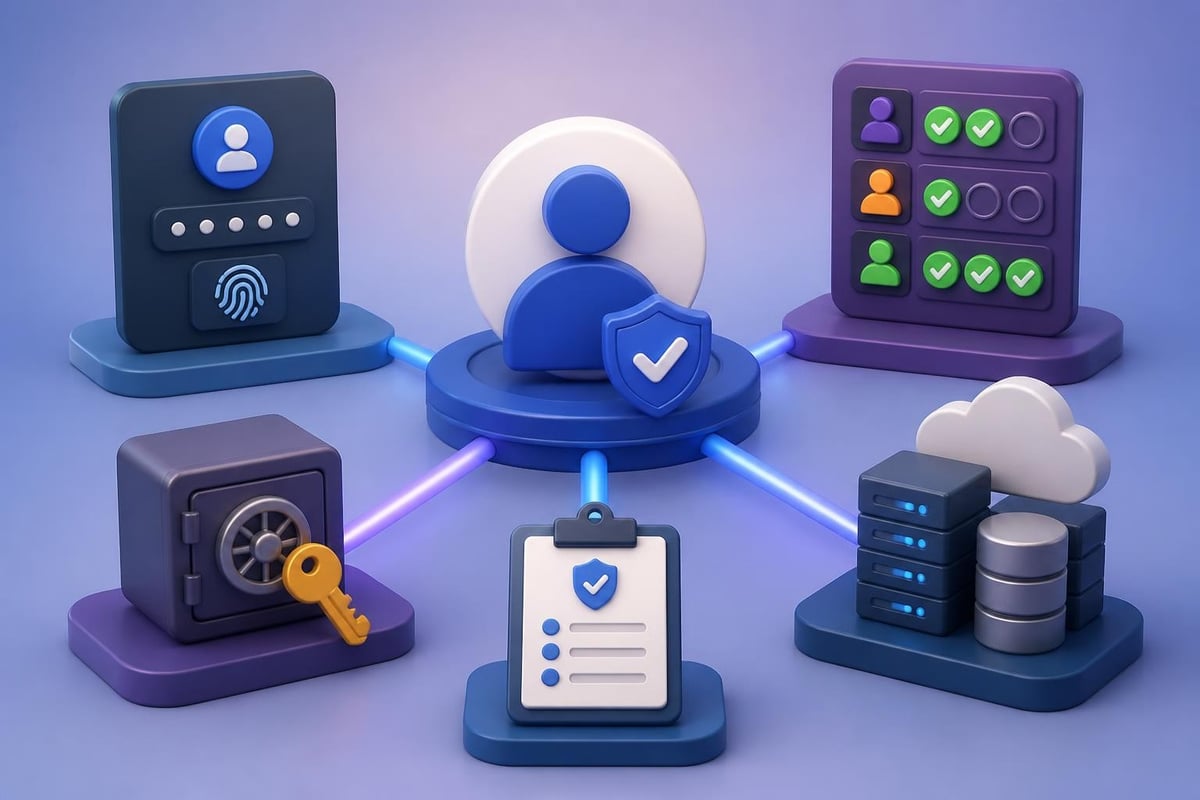
Implementing Strong Authentication
Multi-factor authentication (MFA) significantly reduces the risk of credential compromise by requiring multiple verification methods. Combine something users know (passwords), something they have (tokens or mobile devices), and potentially something they are (biometrics) to create layered authentication defences.
Password policies must balance security with usability. Enforce minimum complexity requirements, regular rotation schedules, and prohibit password reuse across accounts. Password managers help users maintain unique, complex credentials without resorting to insecure practices like writing them down.
Privileged access management (PAM) deserves particular attention, as administrative accounts present the most attractive targets for attackers. Implement just-in-time access provisioning, session recording, and approval workflows for elevated privileges.
Network Security and Segmentation
Your network infrastructure forms the communication backbone connecting distributed IT resources. Securing these pathways prevents unauthorised access, data interception, and malicious traffic from reaching critical systems.
Firewalls provide the first line of defence, filtering traffic based on predetermined security rules. Next-generation firewalls incorporate deep packet inspection, intrusion prevention, and application awareness to identify and block sophisticated threats that traditional packet filtering might miss.
Network segmentation divides infrastructure into isolated zones, limiting the potential impact of security breaches:
- DMZ (Demilitarised Zone): Public-facing services isolated from internal networks
- Production networks: Core business systems and applications
- Development/testing environments: Separated from production to prevent contamination
- Guest networks: Isolated access for visitors and contractors
- Management networks: Dedicated channels for administrative access
Securing Storage Area Networks
Storage systems require specialised security measures to protect the vast quantities of sensitive data they contain. Implementing SAN security best practices involves multi-layered protection including zoning, LUN masking, encryption, and continuous monitoring to prevent unauthorised access to storage resources.
Regular audits of storage access patterns help identify anomalous behaviour that might indicate compromise. Encryption protects data confidentiality even if storage media is physically stolen or improperly decommissioned.
Cloud Security Considerations
Cloud adoption introduces new dimensions to it infrastructure security as organisations share responsibility for protection with service providers. Understanding the shared responsibility model proves critical for maintaining adequate security posture across hybrid environments.
| Security Aspect | Provider Responsibility | Customer Responsibility |
|---|---|---|
| Physical Infrastructure | Full responsibility | None |
| Network Infrastructure | Partial (platform level) | Partial (configuration) |
| Applications | None | Full responsibility |
| Data | None | Full responsibility |
| Access Management | Tools provided | Configuration and policies |
Businesses must secure data before uploading to cloud platforms, implement strong identity controls, and configure cloud resources according to security best practices. Misconfigurations represent the leading cause of cloud security breaches, making proper setup and ongoing monitoring essential.
For organisations implementing secure cloud computing solutions, working with experienced providers ensures configurations align with security requirements whilst maintaining operational efficiency.
Endpoint Protection and Device Management
Endpoints represent the primary attack vector for many cyber threats, as users interact with potentially malicious content through email, web browsing, and application usage. Comprehensive endpoint protection combines multiple defensive technologies to prevent, detect, and respond to threats.
Modern endpoint protection platforms provide:
- Anti-malware detection: Signature-based and behavioural analysis
- Application control: Whitelisting and blacklisting software execution
- Device encryption: Full-disk protection for data at rest
- Patch management: Automated update deployment
- Remote wipe capabilities: Data protection for lost or stolen devices
Mobile device management (MDM) extends protection to smartphones and tablets, enforcing security policies, managing applications, and enabling remote administration. As mobile devices increasingly access corporate resources, securing these endpoints becomes as critical as protecting traditional workstations.

Monitoring, Logging, and Incident Response
Detecting security incidents quickly minimises potential damage and enables rapid response to contain threats. Comprehensive logging and monitoring provide visibility into it infrastructure security events, whilst structured incident response processes ensure coordinated, effective reactions to breaches.
Security Information and Event Management
SIEM (Security Information and Event Management) platforms aggregate logs from across your infrastructure, correlating events to identify suspicious patterns that might indicate security incidents. Automated alerts notify security teams when predefined conditions occur, enabling rapid investigation and response.
Effective SIEM deployment requires careful tuning to balance sensitivity against false positive rates. Too many alerts create alert fatigue, causing analysts to miss genuine threats amongst the noise. Regular review and refinement of detection rules improves signal-to-noise ratios over time.
Incident Response Planning
Every organisation should maintain documented incident response procedures outlining roles, responsibilities, and actions for various security scenarios:
- Preparation: Establish response teams, tools, and communication channels
- Detection: Identify and verify potential security incidents
- Containment: Isolate affected systems to prevent spread
- Eradication: Remove threats and close security gaps
- Recovery: Restore normal operations and verify system integrity
- Lessons learned: Analyse incidents to improve future responses
Regular tabletop exercises test response procedures without requiring actual incidents, identifying gaps and building team competence. These simulations prove invaluable when real incidents occur, as practised responses become instinctive under pressure.
Physical Security Measures
Whilst digital threats dominate security discussions, physical access to IT infrastructure presents equally serious risks. Unauthorised individuals gaining physical access to servers, network equipment, or storage systems can bypass many digital protections.
Data centres and server rooms require multiple physical security layers including access controls, surveillance systems, and environmental monitoring. Badge readers restrict entry to authorised personnel, whilst CCTV provides audit trails and deterrence against unauthorised activities.
Environmental controls protect equipment from physical damage through temperature regulation, humidity control, fire suppression, and power conditioning. Uninterruptible power supplies (UPS) maintain operations during power disruptions, whilst backup generators provide extended runtime for critical systems.
For businesses utilising managed IT services across the North West, professional providers maintain secure facilities with comprehensive physical protections, often exceeding what individual organisations can implement independently.
Compliance and Regulatory Requirements
IT infrastructure security increasingly intersects with regulatory compliance as governments and industry bodies mandate minimum security standards. Understanding applicable regulations ensures your security programme meets legal obligations whilst avoiding potential penalties.
UK businesses must navigate various compliance frameworks depending on their industry and data handling practices:
- UK GDPR: Data protection requirements for personal information
- Cyber Essentials: Government-backed security certification scheme
- PCI DSS: Payment card industry security standards
- ISO 27001: International information security management standard
- NIS Regulations: Requirements for operators of essential services
Compliance frameworks provide structured approaches to it infrastructure security, offering detailed controls and implementation guidance. Whilst meeting compliance requirements doesn't guarantee complete security, these frameworks establish robust baselines that significantly improve security postures.
Backup and Disaster Recovery
No security programme provides absolute protection against all threats. Comprehensive backup and disaster recovery capabilities ensure business continuity even when security incidents, natural disasters, or technical failures impact systems.
| Backup Strategy | Recovery Time | Recovery Point | Use Case |
|---|---|---|---|
| Continuous Replication | Minutes | Seconds | Critical systems |
| Hourly Incremental | Hours | 1 hour | Production databases |
| Daily Full | 24 hours | 1 day | General business data |
| Weekly Archive | Days | 1 week | Long-term retention |
The 3-2-1 backup rule provides a proven framework: maintain three copies of data, on two different media types, with one copy stored offsite. This approach protects against various failure scenarios including hardware failures, localised disasters, and ransomware attacks.
Regular testing of backup and recovery procedures verifies that backups remain viable and restoration processes function correctly. Many organisations discover backup failures only when attempting recovery during actual emergencies, making routine testing essential for reliability.
Security Awareness and Training
Technology alone cannot secure IT infrastructure when users inadvertently introduce risks through poor security practices. Comprehensive security awareness programmes educate employees about threats, promote secure behaviours, and establish security-conscious organisational cultures.
Building Effective Training Programmes
Security training should be engaging, relevant, and ongoing rather than annual checkbox exercises. Interactive modules, simulated phishing exercises, and real-world examples help information retention and behaviour change.
Topics should cover:
- Password security and credential management
- Recognising phishing and social engineering attempts
- Safe browsing and email practices
- Mobile device security
- Reporting suspicious activities
- Data handling and classification
Role-based training addresses specific security responsibilities for different positions. System administrators require deep technical security knowledge, whilst general employees need practical awareness of common threats and appropriate responses.
For organisations seeking cyber security services in Cheadle or surrounding areas, partnering with specialists provides access to professional training resources and expertise that enhance internal security awareness efforts.
Emerging Threats and Future Considerations
The threat landscape continues evolving as attackers develop new techniques and businesses adopt emerging technologies. Staying informed about trends helps organisations anticipate and prepare for future it infrastructure security challenges.
Artificial intelligence and machine learning present both opportunities and risks. Whilst these technologies enhance threat detection and response capabilities, attackers increasingly leverage them to create more sophisticated attacks. Security vulnerabilities in AI systems require careful consideration as organisations integrate these technologies into infrastructure.
Quantum computing threatens current encryption standards, though practical quantum attacks remain years away. Forward-thinking organisations should begin evaluating post-quantum cryptography options and planning eventual transitions to quantum-resistant algorithms.
Supply chain attacks target trusted vendor relationships to compromise multiple organisations through single intrusions. Rigorous vendor security assessments and ongoing monitoring help mitigate these risks, whilst software composition analysis identifies vulnerable components in applications.
Continuous Improvement and Security Maturity
IT infrastructure security represents an ongoing journey rather than a destination. Regular assessments, technology updates, and process refinements ensure security programmes remain effective against evolving threats whilst supporting business objectives.
Security maturity models provide frameworks for measuring progress and identifying improvement opportunities. These models typically define multiple maturity levels from basic reactive security to optimised, proactive programmes with metrics-driven continuous improvement.
Benchmarking against industry peers and standards helps contextualise your security posture and identify gaps. Whilst every organisation faces unique requirements, understanding common practices and emerging trends informs strategic security decisions.
Investment in it infrastructure security should align with business risk tolerance and compliance requirements. Neither under-investment leaving critical gaps nor excessive spending on marginal improvements serves organisational interests. Regular risk assessments inform appropriate investment levels by quantifying potential impact and likelihood of various threats.
Protecting your IT infrastructure requires comprehensive strategies combining technology, processes, and people to defend against increasingly sophisticated threats. For businesses across the North West and throughout the UK, partnering with experienced professionals ensures robust security whilst allowing focus on core business activities. Blowfish Technology provides comprehensive managed IT services, cyber security solutions, and cloud infrastructure protection tailored to your organisation's specific requirements, delivering proactive security that keeps your business running smoothly and securely.

The Blowfish Technology team. Managed IT, cloud services, software development and connectivity for North West businesses since 1999.