
Imagine an attacker has been quietly moving through your business systems for weeks. They are not triggering any alarms. Your antivirus is not flagging anything. Everything looks completely normal, and yet your data, your client records, and your financial information are slowly being mapped and extracted. This is not a worst-case hypothetical. It is how many real breaches actually unfold.
This is exactly the problem that threat hunting is designed to solve. Rather than sitting back and waiting for an alert to fire, threat hunting means skilled analysts actively go looking for attacker behaviour that is already hiding inside your environment. It is a proactive approach, and according to UK government guidance, it is one of the most effective ways to catch threats that have slipped past your automated defences.
If you run or manage a small or medium-sized business, you might assume this kind of security is reserved for large enterprises with big budgets. It is not. In this post, we will walk you through what threat hunting actually is, how the methodology works, and the key questions you should be asking your managed security provider right now.
The Silent Risk Hiding in Your Network
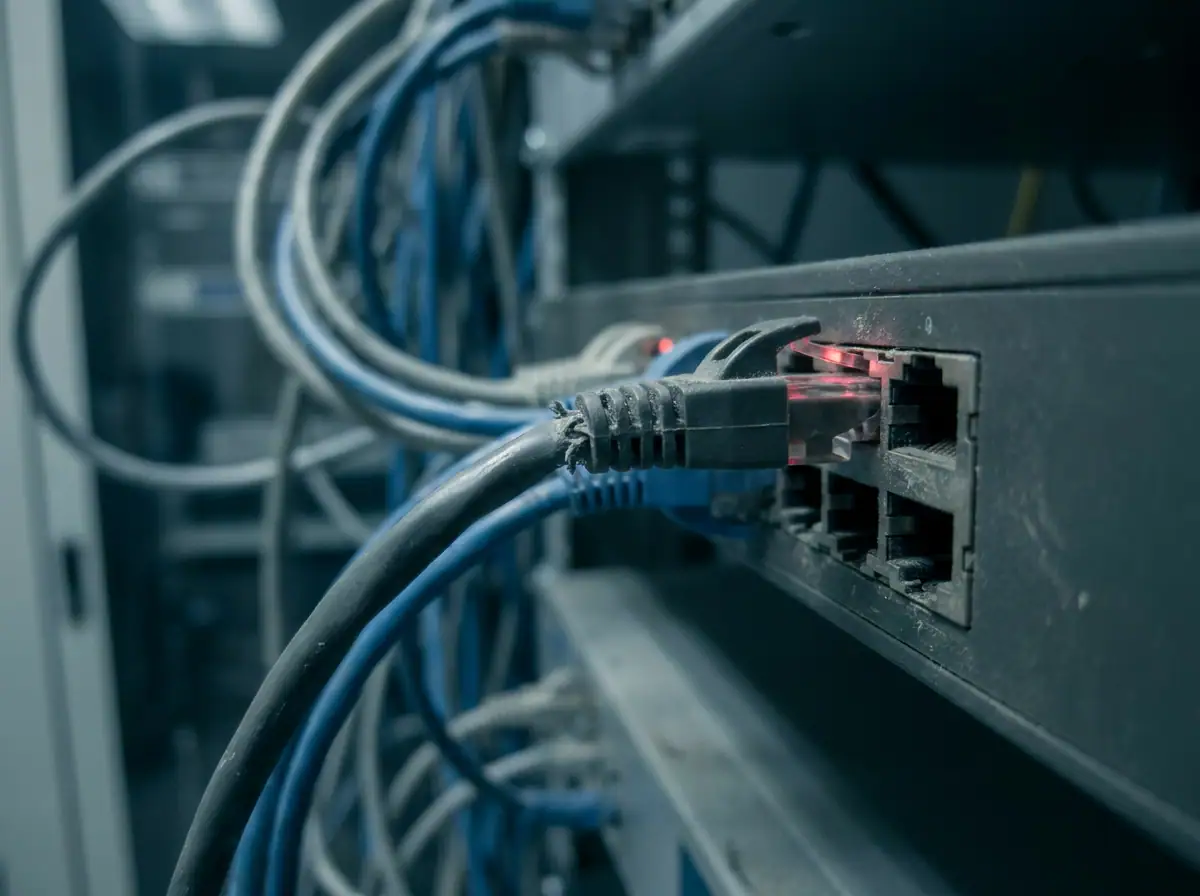
Right now, something could be sitting inside your network, and you would not know it.
According to the M-Trends 2026 report, the global median dwell time for attackers in 2025 was 14 days. That is nearly two weeks during which a threat actor can move laterally across your systems, escalate their privileges, exfiltrate data, or quietly position a ransomware payload, all while your automated defences see nothing unusual.
For stealthy espionage campaigns, that figure reaches a staggering 393 days. Most organisations retain logs for far less than that, meaning the forensic evidence needed to reconstruct an attack may already be gone before anyone realises a breach has occurred.
The reason these threats persist so long is straightforward. Firewalls and signature-based antivirus are built to catch known threats. Advanced persistent threats (APTs) are built specifically to avoid triggering them. Evasion is not accidental; it is deliberate by design.
And if you are thinking your business is too small to attract attention, that assumption is no longer safe. As our guide to threat detection for North West businesses explains, opportunistic attackers scan the internet at scale and exploit whichever environments offer the least resistance, regardless of size. Being small does not make you invisible; it can make you a softer target.
What Is Threat Hunting?
Threat hunting is the proactive practice of searching through networks and systems to find cyber threats that have already slipped past your automated defences, rather than waiting for an alert to fire. The UK government’s own guidance describes it as “Incident Response without the Incident”, a proactive, iterative, and human-centric process for identifying threats that existing controls have missed.
The distinction from standard monitoring matters. Traditional security is reactive: something triggers an alert, and your team responds. Threat hunting inverts that posture. Skilled analysts go looking for evidence of compromise before damage occurs, rather than waiting to be told something is wrong.
It is also not a one-off scan or an automated report. It is a repeatable methodology: analysts form hypotheses about how an attacker might be behaving, interrogate telemetry data, and either confirm the environment is clean or uncover hidden activity. That human judgement is the ingredient automation cannot replicate, which is why investing in the people alongside the technology is so important.
The NCSC’s guidance is clear that this is a SOC-based capability requiring formalised processes, trained personnel, and appropriate tooling. It is not a feature checkbox on a vendor dashboard.
How Threat Hunting Works: The Methodology
So what does the process actually look like in practice?
- Hypothesis formation. Analysts start with an informed assumption about attacker behaviour, drawing on threat intelligence, known tactics, techniques, and procedures (TTPs), and the organisation’s specific risk profile. They ask: “If an attacker were inside this environment right now, how might they be moving?”
- Data collection and telemetry review. Analysts pull data from endpoint detection and response (EDR) tools, network logs, and authentication records, interrogating each source for anomalies consistent with the hypothesis.
- Investigation and pattern analysis. The focus is behavioural, not signature-based. Analysts look for unusual process execution, lateral movement between endpoints, abnormal data access, or suspicious outbound connections; things that look legitimate on the surface but fit known attacker patterns.
- Resolution. If malicious activity is confirmed, findings feed directly into incident response. If the environment comes back clean, the hunt still delivers value by validating that controls are working and identifying gaps worth addressing.
- Documentation and iteration. Every hunt is recorded. Findings, methodology, and outcomes build a knowledge base that makes the next hunt sharper. This accumulated intelligence is precisely what separates a formalised threat hunting programme from a one-off exercise.
Why Automation Alone Is Not Enough
Automated detection tools operate on known patterns and signatures. They are highly effective against commodity malware but structurally blind to living-off-the-land techniques, where attackers abuse legitimate system tools such as PowerShell or scheduled tasks to move through an environment without triggering a single signature. No unusual file exists, so nothing is flagged.
This is not accidental. Advanced persistent threat actors deliberately test their techniques against common security products before deployment. Evasion is engineered in from the start.
Automation also creates its own operational problem. High volumes of low-fidelity alerts cause genuine indicators of compromise to be buried or deprioritised, a well-documented issue known as alert fatigue. Understanding this risk is part of what every North West business needs to know about endpoint security.
Managed cyber security services that rely solely on alerting are, at best, catching yesterday’s threats. The 393-day average dwell time recorded for stealthy espionage campaigns reflects exactly this gap. That dwell time is not accidental, it is the direct product of automation’s blind spots. Threat hunting exists to close that window before the damage is done.
The Role of EDR in Threat Hunting
So if automation cannot catch everything, what gives analysts the raw material to go looking manually? That is where endpoint detection and response (EDR) comes in.
EDR is the telemetry foundation that threat hunting depends on, recording endpoint activity at a granular level. These are the precise signals that separate routine activity from attacker tradecraft.
One important distinction: EDR and threat hunting are not the same thing. EDR collects and surfaces data; threat hunting is the human-led methodology that interrogates that data for hidden attacker activity. One enables the other, but owning the tool does not mean the work is being done.
An organisation that deploys EDR without a threat hunting layer remains in a reactive posture. Without a skilled analyst actively working through the telemetry, a persistent threat can continue undetected. This is particularly relevant for businesses considering whether moving workloads to a managed environment, such as a UK hosted desktop solution, changes their endpoint visibility requirements; it does, and EDR coverage must follow the estate.
When reviewing your managed IT security services, confirm that EDR deployment is accompanied by a defined, documented threat hunting process. The presence of an EDR product alone is not evidence that proactive searching is taking place.
Threat Hunting Is Not Just for Enterprise
So EDR gives your analysts the data they need, but who are those analysts, and does your business actually need them on staff full-time?
This is where a persistent misconception holds many SMEs back. Threat hunting has traditionally been framed as something requiring a dedicated, in-house security operations centre staffed by full-time specialists. For most growing North West businesses, that picture immediately triggers the thought: “That’s not for us.”
It does not have to look like that.
Proportionate threat hunting for an SME means periodic hunting sprints: structured, time-boxed investigations carried out by your managed security provider on a regular cadence. Quarterly is a realistic and genuinely valuable starting point. The key is that the activity is formalised, documented, and repeatable, not ad hoc.
Through a managed cyber security service, you can access trained threat hunting analysts without the overhead of building an internal team. That shared-resource model is exactly how proportionate security works at SME scale.
Crucially, UK government guidance frames threat hunting as foundational cyber hygiene, not an enterprise luxury. That reframes the question entirely. It is no longer “can we afford this?” but rather “can we afford to skip it?”
Even a quarterly sprint with clear methodology and written outcomes delivers measurably more protection than a purely reactive, alert-only posture.
Genuine Threat Hunting vs. Security Theatre
Knowing that proportionate hunting is accessible is one thing; knowing whether your provider is actually delivering it is another.
Security theatre describes security activity that looks protective without meaningfully reducing risk. In managed security, it most commonly appears as alert-monitoring being presented as proactive hunting. If your provider’s “threat hunting” amounts to reviewing dashboard notifications and responding when something fires, that is reactive monitoring with a different label.
Genuine hunting requires that hypothesis-driven investigation described earlier, not just waiting for a notification.
A provider doing this properly will be able to clearly explain:
- Their hunting methodology and how hypotheses are formed
- The specific TTPs (attacker tactics, techniques, and procedures) they investigate
- How frequently hunts are conducted
- How findings are documented and reported back to you
Watch for these red flags: no defined hunting cadence, no mention of hypothesis-driven investigation, and no distinction between automated alerting and manual analysis in their service documentation.
One telling question: does your provider report hunting outcomes even when nothing suspicious is found? A clean result is valuable evidence that controls are working. A provider who understands what a managed security provider actually delivers should be able to show you that proof, not just silence until something breaks.
Questions Every SME Should Ask Their Managed Security Provider

Knowing the red flags is one thing; having the right questions ready is another. Put these directly to your managed security provider before signing or renewing any agreement.
- Is threat hunting explicitly in scope in our service agreement, and how is it defined separately from automated alerting and monitoring? If the contract does not name it, it almost certainly is not happening.
- What is your threat hunting methodology? Are hunts hypothesis-driven, and which attacker tactics, techniques, and procedures (TTPs) or threat intelligence sources shape each hypothesis? A credible provider will give a specific answer, not a general one.
- How frequently do you conduct proactive hunting on our environment, and will we receive a report covering findings, methodology, and outcomes even when nothing is found? Reporting on clean hunts is the mark of genuine activity.
- Which EDR solution underpins our service, and how does your team use that telemetry for proactive hunting rather than reactive alert triage alone? The tool and the methodology are separate things; confirm both are present.
- How do you measure and report dwell time, and what is your target for detection-to-response time? With the global median at 14 days, this benchmark should be defined and tracked.
- What is the escalation process when a hunt uncovers a genuine threat, and how do findings feed into our incident response plan? Hunting without a clear response path leaves the most important step unfinished.
- Can you provide evidence of previous threat hunting outcomes, including clean-result hunts? Documented history confirms that proactive searching is genuinely taking place, not simply promised.
What Proactive Security Looks Like in Practice
Those questions give you a reliable framework for evaluation. The answers you receive will tell you whether genuine threat hunting is already part of your service or whether it needs to be.
At Blowfish Technology, the cyber security service is built on exactly this layered model. EDR provides the visibility; proactive investigation sits on top of it to surface threats that automated tools alone would never flag.
For North West SMEs, that means access to skilled threat hunting capability without the cost of an in-house SOC. It is a proportionate model built around the budget and risk realities of growing businesses.
Reporting matters too. Regular, documented hunting outcomes give business owners and operations directors real evidence of security posture, not just a dashboard showing green. And when managed IT support and cyber security operate together, hunting findings directly inform decisions around patching, network segmentation, and infrastructure improvements, creating a continuous feedback loop that strengthens resilience over time.
Stop Waiting for the Alert
The evidence throughout this guide points to one clear conclusion: waiting for an alert is no longer a sufficient security strategy.
Those dwell-time numbers, already established, are the operational reality passive defences leave unaddressed. Every day inside your environment, an undetected attacker has options.
The questions earlier in this guide give you the framework; use them.
If you are unsure whether genuine proactive hunting is included in your current service, that uncertainty is itself the answer. A provider doing this properly will tell you exactly what they hunt for, how often, and what they found. If they cannot, you know what to do next.
Conclusion
Threat hunting is not a luxury reserved for enterprise security teams. It is a practical, necessary discipline that addresses the fundamental gap passive defences leave open.
The key takeaways are clear. Attackers dwell undetected for days, weeks, or months. Automated tools catch known threats but miss novel techniques and living-off-the-land behaviour. Genuine threat hunting requires human-led hypothesis testing, not just alert response. And SMEs have both the need and the means to access this capability through the right managed security partner.
The call to action is simple: audit what you are actually receiving today. Use the questions in this guide, demand documented methodology, and hold your provider to a higher standard than reactive monitoring.
Proactive security is the difference between discovering an attacker on your terms and discovering them on theirs. Choose the former.
Frequently Asked Questions
What is the average amount of time an attacker can remain undetected inside a business network?
According to the M-Trends 2026 report, the global median dwell time for attackers in 2025 was 14 days. However, for stealthy espionage campaigns, this figure reaches a staggering 393 days. This extended period allows attackers to move laterally across systems, escalate privileges, exfiltrate data, or deploy ransomware payloads without triggering automated defences.
Why can't traditional firewalls and antivirus software catch advanced persistent threats?
Firewalls and signature-based antivirus are built to catch known threats by recognising specific patterns or signatures. Advanced persistent threats (APTs) are deliberately designed to avoid triggering these signatures through evasion techniques. Additionally, attackers often use living-off-the-land techniques that abuse legitimate system tools like PowerShell or scheduled tasks, leaving no unusual files or signatures for automated systems to detect.
How is threat hunting different from traditional security monitoring?
Traditional security monitoring is reactive—it waits for an alert to fire and then responds. Threat hunting inverts this approach by being proactive: skilled analysts actively search through networks and systems to find cyber threats that have already slipped past automated defences before damage occurs. Rather than responding to alerts, analysts form hypotheses about attacker behaviour and interrogate telemetry data to uncover hidden activity. The UK government describes it as 'Incident Response without the Incident.'
Can small and medium-sized businesses afford to implement threat hunting?
Yes. While threat hunting has traditionally been associated with large enterprises staffed with full-time security operations centre specialists, SMEs can access proportionate threat hunting through managed security providers. Periodic hunting sprints—structured, time-boxed investigations conducted on a regular cadence (such as quarterly)—deliver measurable protection without the overhead of building an internal team. The UK government frames threat hunting as foundational cyber hygiene, not an enterprise luxury.
What should I ask my managed security provider to confirm they're delivering genuine threat hunting?
Ask these key questions: (1) Is threat hunting explicitly defined and separate from automated alerting in our service agreement? (2) What is your hypothesis-driven methodology and which TTPs or threat intelligence sources inform each hunt? (3) How frequently do you conduct hunting and do you report findings even when nothing is found? (4) Which EDR solution do you use and how do you use that telemetry for proactive hunting? (5) How do you measure dwell time and detection-to-response time? (6) What is the escalation process when threats are uncovered? (7) Can you provide evidence of previous hunting outcomes? If your provider cannot clearly answer these questions, genuine threat hunting is likely not taking place.
