
As businesses across the UK increasingly migrate their operations to cloud environments, the importance of robust security measures has never been more critical. Cloud network security represents the comprehensive set of policies, technologies, and controls deployed to protect data, applications, and infrastructure hosted in cloud environments. With cyber threats evolving at an unprecedented pace, organisations must understand how to safeguard their digital assets whilst maintaining the flexibility and scalability that cloud computing offers.
Understanding Cloud Network Security Fundamentals
Cloud network security encompasses the strategies and tools used to protect cloud-based networks from unauthorised access, data breaches, and cyber attacks. Unlike traditional on-premises security, cloud network security strategies must account for the distributed nature of cloud infrastructure and the shared responsibility model between providers and customers.
The fundamental challenge lies in securing resources that exist outside your physical premises. When data and applications reside in third-party data centres, organisations must implement controls that extend beyond their traditional network perimeter. This requires a paradigm shift in how security teams approach threat detection, incident response, and compliance management.
Key components of cloud network security include:
- Identity and access management (IAM) systems
- Network segmentation and micro-segmentation
- Encryption for data in transit and at rest
- Security monitoring and logging
- Threat detection and response capabilities
- Compliance and governance frameworks
Modern businesses must recognise that cloud network security isn’t a single product or service, but rather a comprehensive approach that integrates multiple layers of protection. Understanding cloud network security requires familiarity with both technical controls and organisational policies that work together to create a robust security posture.

The Shared Responsibility Model in Practice
One of the most critical concepts in cloud network security is the shared responsibility model. Cloud providers like Microsoft Azure, Amazon Web Services, and Google Cloud Platform manage security of the cloud, whilst customers remain responsible for security in the cloud. This distinction determines who handles specific security controls.
Cloud providers typically secure the physical infrastructure, including data centres, networking hardware, and hypervisor layers. They ensure the underlying platform remains available, resilient, and protected from infrastructure-level threats. However, customers must secure their own data, applications, user access, and network configurations within the cloud environment.
Defining Your Security Boundaries
Organisations must clearly understand where their security responsibilities begin. For businesses leveraging managed IT services, this often means partnering with experienced providers who can bridge the gap between provider and customer responsibilities.
Consider these practical examples:
| Security Layer | Provider Responsibility | Customer Responsibility |
|---|---|---|
| Physical Security | Data centre access, hardware protection | N/A |
| Network Infrastructure | Core network security, DDoS protection | Virtual network configuration, firewall rules |
| Platform Services | Patching managed services, service availability | Application security, data encryption |
| Data & Content | N/A | Data classification, access controls, encryption keys |
| Identity Management | Authentication infrastructure | User provisioning, MFA enforcement, role assignments |
Misunderstanding these boundaries creates security gaps. A 2026 study revealed that 68% of cloud security incidents resulted from customer misconfiguration rather than provider vulnerabilities. This statistic underscores why organisations must invest in proper training and cyber security expertise to manage their portion of the shared responsibility effectively.
Implementing Zero Trust Architecture
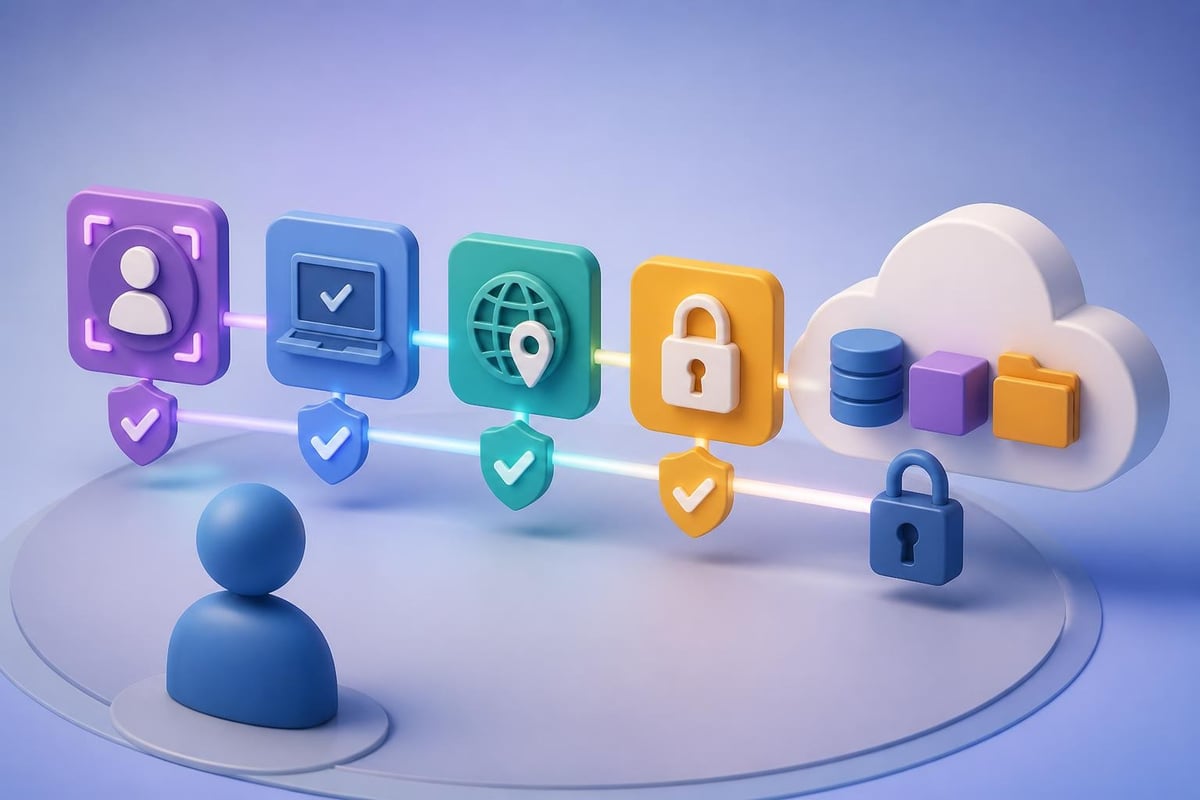
Zero trust represents a fundamental shift from traditional perimeter-based security to a model where trust is never assumed, regardless of network location. In cloud environments, where resources may be accessed from anywhere, zero trust principles become essential to maintaining robust cloud network security.
The core principle is simple: verify explicitly, use least privilege access, and assume breach. Every access request must be authenticated, authorised, and encrypted before granting access to resources. This approach eliminates the concept of a trusted internal network and treats every request as potentially hostile.
Essential zero trust components include:
- Strong identity verification through multi-factor authentication (MFA)
- Granular access controls based on user identity, device health, and location
- Continuous monitoring of user behaviour and network traffic
- Micro-segmentation to limit lateral movement within networks
- Just-in-time access that grants temporary permissions when needed
Implementing zero trust requires rethinking traditional network architectures. Rather than allowing broad access once users authenticate, organisations must enforce continuous verification throughout each session. Cloud security best practices emphasise that this approach significantly reduces the attack surface and limits the potential damage from compromised credentials.
Encryption and Data Protection Strategies
Encryption forms the backbone of cloud network security, protecting data both in transit and at rest. Without proper encryption, sensitive information remains vulnerable to interception, unauthorised access, and regulatory non-compliance. Businesses must implement comprehensive encryption strategies that cover all data states throughout its lifecycle.
Encryption in Transit
When data moves between your organisation and cloud services, or between different cloud resources, it must be encrypted using modern protocols. Transport Layer Security (TLS) 1.3 should be the minimum standard for all communications. This prevents man-in-the-middle attacks and ensures that data cannot be intercepted whilst traversing public networks.
Configure your cloud services to reject unencrypted connections entirely. This prevents accidental data exposure through misconfigured applications or legacy systems that might attempt to communicate over insecure channels.
Encryption at Rest
Data stored in cloud environments must be encrypted using strong algorithms such as AES-256. Most cloud providers offer encryption services, but organisations should maintain control over their encryption keys when handling sensitive or regulated data. Key management systems allow businesses to rotate, revoke, and audit key usage independently of the cloud provider.
Consider implementing these data protection measures:
- Customer-managed encryption keys (CMEK) for sensitive data
- Automatic encryption for all storage services
- Database-level encryption for structured data
- Tokenisation for particularly sensitive fields like payment information
- Regular encryption key rotation policies
For organisations in regulated industries, encryption often forms part of compliance requirements. Financial services, healthcare, and legal firms must demonstrate that client data remains protected both in storage and during transmission, making robust encryption non-negotiable.
Network Segmentation and Access Controls
Effective cloud network security requires dividing your cloud environment into distinct segments with carefully controlled communication pathways. Network segmentation limits the blast radius of security incidents by preventing attackers from moving freely between different parts of your infrastructure once they gain initial access.
Traditional network segmentation used VLANs and physical network boundaries. Cloud environments employ software-defined networking to create virtual segments that can be dynamically adjusted based on workload requirements. These virtual networks provide isolation whilst maintaining the flexibility that makes cloud computing attractive.
| Segmentation Type | Use Case | Security Benefit |
|---|---|---|
| Virtual Private Clouds (VPCs) | Isolate different environments | Prevent cross-environment contamination |
| Subnets | Separate application tiers | Limit communication to necessary paths |
| Security Groups | Control instance-level traffic | Granular firewall rules per resource |
| Network ACLs | Subnet boundary protection | Additional stateless filtering layer |
| Service Endpoints | Private access to cloud services | Eliminate internet exposure |
Micro-segmentation takes this concept further by creating even finer-grained security zones around individual workloads or applications. This approach ensures that even within the same subnet, resources can only communicate based on explicit policies rather than default network connectivity.
Access controls complement network segmentation by determining who can interact with cloud resources. AWS cloud security best practices recommend implementing least privilege access, where users and services receive only the minimum permissions necessary to perform their functions. Regular permission audits help identify and remove excessive privileges that accumulate over time.
Continuous Monitoring and Threat Detection
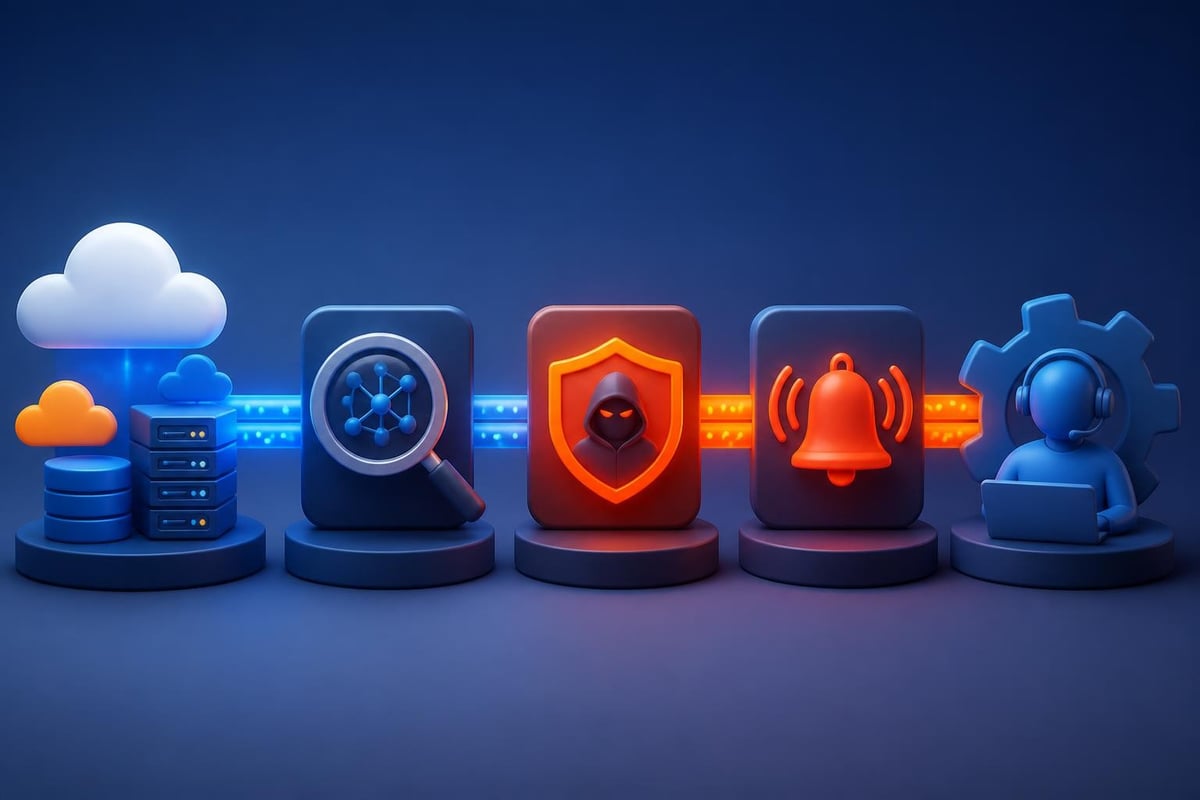
Cloud network security demands real-time visibility into your environment’s security posture. Continuous monitoring enables rapid detection of anomalous behaviour, policy violations, and potential security incidents before they escalate into major breaches.
Modern cloud platforms generate vast amounts of log data from various sources. Network flow logs capture traffic patterns, access logs record authentication attempts, and application logs track user activities. Effective security monitoring consolidates these disparate data streams into actionable intelligence.
Critical monitoring capabilities include:
- Real-time alerting for suspicious activities
- Automated threat detection using machine learning
- Configuration compliance monitoring
- User behaviour analytics
- Network traffic analysis
- File integrity monitoring
Security Information and Event Management (SIEM) systems aggregate logs from across your cloud infrastructure, correlating events to identify patterns that might indicate security incidents. These platforms apply threat intelligence and behavioural analytics to distinguish genuine threats from normal operational activities.
For businesses without dedicated security operations centres, managed EDR services provide professional monitoring and threat response capabilities. These services combine advanced detection technologies with human expertise to identify and respond to threats 24/7.
Cloud Firewall Configuration and Management
Cloud firewalls operate differently from traditional hardware appliances, offering dynamic, software-defined protection that scales with your infrastructure. Proper firewall configuration represents a fundamental element of cloud network security, controlling which traffic can reach your cloud resources.
Cloud providers offer multiple firewall layers. Network-level firewalls control traffic between subnets and external networks, whilst instance-level security groups manage traffic to individual resources. Web application firewalls (WAFs) provide additional protection for internet-facing applications by filtering HTTP/HTTPS traffic for common attack patterns.
When evaluating cloud firewall solutions, organisations should consider these features:
- Default-deny policies that block all traffic except explicitly permitted connections
- Stateful inspection tracking connection states to prevent spoofing attacks
- Application-aware filtering understanding protocols beyond simple port numbers
- Logging and reporting capabilities for security analysis and compliance
- Integration with threat intelligence feeds for proactive blocking
Regular firewall rule audits prevent configuration drift and identify overly permissive rules that may have been created for troubleshooting but never removed. Many organisations accumulate hundreds of firewall rules over time, creating complexity that increases security risk.
Compliance and Governance Frameworks
Cloud network security must align with regulatory requirements and industry standards applicable to your business. Organisations handling customer data face obligations under GDPR, whilst those in financial services must comply with PCI DSS or FCA regulations. Failure to maintain adequate security controls can result in significant fines and reputational damage.
Cloud providers achieve various compliance certifications, but customer responsibility for data protection remains unchanged. Your organisation must implement controls that meet regulatory requirements regardless of where your infrastructure resides. This includes data residency requirements that mandate certain information remains within specific geographic boundaries.
Governance frameworks provide structured approaches to managing cloud network security:
- ISO 27001 offers comprehensive information security management standards
- NIST Cybersecurity Framework provides risk-based security guidance
- CIS Controls recommend specific technical security measures
- SOC 2 addresses service organisation controls for cloud providers
Implementing these frameworks demonstrates due diligence to regulators, customers, and business partners. Many organisations achieve Cyber Essentials Plus certification as a foundation for their security programmes, particularly when working with government contracts or sensitive data.
Automation and Infrastructure as Code Security
Modern cloud environments leverage automation extensively, using Infrastructure as Code (IaC) to define and deploy resources programmatically. Whilst this approach improves consistency and speed, it also introduces security considerations that must be addressed within your cloud network security strategy.
IaC templates, written in languages like Terraform or CloudFormation, define your entire infrastructure configuration. Security misconfigurations in these templates get replicated across every deployment, potentially creating widespread vulnerabilities. Security practices in Infrastructure as Code have become increasingly important as more organisations adopt these methodologies.
Securing Your IaC Pipeline
Treat infrastructure code with the same security rigour as application code. This means implementing code reviews, automated security scanning, and version control for all IaC templates. Static analysis tools can identify security misconfigurations before deployment, preventing issues like publicly accessible storage buckets or overly permissive network rules.
Store IaC templates in private repositories with access controls limiting who can modify infrastructure definitions. Changes should require approval workflows that include security review, particularly for production environments. This prevents unauthorised infrastructure modifications that could create security gaps.
Automated security testing should be integrated into your deployment pipeline. Tools can validate that deployed resources match security baselines, flagging deviations for immediate remediation. This continuous validation ensures that manual changes made outside your IaC workflow don’t compromise security.
Managing Multi-Cloud and Hybrid Environments
Many organisations operate across multiple cloud providers or maintain hybrid environments connecting cloud resources with on-premises infrastructure. This complexity multiplies cloud network security challenges, requiring consistent security policies across disparate platforms with different native security tools.
Multi-cloud strategies offer benefits like avoiding vendor lock-in and leveraging best-of-breed services, but they create management overhead. Each cloud platform uses different terminology, security constructs, and management interfaces. Security teams must develop expertise across multiple platforms whilst maintaining consistent protection levels.
Challenges specific to multi-cloud security include:
- Inconsistent identity and access management across platforms
- Different logging formats and security monitoring tools
- Varied network security constructs and capabilities
- Multiple compliance frameworks and audit requirements
- Complex interconnections between cloud providers
Addressing cloud complexity challenges requires unified security platforms that provide consistent visibility and control regardless of underlying infrastructure. Cloud Security Posture Management (CSPM) tools assess configurations across multiple clouds, identifying misconfigurations and compliance violations from a single interface.
For hybrid environments connecting cloud and on-premises resources, secure connectivity becomes paramount. Virtual private networks (VPNs) or dedicated connections like AWS Direct Connect provide encrypted pathways between environments. These connections must be carefully configured to prevent unauthorised access whilst enabling legitimate business workflows.
Incident Response and Disaster Recovery
Even with robust preventive measures, organisations must prepare for security incidents. Effective cloud network security includes comprehensive incident response procedures that enable rapid detection, containment, and recovery from security breaches. Detecting and responding to cloud security breaches requires different approaches than traditional on-premises incidents.
Cloud environments change rapidly, with resources created and destroyed programmatically. This dynamic nature complicates forensic investigation, as evidence may be ephemeral. Incident response plans must account for cloud-specific challenges like snapshot management, log retention, and cross-region resource distribution.
Your incident response plan should define:
- Detection thresholds that trigger investigation procedures
- Escalation pathways identifying who responds to different incident types
- Containment strategies for isolating compromised resources
- Evidence collection procedures preserving forensic data
- Recovery processes restoring normal operations securely
- Post-incident review identifying lessons learned and improvements
Regular testing through tabletop exercises and simulated incidents ensures your team can execute response procedures effectively under pressure. These exercises often reveal gaps in documentation, tool access, or team knowledge that can be addressed before real incidents occur.
Disaster recovery planning complements incident response by ensuring business continuity when cloud resources become unavailable. Regular backups, tested restoration procedures, and documented failover processes protect against both security incidents and operational failures.
Security Training and Awareness Programmes
Technology alone cannot secure cloud environments. Human factors contribute to most security incidents, whether through phishing attacks, misconfiguration, or inadequate access controls. Comprehensive cloud network security requires ongoing training programmes that develop security awareness across your organisation.
Different audiences require tailored training content. Developers need secure coding practices and configuration guidance. System administrators require deep technical knowledge of security tools and procedures. Business users benefit from awareness training covering phishing recognition, password hygiene, and data handling policies.
Effective security training programmes include:
- Role-based training aligned with job responsibilities
- Regular refresher courses maintaining awareness
- Simulated phishing campaigns testing user vigilance
- Hands-on exercises with security tools
- Updates covering emerging threats and new vulnerabilities
- Metrics tracking training completion and effectiveness
Creating a security-conscious culture where employees actively participate in protecting organisational assets significantly strengthens your overall security posture. When staff understand why security measures exist and how their actions impact organisational risk, compliance improves and incidents decrease.
For businesses throughout the North West seeking to enhance their security capabilities, working with experienced partners who provide both technical security solutions and training support ensures comprehensive protection.
Vendor Security Assessment and Third-Party Risk
Cloud network security extends beyond resources you directly control to include third-party services, APIs, and integrations that access your data or infrastructure. Each external connection represents a potential attack vector requiring careful security assessment and ongoing monitoring.
Before integrating third-party services, conduct thorough security assessments evaluating their security practices, compliance certifications, and incident history. Request documentation demonstrating their security controls, including penetration test results, SOC 2 reports, and disaster recovery capabilities.
Key assessment areas include:
| Assessment Category | Key Questions |
|---|---|
| Data Protection | How is data encrypted? Where is it stored? Who has access? |
| Access Controls | What authentication methods are required? Is MFA supported? |
| Incident Response | What are notification procedures? What is average response time? |
| Compliance | Which certifications do they maintain? How are audits conducted? |
| Business Continuity | What is uptime guarantee? What backup systems exist? |
Contractual agreements should specify security requirements, data ownership, breach notification obligations, and liability allocation. These contracts provide recourse when vendors fail to maintain adequate security, though preventing incidents remains preferable to seeking compensation afterwards.
Continuously monitor third-party services for security incidents and vulnerabilities. Many high-profile breaches occur through compromised third-party software or services, making vendor security management a critical component of your cloud network security strategy.
Emerging Technologies and Future Considerations
Cloud network security continues evolving as new technologies emerge and threat landscapes shift. Staying ahead of these changes requires awareness of trends shaping future security requirements and proactive adaptation of security strategies.
Artificial intelligence and machine learning increasingly power security tools, enabling automated threat detection that identifies sophisticated attacks faster than human analysts. These technologies analyse patterns across millions of events, flagging anomalies that might indicate security incidents whilst reducing false positives that create alert fatigue.
Quantum computing, whilst still emerging, poses long-term risks to current encryption methods. Organisations should begin considering post-quantum cryptography to ensure data encrypted today remains secure when quantum computers become viable. Planning these transitions early prevents rushed migrations under pressure.
Container security and serverless computing introduce new security paradigms requiring specialised tools and expertise. Traditional security approaches designed for persistent servers don’t always translate effectively to ephemeral containers that exist for seconds or minutes. Security must integrate into development workflows, embedding protections throughout the application lifecycle.
Edge computing distributes processing closer to data sources, creating new security boundaries beyond centralised cloud data centres. This distribution requires extending cloud network security controls to edge locations whilst maintaining consistent policies and visibility.
Strategic cloud security frameworks must account for these emerging technologies, building flexibility into security architectures that can adapt as business needs and technology landscapes evolve. Regular reviews ensure security strategies remain aligned with organisational objectives and emerging threats.
Protecting cloud environments requires comprehensive strategies addressing technology, processes, and people across multiple security domains. From implementing zero trust architectures to maintaining robust monitoring and incident response capabilities, cloud network security demands ongoing attention and expertise. Blowfish Technology provides the managed IT and cyber security services that UK businesses need to secure their cloud infrastructure effectively, offering proactive protection that keeps your operations running smoothly whilst safeguarding critical data and applications.

The Blowfish Technology team. Managed IT, cloud services, software development and connectivity for North West businesses since 1999.