
Operational technology cyber security has emerged as a critical priority for organisations across manufacturing, energy, utilities, and infrastructure sectors throughout the United Kingdom. As the boundaries between traditional information technology networks and industrial control systems continue to blur, businesses face unprecedented risks from sophisticated cyber threats targeting their operational environments. The convergence of IT and OT systems, whilst enabling enhanced efficiency and data-driven decision-making, has simultaneously expanded the attack surface available to malicious actors seeking to disrupt critical business operations.
Understanding the Operational Technology Landscape
Operational technology encompasses the hardware and software systems that monitor and control physical devices, processes, and infrastructure. Unlike conventional IT systems designed primarily for data processing and communication, OT environments directly manage industrial equipment, manufacturing lines, building management systems, and critical infrastructure.
The fundamental differences between IT and OT systems create unique security challenges. OT systems often prioritise availability and safety above all else, whereas IT environments typically focus on confidentiality and data integrity. Many operational technology installations were designed decades ago, long before cybersecurity became a primary concern, resulting in legacy systems that lack modern security features.
The Convergence Challenge
Modern businesses increasingly connect their OT networks to corporate IT infrastructure to leverage real-time data analytics, remote monitoring capabilities, and centralised management platforms. This integration, whilst delivering significant operational benefits, introduces vulnerabilities that cybercriminals actively exploit.
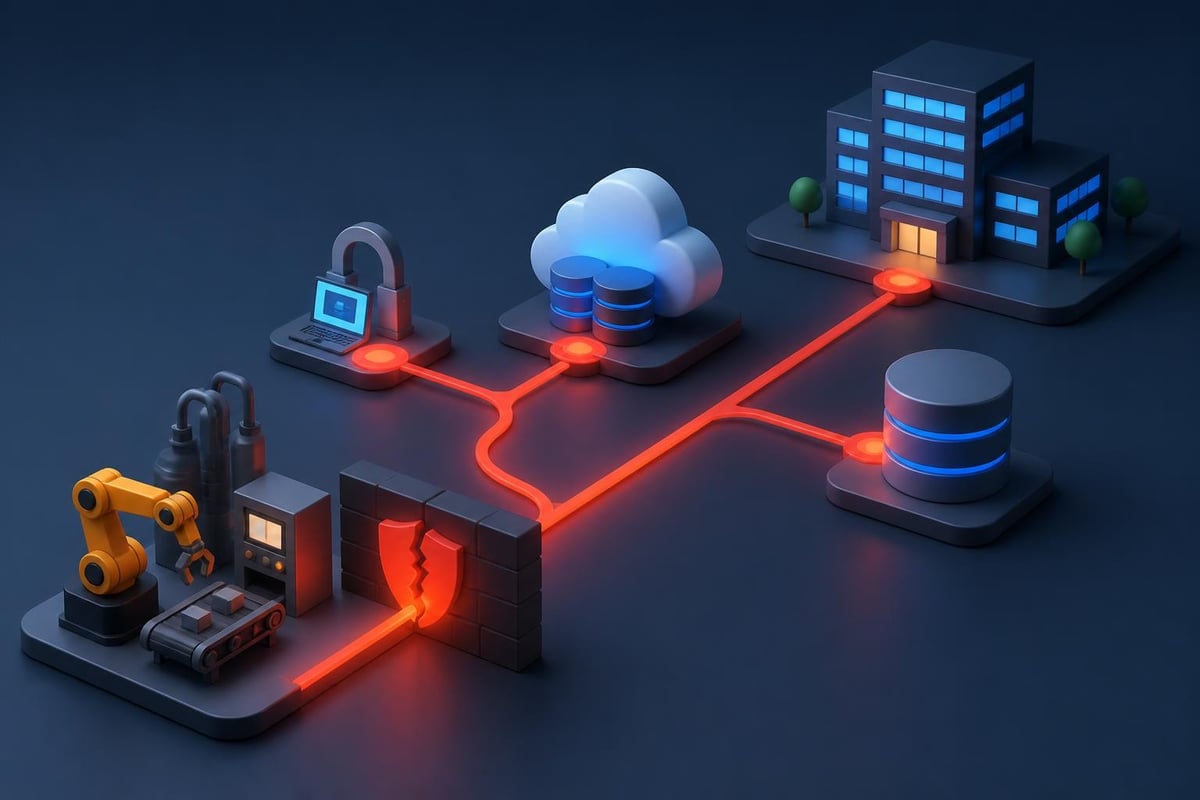
According to research on industrial organisations under attack, threat actors increasingly target operational environments, recognising their critical role in business continuity and physical safety. The consequences of compromised OT systems extend beyond data breaches to include production shutdowns, equipment damage, environmental incidents, and potential threats to human safety.
Critical Vulnerabilities in Operational Environments
Operational technology cyber security faces distinct challenges that differentiate it from traditional IT security approaches. Understanding these vulnerabilities enables organisations to develop comprehensive protection strategies tailored to their industrial environments.
Legacy System Limitations
Many operational technology deployments rely on outdated systems originally designed for isolated networks. These systems frequently run unsupported operating systems, lack authentication mechanisms, and cannot accommodate modern security patches without risking operational disruptions.
- Proprietary protocols designed without security considerations
- Inability to install endpoint protection software
- Long operational lifecycles spanning multiple decades
- Limited computational resources preventing security tool deployment
- Vendor dependencies for system modifications
Network Architecture Weaknesses
Traditional OT networks often lack proper segmentation, allowing lateral movement between operational zones. Flat network architectures, whilst simplifying initial deployment, create significant security risks when connected to external networks or the internet.
| Vulnerability Type | Risk Level | Common Examples | Mitigation Priority |
|---|---|---|---|
| Unpatched Systems | Critical | Legacy PLCs, SCADA servers | Immediate |
| Remote Access | High | Vendor connections, mobile access | High |
| Weak Authentication | High | Default credentials, shared accounts | High |
| Network Segmentation Gaps | Medium | Flat networks, inadequate firewalls | Medium |
| Insufficient Monitoring | Medium | No anomaly detection, limited logging | Medium |
The comprehensive NIST guide to operational technology security provides detailed frameworks for identifying and addressing these vulnerabilities across various industrial sectors.
Implementing Robust Security Frameworks
Developing effective operational technology cyber security requires a structured approach that balances security requirements with operational continuity. Organisations must adopt frameworks specifically designed for industrial environments rather than simply extending IT security policies to OT networks.
Risk Assessment and Asset Inventory
Begin by cataloguing all operational technology assets, including controllers, sensors, human-machine interfaces, and supporting network infrastructure. Understanding what systems exist, their criticality to operations, and their current security posture forms the foundation for effective protection strategies.
Essential inventory components:
- Physical asset locations and operational purposes
- Network connectivity paths and communication protocols
- Vendor relationships and support agreements
- Current patch levels and known vulnerabilities
- Operational constraints and maintenance windows
Network Segmentation and Access Control
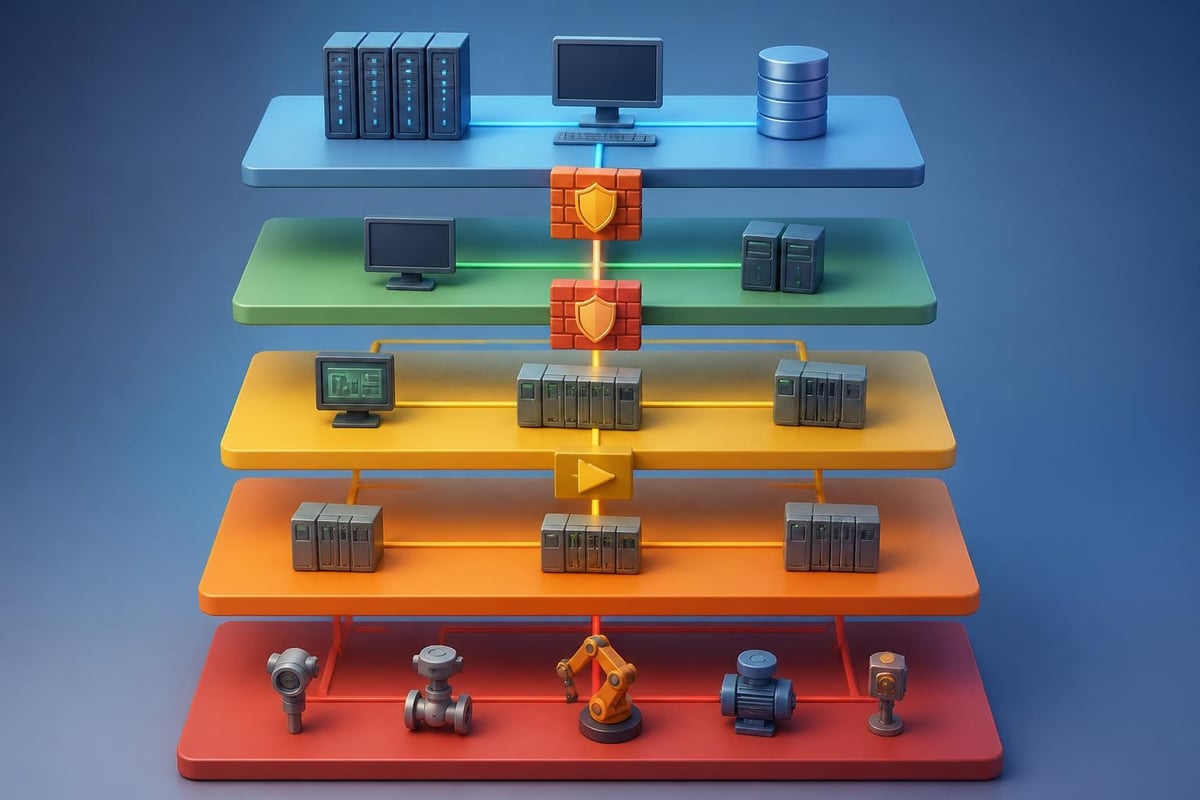
Proper network segmentation represents one of the most effective operational technology cyber security controls. By creating distinct zones with controlled communication pathways, organisations limit the potential impact of security incidents and reduce attack surfaces.
Implement defence-in-depth strategies that combine multiple security layers. Deploy firewalls between IT and OT networks, create demilitarised zones for remote access, and enforce strict rules governing inter-zone communication. Ensure that critical control systems remain isolated from corporate networks whilst maintaining necessary data flows through secure gateways.
Authentication and Access Management
Strengthen authentication mechanisms across operational environments, recognising that traditional password-based systems often prove inadequate for industrial contexts. Implement multi-factor authentication for remote access, eliminate default credentials, and establish role-based access controls aligned with operational responsibilities.
For businesses seeking comprehensive protection, SME cyber security services provide tailored solutions addressing both IT and OT security requirements through integrated approaches.
Monitoring and Incident Response for OT Environments
Effective operational technology cyber security extends beyond preventive controls to include continuous monitoring and rapid incident response capabilities. Industrial environments require specialised detection approaches that account for deterministic operations and minimal tolerance for disruption.
Continuous Visibility and Anomaly Detection
Deploy monitoring solutions designed specifically for OT environments, capable of understanding industrial protocols and recognising normal operational patterns. Passive monitoring techniques preserve system stability whilst providing comprehensive visibility into network traffic, device communications, and process behaviours.
Key monitoring capabilities:
- Protocol analysis for industrial communications (Modbus, DNP3, OPC)
- Asset discovery and configuration change detection
- Baseline establishment for normal operational patterns
- Real-time alerting for suspicious activities
- Integration with security operations centres
The principles outlined in IBM’s discussion of NSA operational technology cybersecurity guidelines emphasise the importance of continuous monitoring aligned with operational requirements.
Incident Response Planning
Develop incident response procedures specifically tailored to operational technology environments, recognising that OT incident handling differs significantly from IT-focused approaches. Response plans must prioritise safety and operational continuity whilst addressing security threats.
Establish clear communication protocols between OT personnel, IT security teams, and executive leadership. Define escalation pathways for various incident scenarios, from suspected intrusions to confirmed compromises of critical control systems. Conduct regular tabletop exercises testing response procedures without disrupting operations.
| Response Phase | OT-Specific Considerations | Key Stakeholders |
|---|---|---|
| Detection | Industrial protocol awareness, operational baselines | OT engineers, security analysts |
| Containment | Operational impact assessment, safety protocols | Operations managers, safety officers |
| Eradication | Patch deployment windows, vendor coordination | IT teams, system vendors |
| Recovery | System validation, production restart procedures | Operations, quality assurance |
| Lessons Learned | Process improvements, control updates | Cross-functional teams |
Vendor and Third-Party Risk Management
Operational technology cyber security must address risks introduced through vendor relationships, third-party connections, and supply chain dependencies. Industrial environments frequently rely on external specialists for maintenance, upgrades, and support, creating potential security vulnerabilities through remote access channels.
Secure Remote Access
Establish strict controls governing vendor remote access to operational systems. Implement jump servers or virtual desktop infrastructure for external connections, enforce time-limited access privileges, and maintain comprehensive logging of all remote sessions. Never permit direct vendor connections to control networks without proper security controls.
Consider deploying dedicated vendor access networks isolated from production OT environments, allowing necessary support activities whilst maintaining security boundaries. Require multi-factor authentication for all remote access, regardless of vendor relationships or trust levels.
Supply Chain Security
Evaluate the security postures of equipment suppliers, system integrators, and service providers involved in operational technology deployments. Request evidence of cybersecurity practices, including secure development lifecycles, vulnerability disclosure programmes, and incident response capabilities.
The case study on transforming operational technology cybersecurity demonstrates practical approaches to enhancing security across complex supply chains in manufacturing environments.

Training and Awareness for Operational Personnel
Human factors significantly influence operational technology cyber security effectiveness. Engineers, operators, and maintenance personnel require specialised training that addresses both cybersecurity fundamentals and OT-specific threats relevant to their roles.
Role-Based Security Training
Develop training programmes tailored to operational roles and responsibilities. Control system engineers need different knowledge than plant operators or maintenance technicians, yet all personnel interacting with OT systems require baseline security awareness.
- Operational security fundamentals for plant personnel
- Secure configuration practices for engineering staff
- Incident recognition and reporting procedures
- Social engineering awareness specific to industrial contexts
- Physical security integration with cyber protection
Building Security Culture
Foster organisational cultures where operational technology cyber security becomes integral to operational excellence rather than an impediment to productivity. Encourage reporting of suspicious activities, reward security-conscious behaviours, and integrate security considerations into operational decision-making processes.
Organisations throughout the North West seeking to strengthen their security postures can explore cyber security services in Alderley Edge and surrounding areas for localised support and expertise.
Regulatory Compliance and Industry Standards
Operational technology cyber security increasingly faces regulatory scrutiny across critical infrastructure sectors. Understanding applicable requirements and aligning protection strategies with recognised standards helps organisations demonstrate due diligence and achieve baseline security maturity.
Key Regulatory Frameworks
UK businesses operating critical national infrastructure must comply with the Network and Information Systems Regulations, which mandate appropriate security measures for essential services. Additional sector-specific requirements apply to energy, water, transport, and healthcare organisations.
Relevant standards and frameworks:
- IEC 62443 series for industrial automation and control systems
- NIST Cybersecurity Framework adapted for OT environments
- ISO/IEC 27001 with operational technology considerations
- Industry-specific guidance from sector regulators
- National Cyber Security Centre recommendations
The NIST announcement on operational technology security guidance provides valuable resources for organisations seeking to align their security programmes with recognised best practices.
Demonstrating Compliance
Maintain comprehensive documentation of operational technology cyber security controls, risk assessments, and improvement initiatives. Regular audits, both internal and external, validate control effectiveness and identify gaps requiring attention.
Future Challenges and Emerging Threats
The operational technology cyber security landscape continues evolving as industrial digitalisation accelerates and threat actors develop increasingly sophisticated attack techniques. Organisations must anticipate emerging challenges to maintain effective protection programmes.
Industrial Internet of Things
The proliferation of connected sensors, smart devices, and edge computing platforms expands operational attack surfaces whilst introducing new vulnerabilities. Many IIoT devices lack robust security features, creating weak points that adversaries can exploit to gain initial access to operational networks.
Artificial Intelligence and Machine Learning
Advanced threat actors increasingly leverage AI-powered tools for reconnaissance, vulnerability discovery, and automated attack execution. Simultaneously, defenders can harness machine learning for enhanced anomaly detection and predictive threat intelligence in operational environments.
Cloud and Hybrid Architectures
Migration of operational technology management functions to cloud platforms introduces new security considerations. Hybrid architectures combining on-premises control systems with cloud-based analytics and management require carefully designed security controls addressing both environments.
For comprehensive understanding of operational technology fundamentals and associated risks, this overview of operational technology provides valuable context on OT-IT integration challenges.
Protecting operational technology environments requires specialised expertise, dedicated resources, and ongoing commitment to security excellence as threats continue evolving. Organisations throughout the UK must prioritise operational technology cyber security to safeguard critical business processes, ensure operational continuity, and protect against increasingly sophisticated adversaries. Blowfish Technology delivers comprehensive managed IT and cybersecurity solutions specifically designed to address the unique challenges of operational technology environments, combining deep technical expertise with proactive monitoring and support to keep businesses across the North West and throughout the UK running securely and efficiently.

The Blowfish Technology team. Managed IT, cloud services, software development and connectivity for North West businesses since 1999.