
As businesses across the North West and the UK continue migrating critical operations to the cloud, the importance of robust security measures has never been more apparent. Organisations now store sensitive data, run essential applications, and manage entire infrastructure environments in cloud platforms, making comprehensive protection strategies essential. Understanding how to implement effective cloud security strategies ensures that businesses can harness the benefits of cloud computing whilst maintaining the highest levels of data protection and regulatory compliance.
Understanding the Evolving Cloud Security Landscape
The cloud security environment has transformed dramatically over recent years. Traditional perimeter-based security models no longer suffice when data and applications exist beyond physical boundaries. Modern cloud security strategies must address shared responsibility models, where providers secure the infrastructure whilst businesses protect their data, applications, and access controls.
The Shared Responsibility Framework
Cloud providers manage the security of the cloud, including physical infrastructure, network components, and hypervisor layers. Businesses remain responsible for security in the cloud, encompassing data classification, identity management, application security, and operating system configurations. This distinction forms the foundation of effective cloud security strategies.
Understanding these boundaries prevents critical gaps in protection. Many security incidents occur when organisations assume their cloud provider handles aspects that remain their responsibility. Clear documentation of which party manages each security layer eliminates confusion and ensures comprehensive coverage.

Essential Components of Effective Cloud Security Strategies
Implementing comprehensive cloud security strategies requires multiple interconnected elements working together seamlessly. Each component addresses specific threats whilst supporting overall protection objectives.
Identity and Access Management
Identity and access management (IAM) serves as the cornerstone of cloud security. Controlling who accesses resources and what actions they can perform prevents unauthorised access and reduces insider threats.
- Implement multi-factor authentication for all user accounts
- Enforce least privilege principles, granting minimum necessary permissions
- Regularly audit access rights and remove unnecessary privileges
- Use role-based access controls aligned with job functions
- Monitor login patterns to detect anomalous behaviour
Strong IAM practices from the Cloud Security Alliance shares best practices that organisations should implement regardless of cloud platform choice. These fundamentals apply whether using Azure, AWS, Google Cloud, or hybrid environments.
Data Protection and Encryption
Data represents the most valuable asset in cloud environments, requiring multiple protection layers. Encryption must cover data at rest, in transit, and during processing to maintain confidentiality.
| Encryption Type | Purpose | Implementation Method |
|---|---|---|
| At Rest | Protects stored data | AES-256 encryption on storage volumes |
| In Transit | Secures data movement | TLS 1.3 for all communications |
| In Use | Shields processing data | Confidential computing environments |
Encryption key management deserves particular attention. Businesses should maintain control over encryption keys, using dedicated key management services or hardware security modules. Never store keys alongside the data they protect, and implement regular key rotation policies.
Recent research on strategies for enhancing cloud security through encryption demonstrates how proper encryption implementation significantly reduces breach impact. Even if attackers access encrypted data, they cannot extract value without corresponding decryption keys.
Network Security and Segmentation
Cloud network security differs substantially from traditional environments. Virtual networks, software-defined perimeters, and microsegmentation replace physical firewalls and network zones.
Implementing network segmentation isolates workloads based on sensitivity and function. Production environments should remain separate from development and testing. Customer data should exist in isolated segments from internal business systems. This containment limits lateral movement if attackers breach one segment.
Modern cloud security strategies incorporate zero-trust network principles. Rather than trusting traffic within the network perimeter, every connection requires verification regardless of source location. This approach particularly suits remote working environments where users access resources from various locations.
Building a Comprehensive Security Framework
Developing effective cloud security strategies demands structured planning and systematic implementation. Organisations must assess current state, identify gaps, and establish roadmaps for improvement.
Risk Assessment and Threat Modelling
Begin by cataloguing all cloud assets, including applications, databases, storage repositories, and network configurations. Classify data by sensitivity and regulatory requirements. Identify potential threats specific to your industry and operational model.
Threat modelling should consider:
- External attackers seeking unauthorised access
- Insider threats from current or former employees
- Supply chain vulnerabilities through third-party integrations
- Misconfigurations exposing resources publicly
- Compliance violations triggering regulatory action
Understanding these risks enables prioritisation of security investments. Focus resources on protecting highest-value assets against most likely threats. Check Point Software discusses the importance of aligning security strategies with specific business risks and compliance requirements.
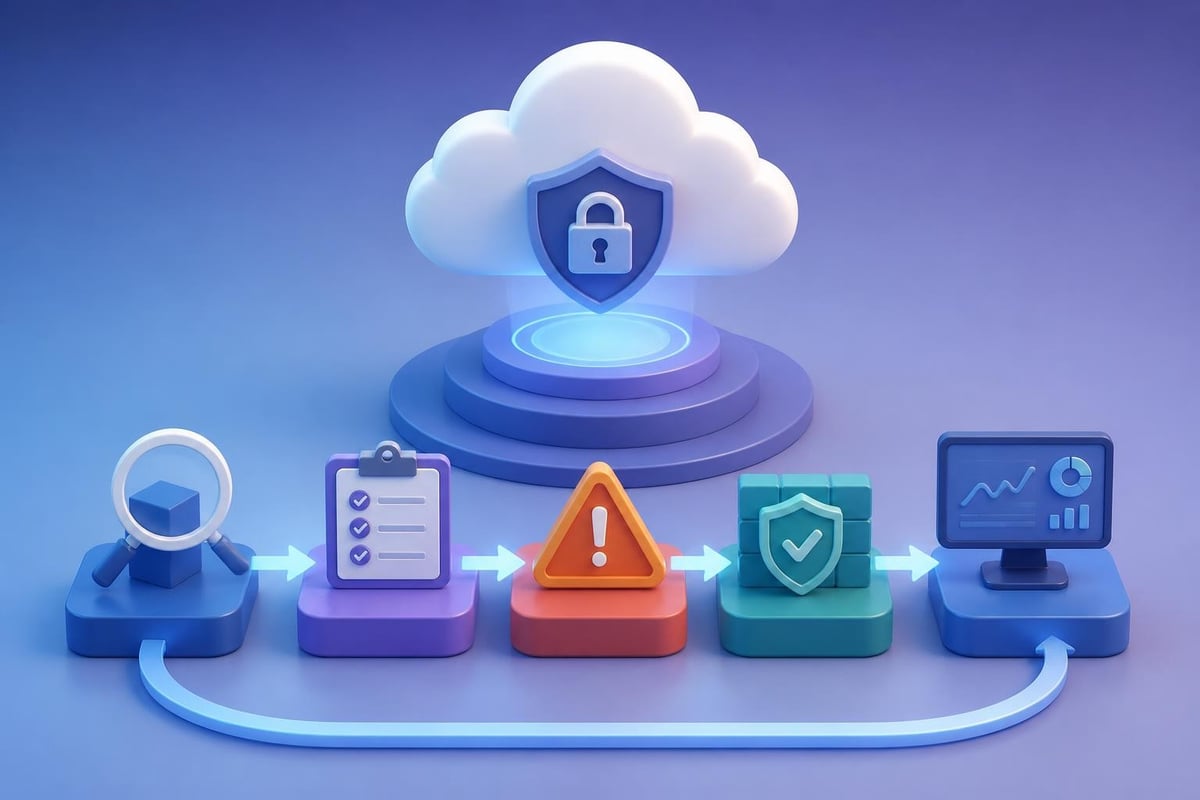
Security Automation and Orchestration
Manual security processes cannot scale with cloud environments. Automation becomes essential for maintaining consistent protection across dynamic infrastructure.
Security automation opportunities include:
- Automated vulnerability scanning and remediation
- Configuration compliance checking against benchmarks
- Threat detection and response workflows
- Backup verification and disaster recovery testing
- Access review and privilege certification
Orchestration platforms connect multiple security tools, enabling coordinated responses to security events. When threat detection systems identify suspicious activity, orchestration triggers investigation workflows, isolates affected resources, and notifies security teams simultaneously.
Businesses implementing business cloud migration services should incorporate automation from the outset. Establishing automated security controls during migration proves far easier than retrofitting them later.
Compliance and Governance Frameworks
Regulatory compliance drives many cloud security strategies, particularly for organisations in healthcare, finance, and legal sectors. Understanding applicable regulations and implementing appropriate controls ensures legal obligations are met.
Key Regulatory Considerations
UK businesses must navigate various compliance frameworks depending on their industry and data types. The UK GDPR mandates specific data protection measures, whilst sector-specific regulations impose additional requirements.
| Regulation | Applicability | Key Cloud Requirements |
|---|---|---|
| UK GDPR | All organisations processing personal data | Data protection by design, breach notification, data portability |
| ISO 27001 | Organisations seeking certification | Information security management system, risk assessment |
| Cyber Essentials | Government contractors, recommended for all | Basic technical controls, secure configuration |
| PCI DSS | Businesses processing card payments | Network segmentation, encryption, access controls |
Implementing governance frameworks ensures consistent application of security policies across cloud environments. Establish clear policies covering acceptable use, data classification, incident response, and change management. Regular audits verify compliance and identify improvement opportunities.
The guidance from TechTarget’s comprehensive guide demonstrates how organisations can align security controls with regulatory requirements whilst maintaining operational efficiency.
Continuous Monitoring and Logging
Comprehensive visibility forms the foundation of effective cloud security strategies. Without detailed logging and monitoring, security teams operate blind, unable to detect threats or investigate incidents effectively.
Implement centralised logging collecting data from all cloud resources. Monitor user activities, system events, network traffic, and configuration changes. Retain logs for sufficient periods to support forensic investigations and compliance audits.
Security information and event management (SIEM) platforms analyse logs to identify patterns indicating potential security incidents. Modern SIEM solutions incorporate machine learning to detect anomalies that traditional rule-based systems might miss.
Advanced Threat Protection Measures
As cloud adoption grows, attackers develop increasingly sophisticated techniques targeting cloud environments. Advanced protection measures counter evolving threats that bypass traditional security controls.
Cloud-Native Security Tools
Purpose-built cloud security tools often provide superior protection compared to adapted traditional solutions. Cloud Security Posture Management (CSPM) platforms continuously assess configurations against security benchmarks, identifying misconfigurations before exploitation.
Cloud Workload Protection Platforms (CWPP) secure servers, containers, and serverless functions regardless of their location. These solutions provide runtime protection, vulnerability management, and threat detection tailored to cloud workloads.
Container security deserves specific attention as businesses increasingly adopt containerised applications. Scan container images for vulnerabilities, enforce immutable infrastructure principles, and monitor runtime behaviour for suspicious activities.
Emerging Threat Considerations
Forward-thinking cloud security strategies address emerging threats before they become widespread. Quantum computing poses future risks to current encryption standards, requiring proactive preparation. Research into future-proofing cloud security against quantum attacks highlights the importance of beginning quantum-resistant cryptography implementation now.
API security represents another growing concern. Cloud services communicate extensively through APIs, creating potential attack vectors if improperly secured. Implement API gateways with authentication, rate limiting, and input validation to protect these interfaces.
Organisations considering outsourced IT department for SMEs arrangements should ensure their providers maintain expertise in emerging threats and continuously update protection measures.

Incident Response and Recovery Planning
Despite robust preventative measures, security incidents may still occur. Effective cloud security strategies include comprehensive incident response capabilities to minimise impact and accelerate recovery.
Developing Response Procedures
Incident response plans should address cloud-specific scenarios whilst integrating with overall business continuity strategies. Define clear roles and responsibilities, ensuring team members understand their functions during incidents.
Response plan components:
- Detection and analysis procedures
- Containment strategies for different incident types
- Evidence preservation for forensic investigation
- Communication protocols for stakeholders
- Recovery and restoration processes
- Post-incident review and improvement
Practice incident response through regular tabletop exercises and simulations. These activities identify procedural gaps and build team familiarity with response processes. ITPro discusses challenges organisations face when detecting and responding to cloud security breaches, emphasising the importance of preparation.
Backup and Disaster Recovery
Cloud environments enable sophisticated backup and recovery capabilities that surpass traditional approaches. Implement automated backups with multiple retention points, storing copies across geographically diverse regions.
Test recovery procedures regularly to verify backup integrity and validate recovery time objectives. Understanding how quickly systems can be restored informs business continuity planning and sets realistic expectations during incidents.
Immutable backups provide additional protection against ransomware attacks. Once created, these backups cannot be modified or deleted, ensuring clean restoration points remain available even if attackers compromise primary systems.
Businesses implementing comprehensive small business cyber security guide principles should prioritise backup resilience as a fundamental protection measure.
Cloud Security Best Practices for 2026
Modern cloud security strategies incorporate lessons learned from recent incidents and adapt to current threat landscapes. Following established best practices significantly reduces security risks.
Configuration Management
Misconfigurations represent a leading cause of cloud security breaches. Implement infrastructure as code practices, defining configurations in version-controlled templates. This approach ensures consistency, enables peer review, and maintains audit trails of changes.
Establish baseline configurations aligned with security frameworks like CIS Benchmarks. Regularly scan environments to identify configuration drift and remediate deviations promptly. Automated tools can enforce security policies, preventing risky configurations from being deployed.
Vendor Security Assessment
Businesses rarely operate entirely within a single cloud provider's environment. Third-party applications, managed services, and integration platforms expand the security perimeter. Assess vendor security practices before integration, reviewing certifications, security controls, and incident response capabilities.
Establish contractual requirements for vendor security standards. Include provisions for security audits, breach notification timelines, and data handling procedures. Regular vendor reviews ensure continuing compliance with security expectations.
Security Training and Awareness
Technical controls alone cannot guarantee security. Users represent both the greatest vulnerability and the strongest defence. Regular security awareness training helps staff recognise threats and follow secure practices.
Tailor training to specific roles. Developers need secure coding guidance, whilst administrators require configuration security knowledge. Business users should understand phishing recognition, password hygiene, and data handling requirements.
Wiz offers insights into building modern cloud security strategies that unite security, development, and operations teams through shared understanding and collaborative practices.
Integration with Broader IT Strategy
Cloud security strategies should not exist in isolation. Integration with overall IT strategy ensures security supports business objectives rather than hindering them.
Security by design principles incorporate protection measures from project inception. Involving security teams during planning phases enables identification of requirements and risks before significant investment occurs. This proactive approach proves more cost-effective than retrofitting security after deployment.
How to reduce IT downtime strategies naturally align with cloud security objectives. Both focus on maintaining system availability, protecting against disruptions, and enabling rapid recovery from incidents.
Multi-Cloud and Hybrid Considerations
Many organisations operate across multiple cloud platforms or maintain hybrid environments combining cloud and on-premises infrastructure. Cloud security strategies must address this complexity through unified visibility and consistent policy enforcement.
Implement security tools capable of spanning multiple environments. Cloud access security brokers (CASB) provide centralised control over cloud service usage, enforcing policies regardless of platform. Identity federation enables consistent authentication across disparate systems.
Understanding the hidden gaps in cloud security fabric helps organisations identify vulnerabilities that emerge from multi-cloud complexity and implement appropriate compensating controls.
Measuring Security Effectiveness
Effective cloud security strategies include metrics and key performance indicators to demonstrate value and guide improvement efforts. Measurement enables evidence-based decision-making and resource allocation.
Security Metrics Framework
Establish metrics across multiple dimensions:
- Technical metrics: Vulnerability remediation time, patch compliance rates, failed authentication attempts
- Process metrics: Incident response times, security audit findings, policy compliance percentages
- Business metrics: Security investment relative to revenue, cost per protected asset, avoided loss from prevented incidents
Regular reporting to leadership demonstrates security programme value and maintains organisational commitment to security initiatives. Trend analysis identifies improving or deteriorating areas, enabling targeted intervention.
Benchmark metrics against industry standards and peer organisations to contextualise performance. Understanding whether your security posture exceeds, meets, or falls short of comparable organisations informs strategic planning.
Continuous Improvement Cycles
Cloud security strategies require ongoing refinement as threats evolve and business requirements change. Establish regular review cycles assessing security effectiveness and identifying enhancement opportunities.
Post-incident reviews following security events provide valuable learning opportunities. Analyse root causes, evaluate response effectiveness, and implement corrective actions to prevent recurrence. Share lessons learned across the organisation to benefit broader security practices.
Implementing robust cloud security strategies requires comprehensive planning, continuous monitoring, and adaptation to evolving threats. By combining technical controls, governance frameworks, and security-aware culture, organisations can confidently leverage cloud computing whilst protecting their most valuable assets. Blowfish Technology provides expert guidance and managed security services to help businesses across the North West and throughout the UK develop and implement effective cloud security strategies tailored to their specific needs and regulatory requirements.

The Blowfish Technology team. Managed IT, cloud services, software development and connectivity for North West businesses since 1999.