
“Unlimited” almost never means unlimited processing power: Unlimited Web Hosting UK Limited advertises shared-hosting allocations such as 1 CPU and 2 GB RAM, and your contract determines what happens when resource or fair-use triggers fire. A UK limited company can still throttle or suspend an account where its terms permit it, so choose the contract before you choose the headline allowance.
The familiar advice to compare storage, bandwidth and price misses the business risk. You need to know whether your website will keep taking enquiries, processing orders or serving client documents when the server is busy, and who must act when it doesn't.
My recommendation is straightforward: treat “unlimited” as a contractual promise with boundaries, not as an infrastructure specification. Assess the company, the production workload and the recovery arrangements separately.
Table of Contents
- What Unlimited Web Hosting UK Limited Really Means
- The Company Behind the Name
- What Unlimited Hosting Plans Actually Limit
- Fine Print That Changes the Deal
- Shared Hosting Versus a Clearly Specified Managed Plan
- Red Flags and the Buyer Checklist
- How Managed UK Hosting Closes the Gap
- Decisions Before You Sign and Common Questions Answered
What Unlimited Web Hosting UK Limited Really Means
The mistake is reading the company's name as a performance guarantee. Unlimited, UK and Limited answer different questions, and none tells you whether your application will behave acceptably under load.
“Unlimited” describes advertised allowances. It doesn't establish an unrestricted entitlement to processing capacity, a dedicated server or a recovery commitment. A plan can offer generous transfer and storage allowances while still requiring you to operate within resource and acceptable-use boundaries.
“UK” needs equally careful handling. Ask where production data, backups and administrative access sit rather than assuming a British brand settles every location question. Your supplier's registered address and your information's physical location are separate matters.
Read the name as a buying checklist
“Limited” identifies the corporate entity you're dealing with. For purchasing purposes, that means checking that the contracting party, invoice details and company registration agree. It doesn't certify the hosting platform, establish application suitability or promise that an engineer will recover your site.
Before comparing packages, separate these questions:
- Who supplies the service? Identify the legal counterparty and the documents incorporated into your agreement.
- What are you buying? Establish the advertised allowances, enforceable limits and responsibilities retained by your business.
- Where will information sit? Obtain a written description of production hosting, backup locations and relevant third-party involvement.
- What happens when something fails? Identify the notification, escalation, restoration and exit arrangements.
Practical rule: If a salesperson's assurance matters to your business, ask for it in the service description or contract.
Don't assume that a reassuring answer to one question compensates for a weak answer elsewhere. An established business can supply a plan that's unsuitable for your workload. A technically capable platform can come with support terms that leave your staff handling the incident.
For a simple public-facing website, those boundaries may be perfectly acceptable. For a client portal or revenue-producing application, they deserve the same scrutiny you'd give any other operational supplier.
The Company Behind the Name
Start with the legal record, not the homepage design. Unlimited Web Hosting UK Limited was incorporated on 8 January 2009, has company number 06786340, and is recorded as active, with its registered office at The Copper Room, Deva Centre, Trinity Way, Manchester, M3 7BG; its record includes accounts for years ending 31 March 2023, 2024 and 2025, alongside confirmation statements in January 2024, 2025 and 2026, according to its Companies House record.
That establishes an identifiable corporate history and formal Manchester base. It doesn't establish response quality, financial resilience or the suitability of a particular hosting package.
Use the public-record checks below to organise your supplier review.
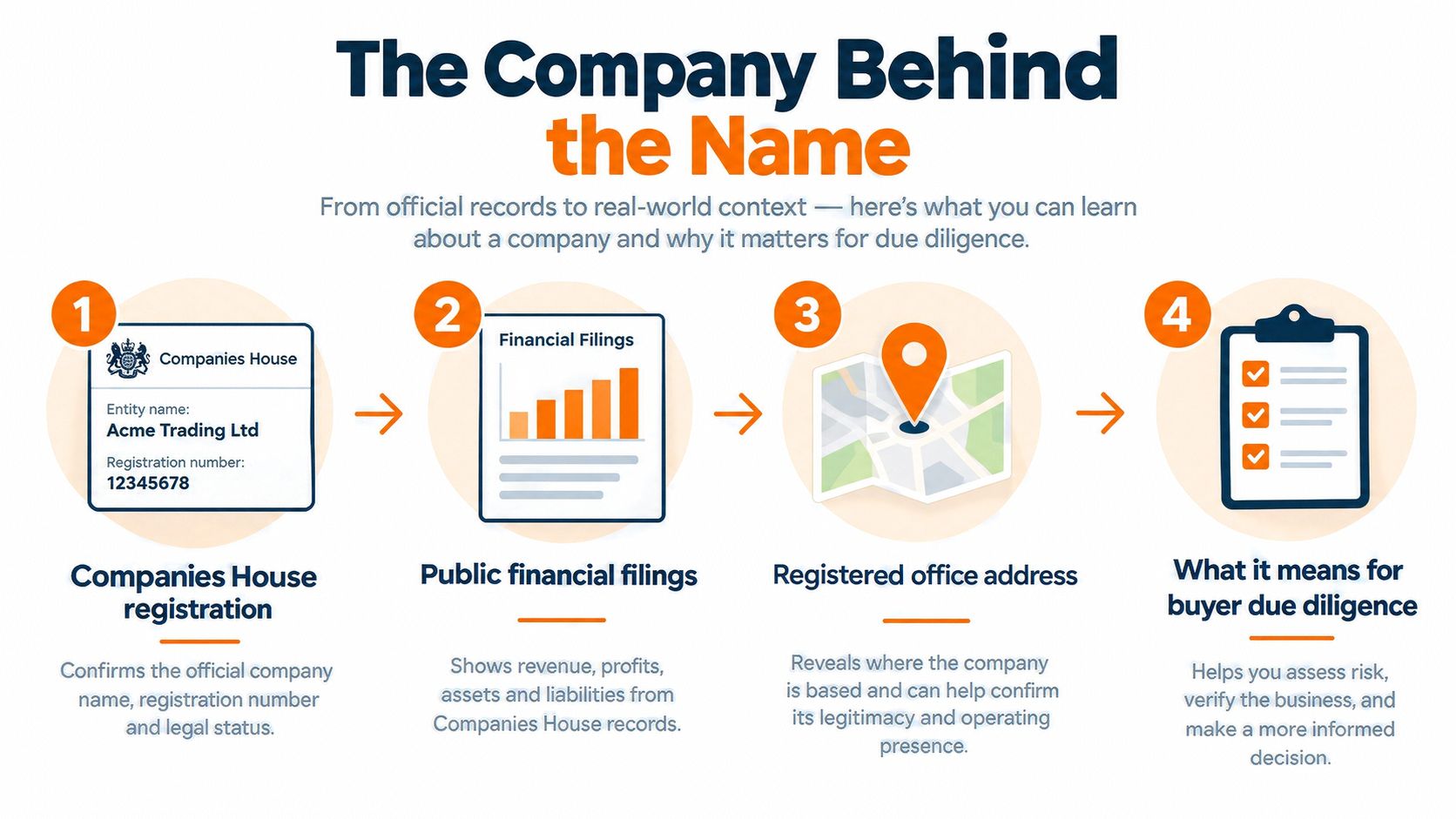
Separate public records from operating claims
Work through the evidence in a deliberate order:
- Match the entity. Check that your proposed agreement names the business you've investigated, rather than an unexplained intermediary.
- Read the filings. Filing continuity is useful background, but submitting accounts isn't the same as proving service quality.
- Check the address. A registered office identifies the formal corporate base, not necessarily every operational location.
- Test the operational claims. Ask for evidence relevant to your service, including certification scope and responsibility for subcontractors.
The company reports more than 9,000 customers, over 69,000 hosted websites and more than 24,000 managed domains, and says websites, mailboxes and backups are held in two Manchester data centres with ISO 27001 and PCI-DSS certifications, on its corporate information page.
Treat those as company-reported operating figures, not independently audited evidence. They describe scale and regional positioning, but they don't tell you how quickly your particular application will respond.
For a North West business, a Manchester operational identity may be relevant to supplier selection. The stronger purchasing question is still whether the proposed service meets your requirements. Ask which facilities and services the stated certifications cover, and request current evidence rather than relying on a badge.
What Unlimited Hosting Plans Actually Limit
A shared account has a resource budget, even when the sales page emphasises unlimited allowances. The provider's published specifications include standard allocations of 1 CPU and 2 GB RAM, higher allocations such as 2 CPUs and 4 GB RAM, unlimited bandwidth, MySQL databases and mailboxes, daily JetBackup backups, SSH access and a 99.9% uptime guarantee, according to its hosting specifications.
The processing allocations matter because serving a file and generating a personalised checkout page are different jobs. Don't compare them using bandwidth alone.
The distinction between headline allowances and operational restrictions is summarised below.
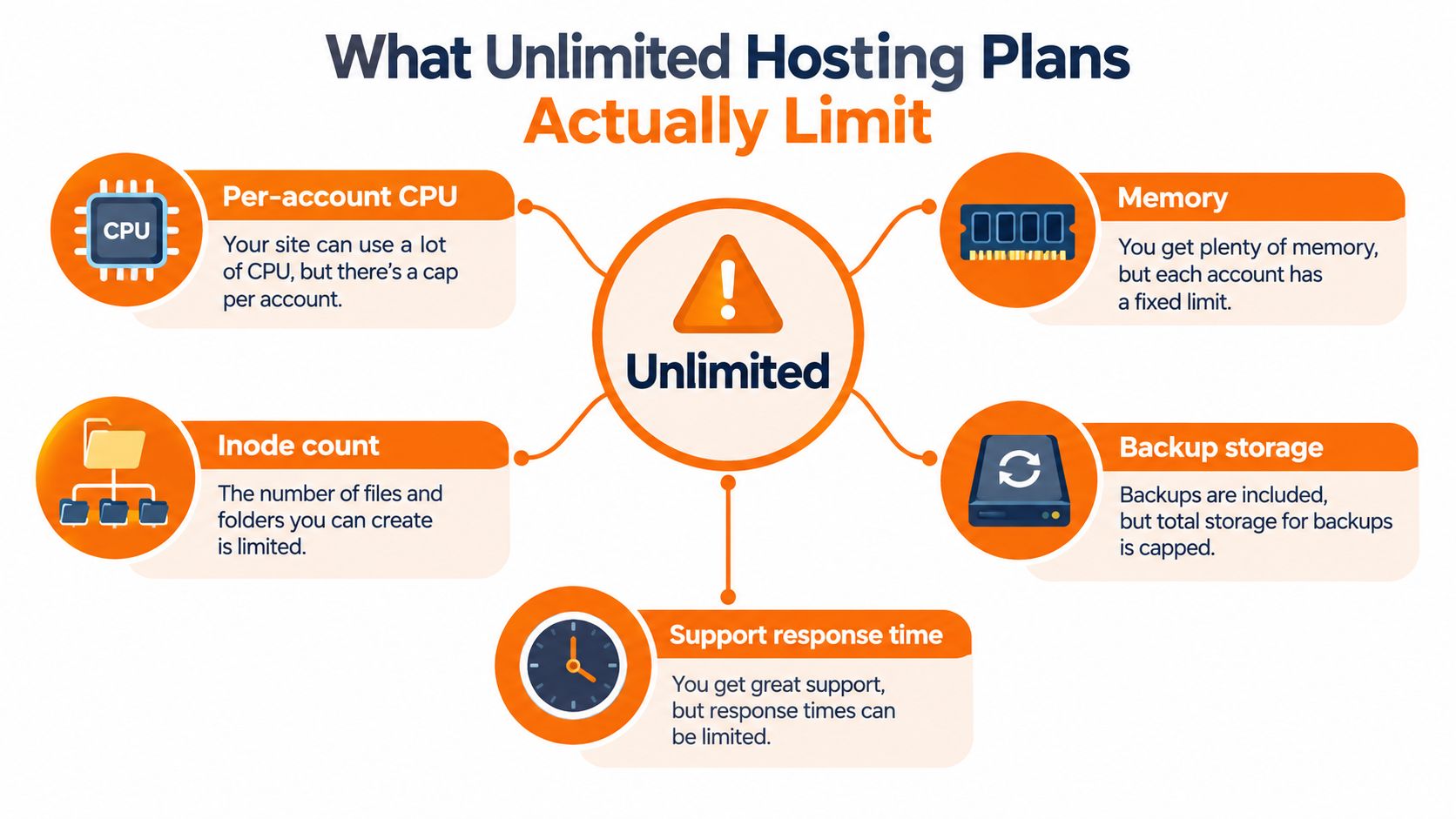
Find the actual bottleneck
Ask for the limits that apply to your selected package. Don't treat the following checklist as confirmation that this provider imposes every restriction listed.
| Resource | What to establish | Why your business should care |
|---|---|---|
| CPU and memory | Allocation, burst behaviour and enforcement | Application work can exhaust the account's available resources |
| PHP workers and entry processes | Concurrent execution limits and queue behaviour | Requests may wait or fail before bandwidth becomes relevant |
| Disk I/O | Throughput restrictions | Database activity and file operations need timely access |
| Inodes | File and directory allowance | Numerous small files can matter independently of storage volume |
| Databases | Size, connection and workload restrictions | An unlimited database count doesn't define database performance |
| Sending restrictions and mailbox conditions | Mailbox availability doesn't establish outbound sending capacity |
A cached brochure website might serve visitors with relatively little application processing. A WooCommerce checkout must handle work that can't be replaced with a cached public page. An engineering portal may spend its resources searching records and serving project documents.
Those are illustrative workloads, not reported customer results. Their purpose is to expose why identical plan labels don't establish identical suitability.
Test production behaviour
Run a representative workload before committing business-critical functions. Include logged-in activity, searches, uploads and the administrative tasks staff perform, not just the homepage.
Measure time to first byte, failed requests and resource-limit events. Ask the provider to explain any throttling or errors, and whether the account's websites share the same resource allocation.
The provider describes individual CPU and memory allocations as a way to isolate accounts. That's useful, but it isn't a substitute for testing your application. Buy against observed behaviour and written limits, not a successful screenshot of an idle site.
Fine Print That Changes the Deal
A resource ceiling becomes a business problem through its enforcement. A warning, temporary throttle and account suspension have very different consequences for your customers and staff.
Ask the provider to identify the applicable fair-use and acceptable-use clauses. Then request a written explanation of the escalation process: what triggers action, whether you receive notice, how you contest an error and what you must do to regain service.
Availability isn't recovery
The advertised availability target mathematically permits approximately 8 hours 46 minutes of downtime in a 365-day year, calculated from the published guarantee noted above, before contractual exclusions. That arithmetic isn't a forecast of actual downtime, and it doesn't tell you whether interruptions occur during trading hours.
Ask what the provider measures: server availability, a network endpoint or your working application. Establish when the incident clock starts, which maintenance and external events are excluded, and whether you must submit a claim.
Use a service-level agreement review to structure those questions. Keep response, restoration and resolution separate: acknowledging a ticket doesn't mean your website is usable again.
A service credit may settle a contractual claim. It doesn't recover a missed order or restore a client's confidence.
Make recovery and charges explicit
The published backup feature needs a separate examination. Obtain written answers covering:
- Scope and retention. Which files, databases and mailboxes are included, what's excluded, and when recovery points expire.
- Isolation and access. Who can delete backups, and what happens if the production account is compromised.
- Restoration responsibility. Who performs recovery, whether application checks are included, and what assistance costs.
- Support boundaries. Which server, WordPress, plugin and malware issues are included or chargeable.
- Commercial changes. Renewal pricing, notice periods, migration charges and the exact meaning of any price-lock promise.
Don't infer that these are problematic terms at this company. They're questions that every shortlisted provider should answer.
My recommendation is to keep the applicable terms and service description with your purchasing approval. If an important operational promise exists only in a sales conversation, your team hasn't finished procurement.
Shared Hosting Versus a Clearly Specified Managed Plan
An engineering firm's public capability statement and its project portal shouldn't automatically share the same hosting decision. The former may tolerate a self-service model; the latter may require someone to investigate application failures while staff are trying to deliver work.
Shared hosting isn't unsuitable for business. The mistake is selecting it for a critical workload without deciding who owns monitoring, maintenance and recovery.
The illustration below represents the management distinction, not a measured comparison of particular providers.
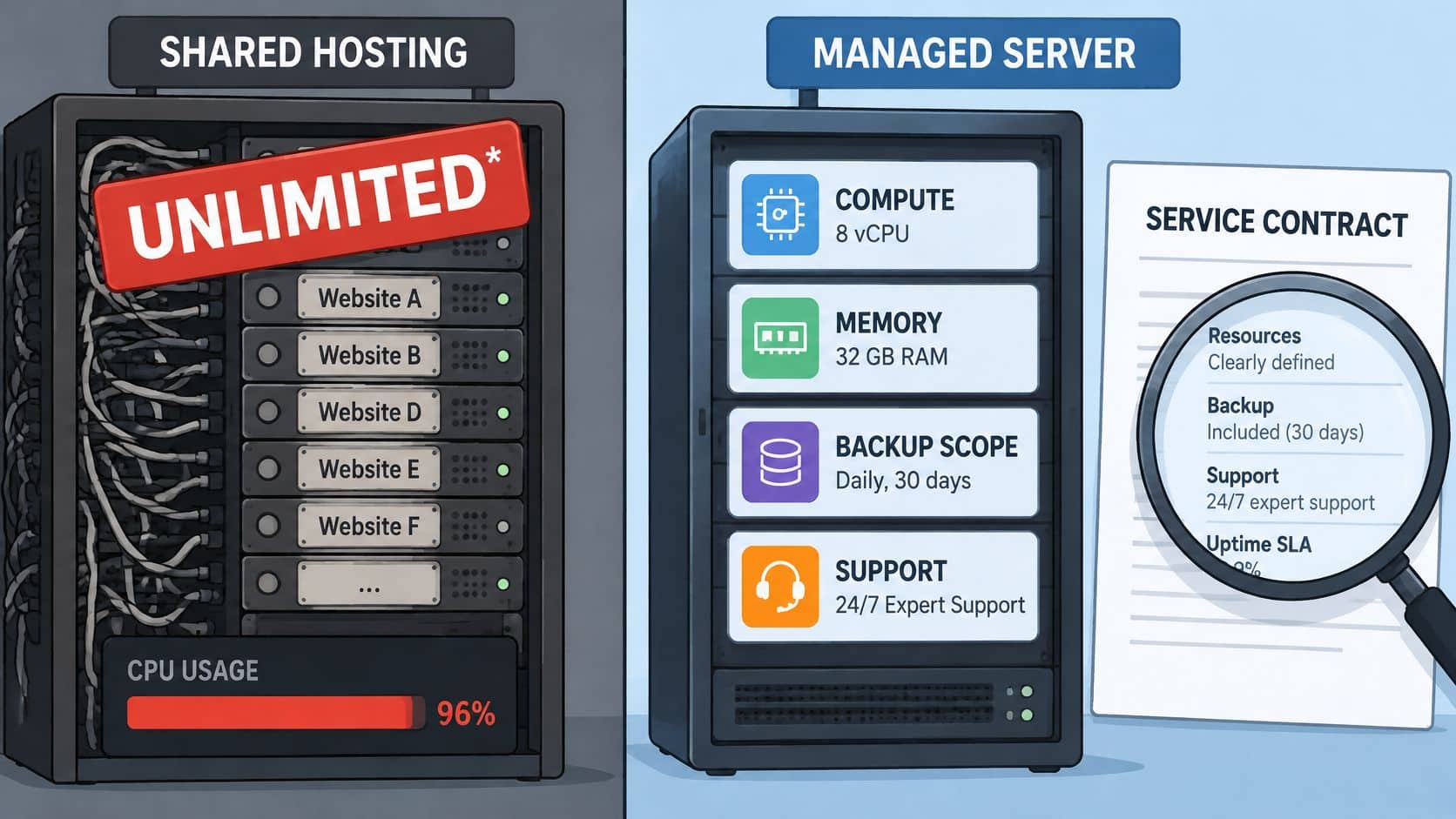
Shared unlimited plan vs clearly specified managed hosting
| Dimension | Shared unlimited plan | Clearly specified managed plan |
|---|---|---|
| Capacity | Assess the account limits behind advertised allowances | Require documented resources and a capacity-review process |
| Administration | Confirm which tasks remain yours | Name the supplier's server and software responsibilities |
| Monitoring | Establish what the provider checks | Define application-relevant checks and alert ownership |
| Recovery | Verify the available backup facility and assistance | Agree recovery objectives, testing and responsible engineers |
| Security | Identify platform controls and customer duties | Document the controls included for the agreed environment |
| Changes | Expect to manage tasks outside support scope | Specify approvals, testing and rollback responsibilities |
| Commercial fit | Consider for straightforward, supportable workloads | Consider when operational ownership needs to be contracted |
A managed label doesn't automatically deliver the right-hand column. Those are acceptance criteria, not benefits you should assume from a more expensive package.
Choose by the consequence of failure
For a legal practice's client extranet, I'd require documented access responsibilities, incident escalation and evidence of restoration. For a manufacturer's document portal, I'd test the file-handling workload and establish who responds when staff can't retrieve current material.
For a multi-site retailer, I'd examine dependency on the central application and the effect of an outage across locations. A collection of small public websites may fit shared hosting comfortably; an application supporting daily operations deserves a different conversation.
Don't pay for managed infrastructure merely because it sounds more substantial. Pay for specific responsibilities your business needs someone else to perform.
Equally, don't assume a low subscription is economical when your own staff must diagnose outages, coordinate developers and rebuild services. Compare the complete operating arrangement, including the work retained internally, rather than the hosting line on an invoice.
Red Flags and the Buyer Checklist
Security belongs in the hosting purchase, not in a separate conversation after launch. 43% of UK businesses reported a cyber breach or attack during the previous 12 months, while only 25% had a formal incident-response plan, according to the Cyber Security Breaches Survey 2025/2026.
Those figures don't measure this provider's security. They support a practical recommendation: decide who responds to a compromise before entrusting a supplier with an operational website.
Use the checklist as a sales-call agenda, then request the answers in writing.
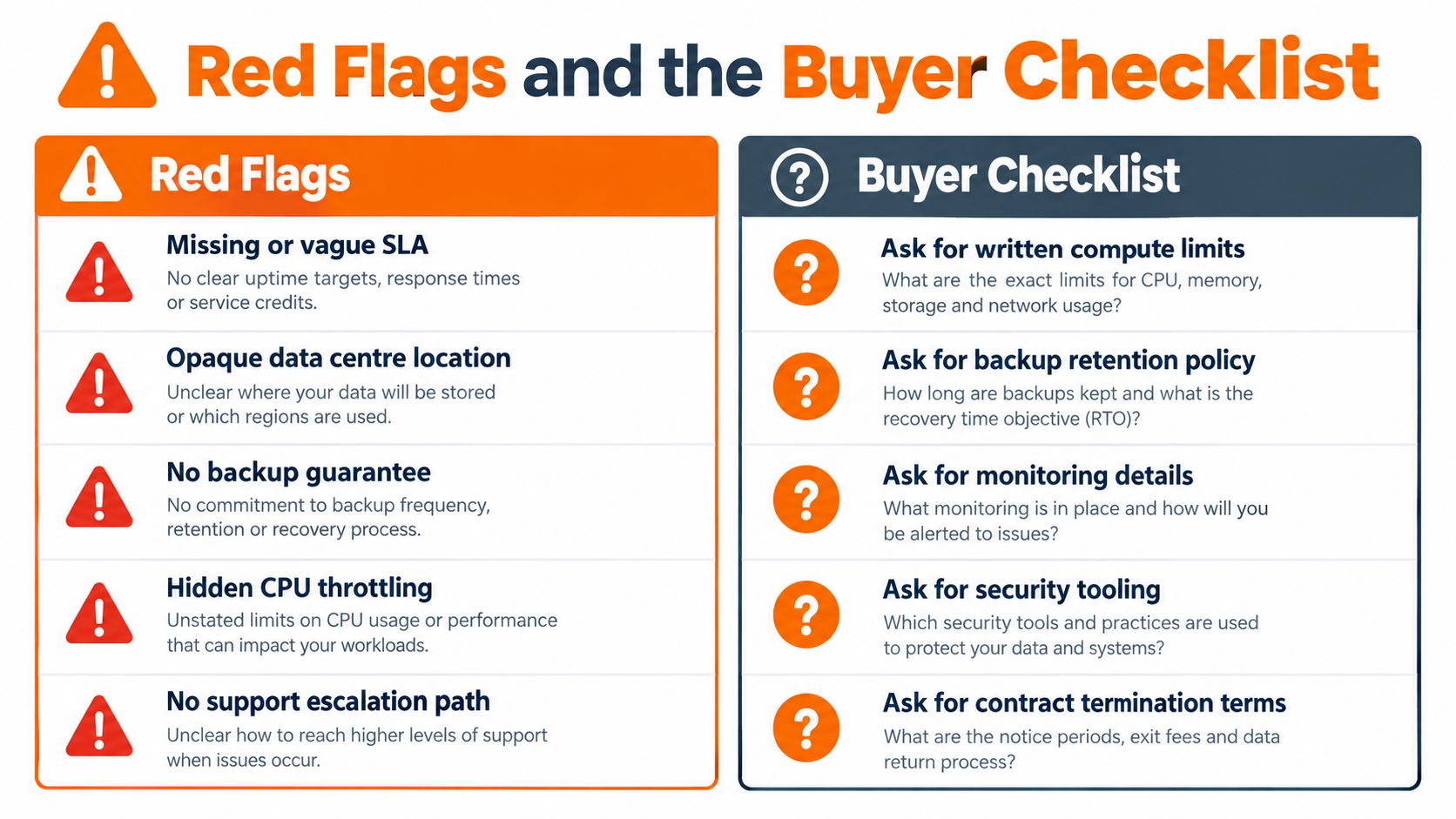
Recognise weak answers
- Unverifiable assurances. A supplier references security certifications but won't explain their scope or provide relevant evidence.
- Opaque locations. Nobody can describe where your information and recovery copies will be processed.
- Unowned incidents. Support can receive tickets, but there's no defined escalation route or recovery responsibility.
- Unclear commercial exits. Renewal, cancellation and data-export conditions remain unresolved.
For a broader purchasing framework, DesignStack's hosting advice is a useful companion resource. Keep your own service requirements alongside any general selection guide.
Take these questions into procurement
Ask for more than affirmative answers. Request the document, test result or named responsibility that supports each response.
- Segregation. How are customer accounts, administrative access and recovery copies separated?
- Recovery evidence. Can the supplier demonstrate a restoration exercise relevant to the proposed service?
- Compromise handling. Who contains an incident, preserves useful evidence and authorises reopening?
- Compliance support. How does the service fit your Cyber Essentials work, and what remains your responsibility?
- Connected services. Is Microsoft 365 backup separately contracted, or outside the website-hosting scope?
- Exit access. Can you obtain usable site data and regain control of domains without an unresolved dependency?
For legal and financial practices, have the person responsible for information governance review the answers. Use the distinction between UK data sovereignty and data security to avoid treating location as proof of protection.
A supplier that answers precisely gives you something useful to evaluate. A supplier that repeatedly substitutes reassurance for evidence should leave your shortlist.
How Managed UK Hosting Closes the Gap
A useful managed service assigns responsibility for the gaps between infrastructure, applications and people. The improvement isn't the word “managed”. It's an agreement that identifies who detects a fault, who investigates it and who verifies that the business service works afterwards.
The supplier's presentation can help you identify the services to discuss, but it isn't contractual evidence.

Blowfish Technology offers managed IT and hosting as an option alongside self-managed shared hosting and other managed suppliers. For any proposal, require the service schedule to identify the included environment management, monitoring, maintenance and engineer-led support rather than assuming every advertised capability is bundled.
Contract the complete operating arrangement
Separate website hosting from the wider security services your organisation may need. Ask whether endpoint detection and response, identity threat detection and response, DNS filtering and Microsoft 365 backup are included, optional or managed elsewhere.
Then agree how those responsibilities connect. If a compromised administrator account affects the website, someone must coordinate identity recovery, application inspection and safe restoration.
The embedded video is supplementary material, not a replacement for that written scope.
A credible managed proposal should also identify exclusions, change procedures and pricing assumptions. Account management is useful when it produces decisions about capacity, software dependencies and recovery priorities, rather than a recurring sales conversation.
Acceptance test: Ask the proposed engineer to talk through an application failure from alert to verified recovery, including every hand-off.
Listen for ownership rather than tool names. Monitoring without an assigned responder leaves your staff watching an alert; backups without a recovery procedure leave them deciding what to restore during an incident.
Choose the managed model when those operational duties need to sit with a supplier. Retain shared hosting when your business can competently own them and the workload fits the documented constraints.
Decisions Before You Sign and Common Questions Answered
Make these decisions before approving the order:
- Workload fit. Accept shared hosting only when testing and documented limits support the intended use.
- Recovery evidence. Require a credible restoration process, not merely an enabled backup feature.
- Contractual ownership. Confirm which security and support duties belong to the supplier and which remain yours.
For a recovery-focused discussion, use this explanation of cloud backup for small businesses to prepare questions about recoverability rather than storage alone.
Can an unlimited plan run WordPress or ecommerce?
Potentially, but the platform name doesn't settle suitability. Test the actual theme, plugins, database activity and customer journeys against the resource limits already discussed.
Does the uptime guarantee protect trading?
Only to the extent its measurement and remedies match your needs. Use the annual downtime allowance calculated earlier as context, then inspect exclusions and application coverage.
Does UK Limited status settle data protection?
No. Corporate identity doesn't replace an assessment of processing arrangements, access, security responsibilities or contractual safeguards.
Where should I look for suspension triggers?
Read the acceptable-use, resource-use, security, payment and termination provisions together. Ask what happens to administrative access, backups and exports during a suspension.
Your final purchasing record should contain the agreed requirements, evidence and exceptions. If a critical answer is still missing, postpone signing rather than hoping support will resolve it later.
Blowfish Technology offers managed hosting, IT support, security and backup services for businesses that need clearer operational ownership than a self-service plan provides. Visit Blowfish Technology with your current hosting terms, workload requirements and recovery priorities, and ask for a written proposal showing exactly who manages limits, incidents and restoration.
