
Most North West businesses buy connectivity the same way they buy a phone contract: by scanning the biggest download number on the page. Then the office fills up, the cloud backup runs at 4pm, card payments queue at the till, and the connection everyone thought was fast enough starts costing real money.
The problem is that download speed describes capacity, not reliability. It tells you nothing about how many other businesses share your circuit at peak, how long a repair takes, whether upload matches download, or what happens when a cable is cut outside your building.
This post compares leased lines, full-fibre broadband and contended business connections on the guarantees behind them, not the megabytes in front of them. We will cover why download speed is the wrong buying criterion, how contention ratios shape your busiest hours, where asymmetric upload quietly fails, and what an SLA genuinely guarantees. We will also turn 99.9% availability into hours your business can absorb, weigh install lead times and cost shape, address the PSTN switch-off deadline, and design a backup path so one cut cable does not end your working day.
Why Download Speed Is the Wrong Buying Criterion
Most North West businesses buy connectivity on the headline download figure. The number that actually stops work is hours of downtime, not megabits.
Once voice, cloud apps, off-site backup and card payments share one connection, throughput at 9am matters far less than what happens the moment it drops.
Four terms run through this guide:
- Contention ratio: how much of your bandwidth is shared with other businesses.
- Symmetrical speeds: upload matching download.
- Service level agreement (SLA): the contractual commitment on availability and response.
- Mean time to repair (MTTR): the target time to restore service after a fault.
Vendors advertise SLA percentages and tick the symmetric speed box, yet rarely publish the repair times or credit terms sitting behind those percentages. Every claim needs confirming in writing.
This guide judges business connectivity North West buyers choose on four dimensions: contention, upload symmetry, SLA and repair, and install lead time plus cost shape.
Contention Ratio: The Sharing Model That Decides Your Peak Hours
Contention ratio describes how many businesses share the same capacity on the route back to the exchange or headend. A 20:1 ratio means up to 20 premises share one pool.
Business broadband is contended by design, and providers increasingly manage capacity across the network rather than publishing a single fixed ratio. Legacy figures of 20:1 or even 50:1 are still quoted, which is why the speed you measure at 7am is rarely the speed you get when the office is busy.
A leased line runs at 1:1 contention: a dedicated fibre circuit reserved for your business, unaffected by what neighbouring premises are doing.
Cloud apps (including a UK hosted desktop), VoIP calls, off-site backup and card terminals all draw on the same contended pool. Ask the supplier whether latency and jitter are monitored at peak, since Teams calls degrade before headline throughput drops.
Before signing, also ask in writing: what committed rate applies at peak, is it contractual, and does any traffic shaping or fair-use policy apply during busy periods?
Symmetry and Upload: Where Full-Fibre Broadband for Business Quietly Fails
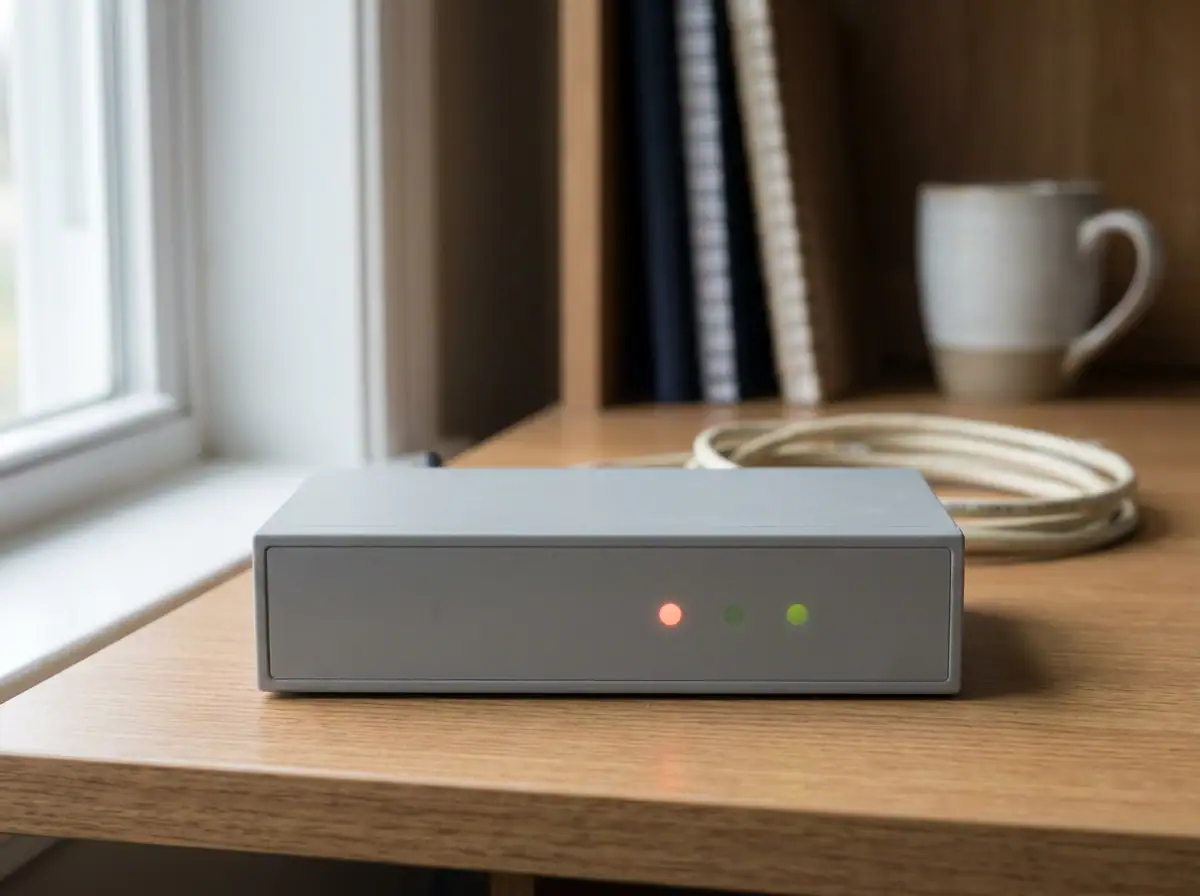
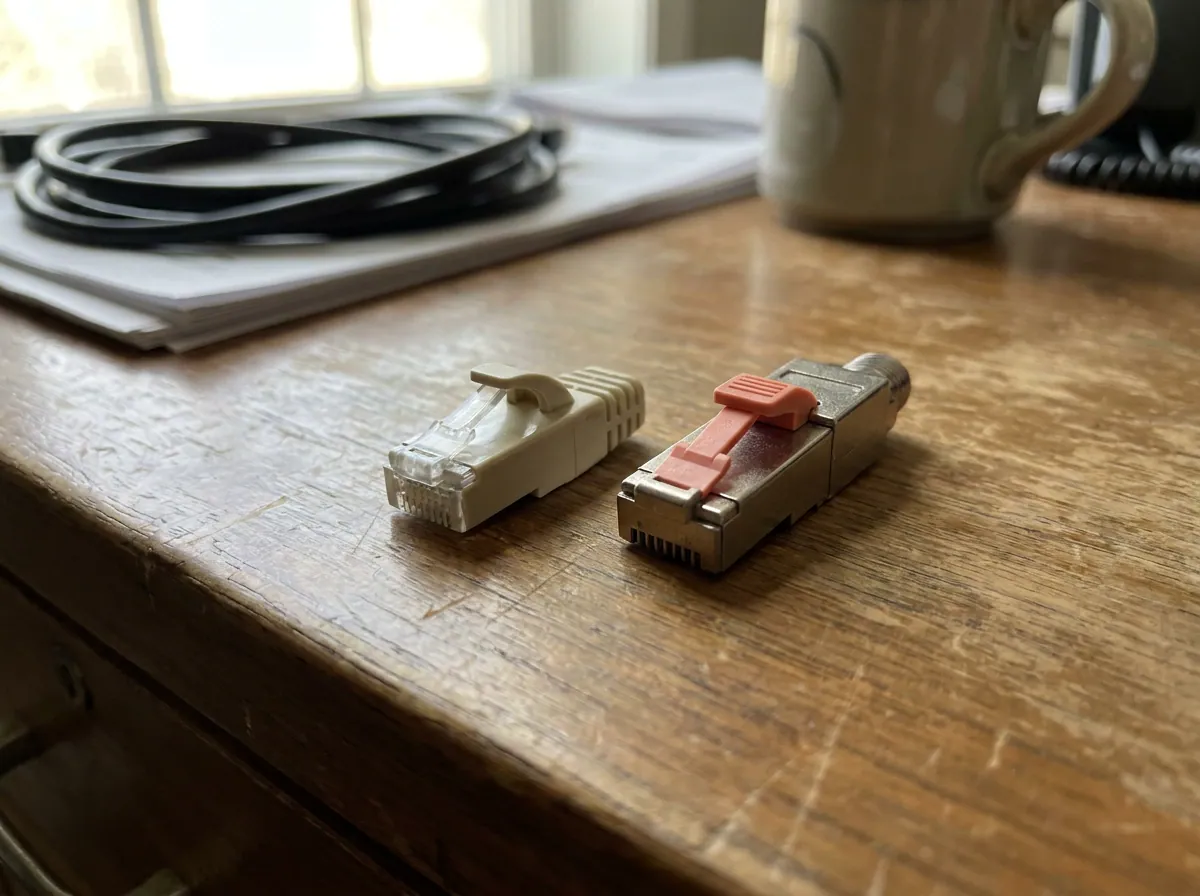
Symmetry is where full-fibre broadband for business parts company with a leased line. FTTP (full fibre to the premises) runs fibre all the way into the building rather than using copper on the final leg.
The catch: many full-fibre business packages stay asymmetric, with upload a fraction of headline download, and the ratio varies by provider and speed tier.
Typical North West offices upload constantly. Off-site backup, cloud accounting, design and drawing files, CCTV to the cloud, hosted phone calls and video meetings share one outbound pipe. Saturate that outbound pipe and the whole connection can suffer. A 900Mbps connection can feel broken on a busy backup day.
Test over ethernet, not Wi-Fi, and treat one speed test as a snapshot, not proof of the broadband and internet connectivity service level you pay for. If upload sits on your critical path, the guarantee matters more than the download number.
What an SLA Actually Guarantees, and What It Leaves Out
A speed test shows what happened; an SLA states what happens when it stops. The parts that matter are target availability, fault response time, MTTR (mean time to repair), an escalation path, service credits and the exclusions list.
Leased line target availability is typically quoted between 99.9% and 100%, with higher tiers of 99.95% and 99.99% advertised on larger circuits. Entry-level business broadband may carry no service level at all, or only a soft next-working-day repair aim with no compensation.
The gap buyers miss: percentages are public, credit terms and MTTR usually are not. Ask how a credit is calculated, when a fault is deemed to start and end, and how long each stage may take. As managed IT support in Manchester benchmarks show, generic SLA promises are easy to make and hard to verify.
Most exclusions cover on-site equipment, power failures and third-party works, which is why your router, firewall and power protection matter as much as the circuit itself.
Turning 99.9% Into Hours: How Much Downtime Can You Genuinely Absorb?
A year is 8,760 hours. At 99.9% availability, the theoretical downtime allowance is roughly 8.8 hours. At 99.95%, about 4.4 hours. At 99.99%, around 53 minutes.
Stop buying percentages and set a budget instead. Write down the hours of outage each site can absorb per year before it loses money, then choose the product that sits inside it.
Two traps sit inside that arithmetic. An SLA may not count degraded service as downtime at all, so a line slow enough to block card payments can still be “up”. And timing matters: 90 minutes of silence on a quiet Sunday is not the same event as 90 minutes during Saturday morning payment peak.
Credits are compensation, not continuity. If the offered hours sit outside your tolerance, the fix is design, not a higher percentage. The same budget discipline applies to your wider IT estate when you compare outsourced IT support against an in-house hire.
Install Lead Times and Cost Shape: Planning the Switch Properly
Once you know your downtime budget, the practical question becomes timing. Vendor quotes commonly sit around four weeks for 100Mbps and 1Gbps circuits, and around six weeks for 10Gbps, with the per-site survey and any construction work the variables that move those dates.
Leased lines usually take longer because they need a fibre build to the premises. Where a new duct or civils work is required, excess construction charges can apply.
On cost, leased lines carry a higher monthly but are often installed free on 36 to 60 month terms; otherwise installation is typically quoted from nothing up to around £2,500. Full-fibre broadband is cheaper monthly on a shorter commitment, and that saving is partly risk you are choosing to carry rather than pure efficiency. Sequencing matters here as much as in cloud migration planning for North West businesses, where the order of moves decides the outcome.
Plan the switch around contract terms, notice periods and break clauses, particularly where voice and data move together.
Leased Line vs Broadband: The Comparison That Matters
| Dimension | Leased line | Business broadband / FTTP |
|---|---|---|
| Contention | 1:1, dedicated | Contended, often quoted up to 50:1 at peak |
| Upload symmetry | Symmetrical | Frequently asymmetric |
| SLA | Written, 99.9% to 100% target availability | Often none, or a soft repair aim |
| Repair commitment | Contractual MTTR with credits | Rarely contractual |
| Install lead time | Around 4 to 6 weeks | Usually shorter |
| Cost shape | Higher monthly, often free install on 36 to 60 month terms | Lower monthly, shorter commitment |
| Best fit | Sites where downtime stops trade | Light use, paired with failover |
Indicative leased-line market figures, not quoted prices: 100Mbps from around £130 per month, 1Gbps from around £195 and 10Gbps from around £650, all excluding VAT. Postcode, excess construction, contract term and VAT all move the final number, so treat any band as a starting point.
Tiered uptime percentages are marketing until a written quote confirms the SLA, the repair commitment and the credit terms. Request written quotes for your own postcode, because the product varies more by site than by product category. Blowfish Technology supplies leased lines, fibre broadband and managed connectivity across the North West, and can quote both routes for your premises.
Designing a Backup Path So One Cut Cable Is Not Your Whole Day
One connection carrying voice, cloud, backups and card payments is a single point of failure, however strong its leased line SLA. Pair the primary circuit with a secondary path: a second circuit on different technology or a different carrier route, or 4G and 5G failover on a router that switches automatically when the primary drops.
Diversity must be genuine: do not assume two lines fail separately, so ask the supplier to confirm the routes are physically diverse before you rely on the backup.
Monitoring and testing matter just as much. Without alerting and a periodic failover test, a backup path that was never exercised is an assumption rather than a control. Choosing a backup solution is the wider version of the same discipline.
Finally, decide what degrades gracefully. Card terminals and voice belong at the top of the priority list, bulk backup traffic at the bottom.
The PSTN Switch-Off Deadline and Your Voice Line
The backup path protects the data circuit, but your voice line faces its own hard deadline. The analogue phone network is being retired on 31 January 2027, so every legacy line needs a migration plan before then.
Sites still running legacy voice must decide whether calls travel over the data connection or a separate circuit. That choice changes the SLA the business needs, because voice becomes dependent on the connectivity guarantee behind it.
Remember what else sits on those analogue lines: lift phones, intruder alarms, door entry systems and payment terminals. Each needs its own replacement, not just an assumption that it will keep working.
Verify the deadline and your contract implications against neutral guidance from Ofcom and the official PSTN switch-off programme, rather than a supplier’s sales page.
Do not leave it late. A new circuit, number porting and alarm replacement stack their lead times together, precisely when demand peaks.
Choosing by Scenario: Which Product Fits Which North West Business
For North West businesses, with the voice deadline settled, match connectivity to the site. Where voice, cloud apps and card payments share one line, pick a dedicated circuit with a written leased line SLA and a diverse backup path, sized by tolerable downtime, not download speed. A light-use site with a small browser-and-email team can usually run on full-fibre broadband, provided it has business-grade routing, power protection and 4G or 5G failover. Multi-site firms should prioritise consistent kit and one point of accountability for faults, especially out of hours, rather than shaving a few pounds per line. Heavy uploaders such as design, media or engineering teams need symmetry and steady latency, so have the upload figure written into the contract. Protecting card devices and cloud accounts also means endpoint protection service should sit alongside resilient connectivity. Blowfish Technology brings managed IT, telecoms and connectivity together, covering leased lines, fibre broadband, hosted phone systems and managed Wi-Fi, so circuit, failover and support come from one provider.
Frequently Asked Questions
Is a leased line always better than full-fibre broadband? No. It wins where the business cannot absorb downtime. Where usage is light and a diverse failover path covers the risk, full-fibre is enough.
What is a good contention ratio? A leased line runs at 1:1. Business broadband is contended, with vendor guidance often quoting up to 50:1 at peak, so ask for the committed peak rate.
Does full-fibre broadband come with an SLA? Often not, or only a soft repair target. Check the contract rather than assume cover exists.
How long does a leased line take to install? Quotes commonly sit around four to six weeks, confirmed per site after survey. Each answer still comes down to one figure: the hours of downtime you can absorb.
Buy the Guarantee, Not the Number
Compare the hours an availability target allows with the hours your business can genuinely absorb before revenue stops.
Get the service level agreement written into the contract: target availability, repair time, credit terms and exclusions. A percentage without credit terms is a marketing claim, not a guarantee.
Design a diverse backup path and test it, so no single cable, carrier route or exchange can stop voice, cloud and card payments at once. Genuine diversity means a different route, not a second line in the same duct.
Then close on a written, post-survey quote rather than a vendor price band. With the January 2027 voice deadline approaching, Blowfish Technology can assess your leased lines, fibre broadband, backup path and hosted phone setup.
Conclusion
Uptime, not megabytes, is the buying criterion. Check contention at peak, upload symmetry, and whether the SLA includes meaningful repair times and credit terms. Then plan a genuinely diverse backup path and address the January 2027 voice deadline before it forces the issue.
For a practical next step, ask Blowfish Technology to assess your leased lines, fibre broadband, backup path and hosted phone setup. Seek a written, post-survey quote and compare it with the downtime your business can truly absorb. Buy the guarantee, not the number, and make your North West connectivity a deliberate advantage.
