
The digital transformation of businesses across the North West and throughout the UK has created an unprecedented demand for skilled cybersecurity professionals. As organisations increasingly rely on connected systems, cloud infrastructure, and remote working environments, the cyber technician has emerged as a critical frontline defender against evolving cyber threats. These technical specialists combine hands-on expertise with strategic thinking to protect business assets, maintain system integrity, and respond to security incidents before they escalate into major breaches.
Understanding the Cyber Technician Role
A cyber technician serves as the operational backbone of an organisation's security infrastructure. Unlike strategic cybersecurity architects who design overarching policies, these professionals work directly with systems, networks, and security tools to implement, monitor, and maintain protective measures.
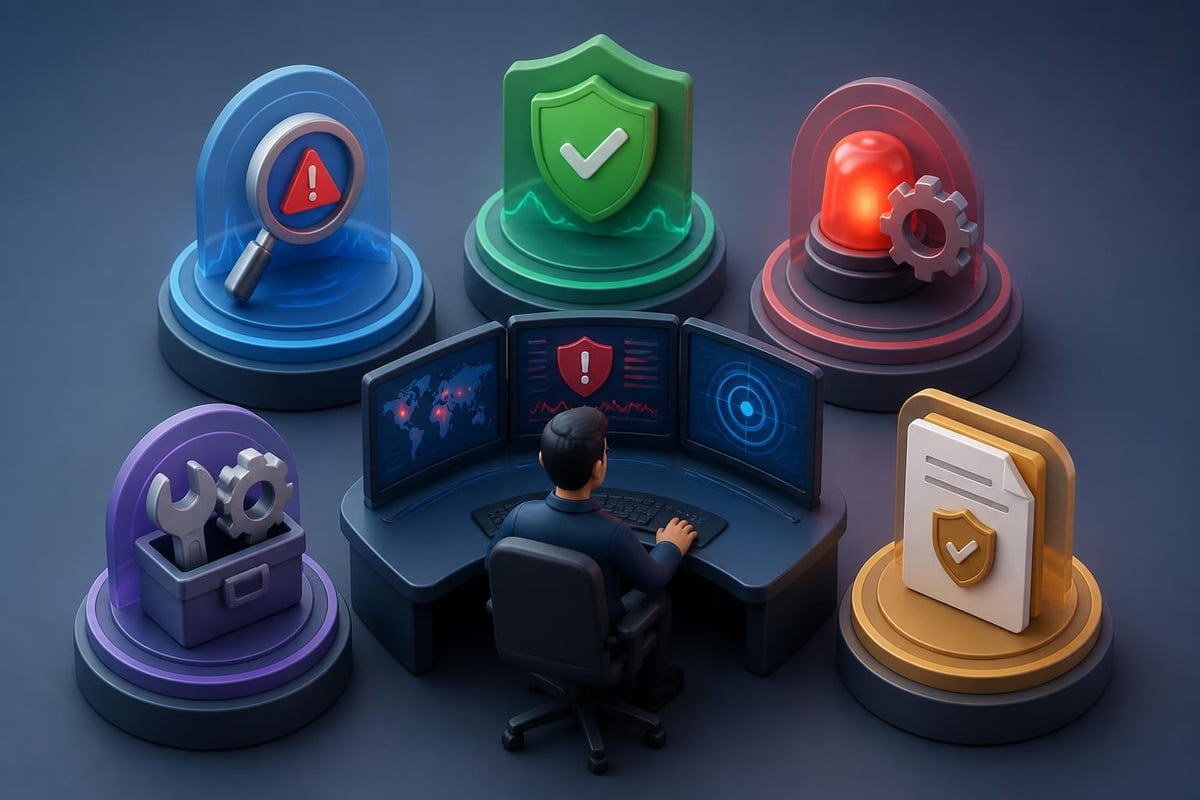
The responsibilities of a cyber technician extend across multiple domains:
- Network monitoring and threat detection through security information and event management (SIEM) systems
- Vulnerability assessment and patch management across servers, workstations, and network devices
- Incident response to contain and remediate security breaches
- Security tool configuration including firewalls, intrusion detection systems, and endpoint protection
- User access management and identity verification protocols
- Security documentation and compliance reporting
These professionals typically work within IT departments, managed service providers like Blowfish Technology, or dedicated security operations centres. Their daily activities might involve analysing security logs, investigating suspicious network activity, or deploying security updates across business infrastructure.
The Technical Foundation
A competent cyber technician must possess a broad technical foundation spanning multiple IT disciplines. Network fundamentals form the cornerstone, requiring deep understanding of TCP/IP protocols, routing, switching, and wireless technologies. This knowledge enables effective analysis of network traffic patterns and identification of anomalous behaviour.
Operating system expertise across Windows, Linux, and macOS environments proves essential for securing diverse infrastructure. Technicians must navigate command-line interfaces, configure security settings, and understand how malware exploits system vulnerabilities.
| Technical Area | Key Competencies | Application |
|---|---|---|
| Networking | TCP/IP, DNS, VPNs, firewalls | Traffic analysis, access control |
| Systems Administration | Windows Server, Active Directory, Linux | User management, patch deployment |
| Security Tools | SIEM, IDS/IPS, EDR solutions | Threat detection, incident response |
| Cloud Platforms | Azure, AWS, Microsoft 365 | Cloud security configuration |
Certification Pathways for Cyber Technicians
Professional certifications validate technical competence and demonstrate commitment to the cybersecurity field. The Certified Cybersecurity Technician (CCT) certification by EC-Council provides comprehensive coverage of essential security concepts, including network defense, ethical hacking fundamentals, and digital forensics.
This certification addresses the growing skills gap by focusing on practical, hands-on capabilities rather than purely theoretical knowledge. The curriculum encompasses attack surface analysis, network security implementation, and security operations centre procedures.
Educational Routes and Training
Academic programmes like the Cyber Security Technician Certificate from Fullerton College offer structured learning paths for aspiring professionals. These programmes typically cover operating systems, networking concepts, and cybersecurity fundamentals, preparing students for entry-level positions.
However, formal education represents just one pathway. Many successful cyber technicians combine vendor-specific certifications (such as CompTIA Security+, Cisco CCNA Security, or Microsoft Security Operations Analyst) with practical experience gained through internships or junior IT support roles.
Continuous learning remains paramount in this field. Cyber threats evolve rapidly, and yesterday's defensive strategies may prove inadequate against tomorrow's attack vectors. Professional development through workshops, industry conferences, and ongoing certification updates ensures technicians maintain relevant, current knowledge.
Essential Skills Beyond Technical Knowledge
Whilst technical proficiency forms the foundation of a cyber technician's capabilities, soft skills frequently determine long-term career success. Analytical thinking enables effective problem-solving when investigating security incidents or troubleshooting complex system issues.
Communication abilities prove critical when explaining technical risks to non-technical stakeholders or documenting security procedures for compliance purposes. A cyber technician must translate complex vulnerabilities into business impact terms that executives understand.
The ability to work under pressure becomes essential during security incidents. When ransomware strikes or a data breach occurs, technicians must maintain composure whilst executing incident response procedures and coordinating with multiple teams.
Key interpersonal competencies include:
- Collaboration with IT teams, management, and external security consultants
- Attention to detail when reviewing logs, configurations, and security reports
- Time management to balance routine monitoring with urgent incident response
- Ethical judgment when handling sensitive data and privileged access
- Adaptability to rapidly changing threat landscapes and technologies

Cyber Technicians in Managed Service Environments
Within managed IT service providers, cyber technicians operate across multiple client environments, requiring breadth of experience beyond single-organisation specialists. These professionals must quickly adapt to diverse network architectures, varying security requirements, and different compliance frameworks.
Managed IT support for small businesses relies heavily on skilled technicians who can implement standardised security frameworks whilst accommodating unique business requirements. They ensure SMEs benefit from enterprise-grade security despite limited internal IT resources.
Proactive vs Reactive Security Approaches
Modern cyber technicians increasingly focus on proactive security measures rather than purely reactive incident response. This shift involves:
- Continuous vulnerability scanning to identify and remediate weaknesses before exploitation
- Threat intelligence integration to anticipate emerging attack vectors
- Security automation through scripting and orchestration platforms
- Regular security assessments including penetration testing and configuration reviews
The proactive approach significantly reduces business risk by addressing vulnerabilities during maintenance windows rather than during active attacks. For organisations implementing business cloud migration services, cyber technicians ensure security considerations integrate into every migration phase.
Industry-Specific Cybersecurity Challenges
Different sectors face unique security challenges requiring specialised cyber technician knowledge. Manufacturing environments, for instance, must protect both traditional IT systems and operational technology (OT) networks controlling production equipment. Cyber security for manufacturing companies demands technicians who understand industrial control systems alongside conventional network security.
Financial services organisations face stringent regulatory requirements, requiring cyber technicians familiar with PCI DSS, GDPR, and Financial Conduct Authority guidelines. Healthcare providers must ensure HIPAA compliance whilst protecting sensitive patient data.
The research presented in CyberCertBench highlights the importance of domain-specific knowledge by evaluating cybersecurity competencies against industry-recognized certifications. This benchmark demonstrates that effective cyber technicians must combine broad technical skills with sector-specific expertise.
Career Progression and Specialisation
The cyber technician role serves as an excellent foundation for diverse cybersecurity career paths. With experience, professionals typically specialise in particular domains or progress into leadership positions.
Common specialisation areas include:
- Security Operations Centre (SOC) Analyst focusing on threat detection and incident response
- Penetration Tester conducting authorised attacks to identify vulnerabilities
- Digital Forensics Investigator analysing security incidents and gathering evidence
- Security Architect designing comprehensive security frameworks
- Compliance Specialist ensuring regulatory adherence and audit readiness
Each specialisation requires additional certifications and focused skill development. Penetration testers might pursue Offensive Security Certified Professional (OSCP) credentials, whilst forensics investigators often obtain Certified Forensic Computer Examiner (CFCE) certification.
| Career Level | Typical Role | Key Responsibilities | Experience Required |
|---|---|---|---|
| Entry | Junior Cyber Technician | Monitoring, basic incident response | 0-2 years |
| Mid | Cyber Security Technician | Independent investigations, tool management | 2-5 years |
| Senior | Senior Security Analyst | Advanced threat hunting, mentoring | 5-8 years |
| Lead | Security Team Lead | Strategy, team management, architecture | 8+ years |

Integration with Business IT Infrastructure
Effective cyber technicians understand that security cannot exist in isolation from broader business objectives. They must balance protective measures with operational efficiency, ensuring security controls don't unnecessarily impede legitimate business activities.
When organisations adopt outsourced IT department services for SMEs, cyber technicians become trusted advisors who explain risk versus reward trade-offs. They help business leaders make informed decisions about security investments, balancing budget constraints against threat exposure.
Understanding IT support SLA response times becomes crucial when establishing incident response procedures. Critical security events demand immediate attention, whilst lower-priority alerts can follow standard support queues.
Tools and Technologies in the Cyber Technician Arsenal
Modern cyber technicians leverage extensive toolsets spanning multiple security domains. SIEM platforms like Splunk, IBM QRadar, or Microsoft Sentinel aggregate logs from across the infrastructure, enabling correlation analysis and threat detection.
Endpoint detection and response (EDR) solutions provide detailed visibility into workstation and server activity, allowing technicians to identify malicious processes, unusual network connections, or suspicious file modifications. These tools prove particularly valuable when investigating potential breaches or conducting threat hunting exercises.
Network security tools include:
- Firewalls (next-generation and application-aware models)
- Intrusion detection/prevention systems for traffic analysis
- Network access control systems enforcing device authentication
- Packet analysers like Wireshark for detailed traffic inspection
- Vulnerability scanners identifying configuration weaknesses
Cloud security introduces additional tools for monitoring platforms like Microsoft 365, Azure, or AWS. Cyber technicians must understand cloud-native security features, identity and access management, and the shared responsibility model governing cloud provider versus customer security obligations.
Emerging Challenges and Future Outlook
The cyber technician role continues evolving alongside technological advancement and threat sophistication. Artificial intelligence and machine learning increasingly augment security operations, enabling automated threat detection and response. However, these technologies complement rather than replace human expertise.
Remote working proliferation has expanded attack surfaces, requiring cyber technicians to secure distributed environments without traditional network perimeters. Zero-trust architectures, which verify every access request regardless of source, represent the emerging security paradigm.
IoT device proliferation introduces countless new endpoints requiring security management. From smart office equipment to industrial sensors, cyber technicians must protect devices that often lack robust built-in security features.
Supply chain attacks, where adversaries compromise trusted vendors to access customer systems, demand new defensive strategies. Cyber technicians must verify software integrity, monitor third-party access, and assess vendor security postures.
Compliance and Regulatory Considerations
Cyber technicians increasingly shoulder compliance responsibilities as regulatory frameworks expand. Understanding Cyber Essentials requirements in the North West proves essential for organisations pursuing government contracts or demonstrating security commitment to clients.
GDPR compliance requires cyber technicians to implement appropriate technical measures protecting personal data. This includes encryption, access controls, data minimisation, and breach notification procedures. Regular audits verify ongoing compliance and identify remediation requirements.
Industry-specific regulations like PCI DSS for payment card processing or HIPAA for healthcare data impose additional technical controls. Cyber technicians must document security measures, maintain audit trails, and demonstrate continuous monitoring capabilities.
The detailed modules covered in the CCT certification include regulatory frameworks and compliance requirements, recognising their central importance to modern cybersecurity operations.
Building a Career as a Cyber Technician
Aspiring cyber technicians should begin by establishing strong IT fundamentals through entry-level support roles or help desk positions. This foundation provides essential troubleshooting skills and business context for security measures.
Practical experience trumps theoretical knowledge in cybersecurity. Setting up home lab environments for experimentation, participating in capture-the-flag competitions, or contributing to open-source security projects demonstrates hands-on capabilities to potential employers.
Networking within the cybersecurity community opens opportunities and facilitates knowledge sharing. Local security meetups, industry conferences, and online forums connect professionals facing similar challenges. These relationships often prove invaluable when seeking career advice or job opportunities.
Demonstrating continuous learning through blog posts, conference presentations, or security tool contributions distinguishes candidates in competitive job markets. The field rewards curiosity, initiative, and willingness to tackle complex problems.
Salary Expectations and Market Demand
The cybersecurity skills shortage continues driving strong demand for qualified cyber technicians across the UK. Entry-level positions typically offer salaries ranging from £25,000 to £35,000, depending on location and organisation size.
Mid-level cyber technicians with 3-5 years' experience command £40,000 to £55,000, whilst senior professionals often earn £60,000 to £80,000 or more. Specialised roles in penetration testing or digital forensics may exceed these ranges, particularly in London and the South East.
The North West offers competitive salaries alongside lower living costs compared to London, making regions like Manchester, Liverpool, and Preston attractive for cybersecurity professionals. Growing business clusters in these areas increase demand for skilled technicians.
Beyond base salary, many positions offer benefits including professional development funding, certification reimbursement, flexible working arrangements, and performance bonuses. The comprehensive approach taken by the CCT programme with hands-on labs and practical skill development reflects the market's emphasis on applicable competencies.
Real-World Impact of Cyber Technicians
The value cyber technicians deliver extends beyond preventing breaches to enabling business growth. Organisations with robust security postures win customer trust, meet regulatory requirements for market entry, and avoid costly downtime from security incidents.
When ransomware strikes unprepared businesses, recovery costs frequently exceed £100,000 when accounting for ransom payments, system restoration, lost productivity, and reputational damage. Cyber technicians prevent these catastrophic scenarios through vigilant monitoring and rapid incident response.
For businesses considering cloud infrastructure benefits, cyber technicians ensure secure implementation and ongoing management. They configure appropriate access controls, enable multi-factor authentication, and monitor for suspicious activity across cloud platforms.
Small businesses particularly benefit from cyber technician expertise, as they typically lack resources for dedicated security staff. Through managed service providers, these organisations access enterprise-grade security capabilities scaled to their requirements and budgets.
The cyber technician role represents a vital component of modern business security, combining technical expertise with practical problem-solving to protect organisations from evolving threats. As businesses across the North West navigate increasingly complex digital environments, partnering with experienced providers ensures access to skilled security professionals without the overhead of building internal teams. Blowfish Technology delivers comprehensive managed IT and cybersecurity services, providing the expertise and proactive protection your business needs to operate securely and confidently in today's threat landscape.

The Blowfish Technology team. Managed IT, cloud services, software development and connectivity for North West businesses since 1999.